
Essential Gear for Multi Day River Camping Trips
Last Updated: November 5, 2026
Quick Summary
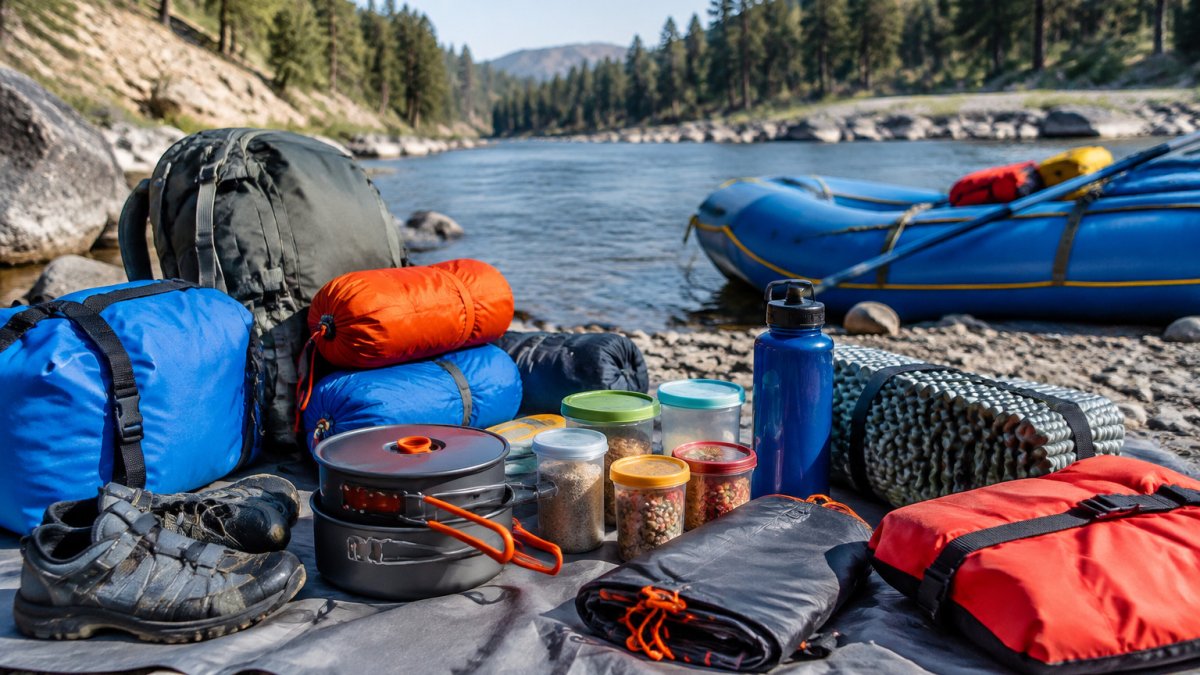
Essential gear for multi day river camping includes quick-dry synthetic or wool layers without cotton, sun protection, roll-top dry bags, a sleep system with an insulated pad, a camp stove, and required safety equipment like a PFD and first-aid kit. Pack gear so it survives repeated soaking, sand, and cold nights.
- Avoid cotton clothing, since it holds water and pulls heat from your body.
- Pack two full sets of base layers so one can dry while you wear the other.
- Use dry bags in mixed sizes, from 20-30 liters for sleep gear down to 2-5 liters for first aid.
- Roll the dry bag top at least three times and clip the buckles to keep water out.
- Carry a PFD for every person, plus a throw bag and a whistle attached to each PFD.
Table of Contents
- What Multi Day River Camping Demands From Your Gear
- Multi Day River Trip Packing List: Clothing and Sun Protection
- Dry Bags for Rafting and Waterproof Storage
- River Camping Sleeping Gear: Shelter, Bag, and Pad
- Overnight Rafting Trip Packing List: Food, Water, and Camp Kitchen
- Safety Equipment, Lighting, and Camp Hygiene
- Book Your Multi Day Trip With Sierra Mac
- Frequently Asked Questions
Multi-day river camping asks more of your gear than a weekend trip ever does. You are carrying everything you need down a river, setting up camp each evening, and living out of dry bags for several days in a row. The wrong gear costs you comfort, warmth, and sometimes safety. Sierra Mac has guided river trips on the Tuolumne, Merced, and Cherry Creek rivers near Yosemite since 1965. This guide walks through the essential gear for multi-day river camping, from clothing and sun protection to shelter, food, and safety equipment.
What Multi Day River Camping Demands From Your Gear
Multi-day river trips put gear through wet, cold, and dusty conditions all at once. Choosing the essential gear for multi day river camping means picking items that can survive repeated soaking, sand, and sudden temperature drops after sunset, and that pack small enough to share a raft with your group’s gear.
Multi Day River Trip Packing List: Clothing and Sun Protection
Clothing causes more trouble on river trips than almost anything else. Cotton holds water, stays wet, and pulls heat from your body (Cold Weather Safety). Synthetic and wool layers dry fast and keep you warmer when wet.
River-Ready Layers and the No-Cotton Rule
Pack two full sets of thermal and base layers, so one set can dry while you wear the other. Cotton jeans, hoodies, and socks keep moisture against your skin, so avoiding cotton is a sound general practice.
- Quick-dry synthetic or wool base layers
- A warm mid-layer, such as a fleece
- A waterproof rain jacket
- Quick-dry shorts or pants for paddling
- Wool or synthetic socks, never cotton
- Water shoes or sandals with heel straps
Hats, Sunglasses, and Sunscreen
Sun exposure on the water is intense, because the river reflects light back up at you. Bring a wide-brimmed hat with a chin strap so it stays on in the rapids. Polarized sunglasses with a retainer strap cut glare and stay put when you splash through a wave.
Reapply a water-resistant, broad-spectrum sunscreen every couple of hours, and after you have been in the water. Lip balm with SPF protects the area people forget.
Dry Bags for Rafting and Waterproof Storage
Dry bags are a core part of multi-day river gear. Everything you do not want wet can go inside one, from your sleeping bag to your phone and first-aid kit.
Sizing: Match Liters to What Goes Inside
Dry bags are sold by volume in liters. A practical starting point for a multi-day trip is a set that covers sleep, clothing, and day access separately rather than one giant bag:
- 20-30 liters for a sleeping bag and sleep clothes
- 10-20 liters for a clothing set and toiletries
- 5-10 liters for a day bag with sunscreen, snacks, a headlamp, and a phone
- A small 2-5 liter bag for a first-aid kit and repair items so they stay findable
Using three to five bags in mixed sizes can make it easier to balance weight across the raft and find items without unpacking everything. Label each bag by contents and owner with a permanent marker or a strip of tape.
The Roll-Down Closure: Why It Works
A roll-top dry bag keeps water out through a simple mechanism: the top is folded over itself several times to create a sealed channel, then the buckles are clipped. Roll the top at least three times, press the air out first, and clip the buckles so the fold stays compressed. A bag rolled once or left unclipped will leak in splash or rain. Watch out: overstuffing a bag prevents a clean fold, so leave a few inches of headroom at the top.
Packing Order and Waterproofing Layers
Pack heavy items low and centered in the raft, and keep day-access items in a bag you can reach without moving the load. Inside each dry bag, line the contents with a trash compactor bag or a second lightweight dry sack for anything critical, such as a sleeping bag or spare layers. That inner liner is your backup if the outer closure fails.
One way to pack is to start with the sleep system, then clothing, then kitchen and food, with day-access items on top. Keep the first-aid kit and repair kit in a known bag that is not buried. At camp, set bags on a tarp or hang them rather than leaving them in standing water, and re-roll and clip every bag before you push off in the morning.
The article sizes dry bags by volume, so this table summarises the recommended liter ranges for each job.
| Bag size | What goes inside | Note |
|---|---|---|
| 20-30 liters | Sleeping bag and sleep clothes | Largest bag in the set |
| 10-20 liters | Clothing set and toiletries | Mid-size for daily wear |
| 5-10 liters | Sunscreen, snacks, headlamp, phone | Day-access bag |
| 2-5 liters | First-aid kit and repair items | Keep easy to find |
River Camping Sleeping Gear: Shelter, Bag, and Pad
Sleep quality decides how rested you feel on day three. A good sleep system keeps you warm, dry, and off the cold ground.
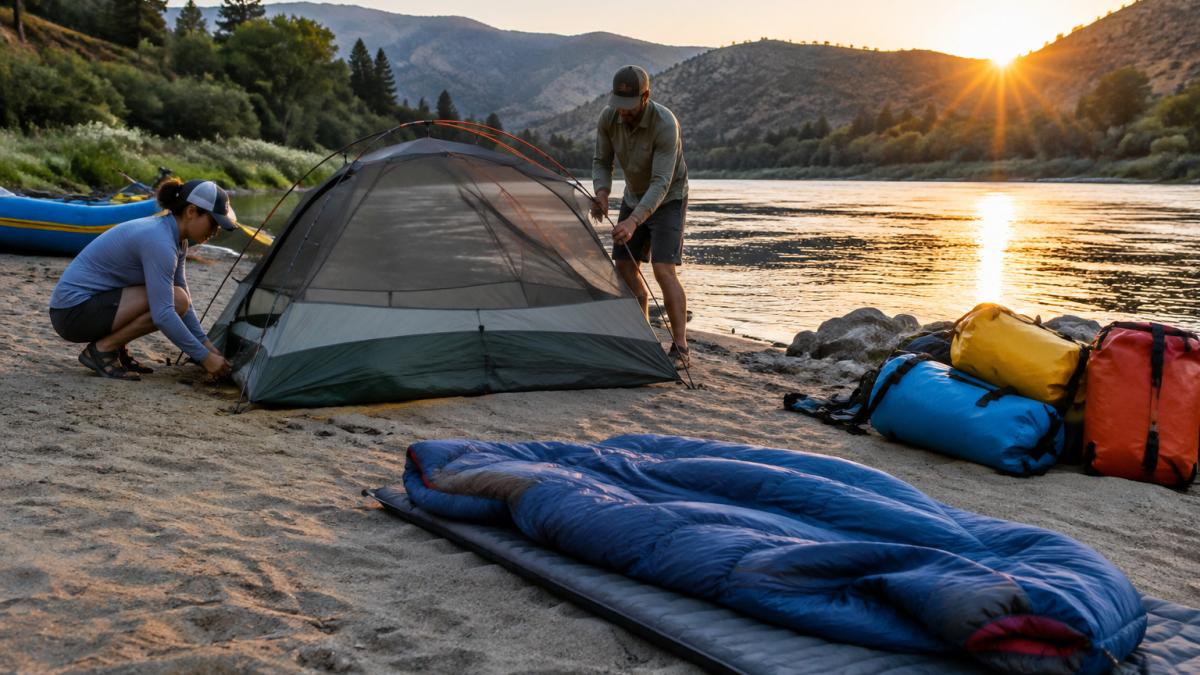
A tent is the most common shelter choice, since it blocks wind, insects, and rain. Some experienced campers skip the tent in dry weather and sleep under the stars, which saves weight. Decide based on the forecast and whether bugs are a problem on your river.
- Sleeping bag rated for the lowest overnight temperature you expect
- Insulated sleeping pad, since the ground pulls heat away from your body
- Pillow, which makes a surprising difference after long paddling days
- Sand stakes for tent anchors, since standard stakes pull out of loose sand
- Headlamp and a camp lantern for hands-free light at camp
A closed-cell foam pad or an air pad with an insulation rating works well. Test your sleep setup at home before the trip so you know it works.
Overnight Rafting Trip Packing List: Food, Water, and Camp Kitchen
Food and water need planning because you cannot simply run to a store. Pack food that tolerates heat and moisture, and plan meals so you do not carry more than you need.
- Water filter or purification tablets for backup
- Insulated water bottles or a hydration bladder
- Camp stove with fuel, and a windscreen
- Cookware, a lighter, and a biodegradable soap for dishes
- Cooler with ice or frozen water bottles
- Breakfast, lunch, and dinner options that need little cooking
- Snacks you can eat while paddling
Keep food sealed in dry bags or sturdy containers, since animals and moisture both cause problems. Follow your outfitter’s guidance on what food is allowed and how to store it at camp.
Safety Equipment, Lighting, and Camp Hygiene
Safety gear is the one category where the question is not what is nice to have but what is required. On a multi-day river trip, separate your packing list into required safety equipment, emergency planning, and camp hygiene so nothing critical gets left in the truck.
Required Safety Gear vs. Comfort Items
A personal flotation device is required on any river trip, and it must fit the wearer. Most outfitters also recommend a spare throw bag and a spare PFD per group. Treat these as required:
- PFD for every person, sized correctly
- Throw bag with a floating rope
- First-aid kit covering cuts, blisters, sunburn, stings, and sprains
- Whistle attached to each PFD
- Repair kit for rafts and dry bags
- Knife accessible to the group leader
Comfort and convenience items, such as camp chairs, pillows, and extra lighting, go in a separate pile. They improve the trip but should never crowd out the required list.
Emergency Planning and Communication
Cell service is unreliable on most river corridors, so plan for being out of contact. A common pattern is to carry a satellite messenger or personal locator device, a waterproof phone case, and a printed trip plan left with someone at home that lists your put-in, take-out, and expected check-in times. Make sure at least two people in the group know basic first-aid steps and where the kit is stored. Watch out: a first-aid kit nobody can find is the same as no kit, so keep it in a labeled dry bag that is not buried under sleep gear.
Camp Hygiene and Sanitation
Good camp hygiene protects the river and everyone on the trip. Use a portable toilet or groover where required, and locate it well away from the water and from camp. Wash hands with biodegradable soap and water carried away from the river, not in it. Pack out all trash, including food scraps and wrappers, and follow Leave No Trace principles on every trip (Leave No Trace Seven Principles (U.S. National Park Service)). Keep food sealed in dry bags or sturdy containers, since animals and moisture both cause problems, and follow your outfitter’s guidance on food storage at camp.
Book Your Multi Day Trip With Sierra Mac
Gear makes a trip comfortable, but a good outfitter makes it safe and memorable. Sierra Mac offers expert-led river trips near Yosemite, and our team can answer questions about your trip before you book. For current prices and available dates, check our Rates & Dates page or contact our team for a quote.
Frequently Asked Questions
What gear do you need for a multi-day river camping trip?
Core gear includes a waterproof dry bag system, a shelter, a sleeping bag rated for overnight cold, a sleeping pad for insulation from cold ground, a headlamp, a first-aid kit, a camp stove with cookware, and a water filter or sufficient drinking water. Personal life jackets and sun protection are essential safety items. Pack two full sets of thermal and base layers, and avoid cotton, which holds moisture and loses insulating value when wet. Confirm with your outfitter which items they supply, since many commercial trips provide rafts, paddles, and some camp equipment, and pricing for add-on gear depends on your trip dates and group size. Check Sierra Mac’s website for current details.
What should I pack for an overnight rafting trip?
An overnight rafting trip needs less gear than a long expedition but still requires waterproof storage for clothing and sleeping items, a sleeping bag and pad, quick-dry layers, a rain jacket, sun protection including a wide-brimmed hat and sunglasses, a headlamp, toiletries, and a reusable water bottle. Keep a small dry bag within reach during the river section for items you may need quickly, such as sunscreen, snacks, and your phone. Packing order matters: heavier items go low in the raft and everyday items stay accessible.
How do you keep gear dry on a river trip?
Use roll-top dry bags rated for submersion, and pack each bag so the roll-top closes at least three times before sealing. Line the inside of larger bags with a second bag for sleeping gear, and keep electronics in a small sealed case. Size bags to your items so there is little air to compress and little room for water to shift. Check seals and closures before each day on the water and separate clothing by day use, sleep use, and wet-weather use to avoid repacking mistakes.
What clothes should you bring on a multi-day rafting trip?
Bring quick-dry river clothing for daytime paddling, a separate set of dry camp clothes kept sealed in a dry bag, and warm insulating layers for cool evenings and early mornings. Two full sets of thermal and base layers is a common recommendation, and cotton should be avoided entirely because it stays wet and cold. Add a rain shell, sun protection, and footwear that stays on in the water, such as secure river sandals or water shoes.