
Beginner Guide to Whitewater Rafting in Yosemite
Last Updated: November 21, 2026
Quick Summary
A beginner guide to whitewater rafting in Yosemite starts with choosing between the calm, self-guided valley float in Yosemite Valley and the guided Merced River rapids outside the park. First-timers are happiest in Class II to III water with a guide and a paddle in hand.
- Snowpack, not the calendar, sets the rafting season on the Merced River.
- Early summer often offers the most forgiving mix of water and weather.
- Class III rapids give beginners real whitewater without being over their heads.
- You do not need to be a strong swimmer, but rafting is not recommended for non-swimmers.
- Confirm shuttle service and the takeout before paying for a self-guided rental.
Table of Contents
- Yosemite Whitewater Rafting at a Glance: Valley Floats vs. Merced River Rapids
- Yosemite Rafting Season: Snowmelt, River Flow, and Timing Your Trip
- Class III Rapids for Beginners: What the Difficulty Ratings Actually Mean
- What to Wear Whitewater Rafting: A Beginner Packing Checklist
- Beginner Whitewater Rafting Tips: Safety, Swimming Ability, and Paddle Coordination
- Self-Guided Float vs. Guided Whitewater Rafting: Permits, Rentals, and Logistics
- Booking Your First Guided Rafting Trip with Sierra Mac
- Frequently Asked Questions
Yosemite Whitewater Rafting at a Glance: Valley Floats vs. Merced River Rapids
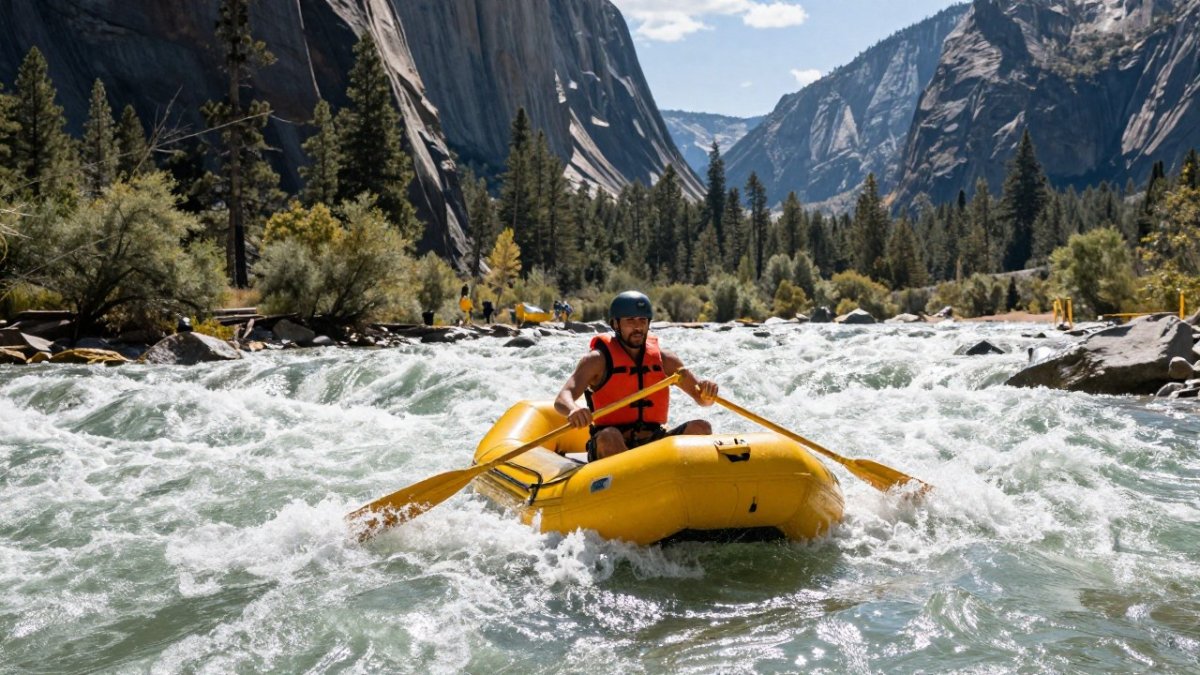
A beginner guide to whitewater rafting in Yosemite starts with one distinction that shapes everything else: the park’s calm valley float and the Merced River’s rapids outside the park are two different experiences. The valley float is a gentle, self-guided drift through Yosemite Valley. The Merced River rapids are a guided whitewater trip with real current and splash.
Sierra Mac has guided these rivers since 1965, and we tell first-timers the same thing: pick the experience that matches your group’s comfort level, not the one that sounds most exciting.
Here is the short version:
- Valley float: calm water, minimal current, suited to families and first-timers.
- Merced River rapids: moving water with whitewater sections, best with a guide.
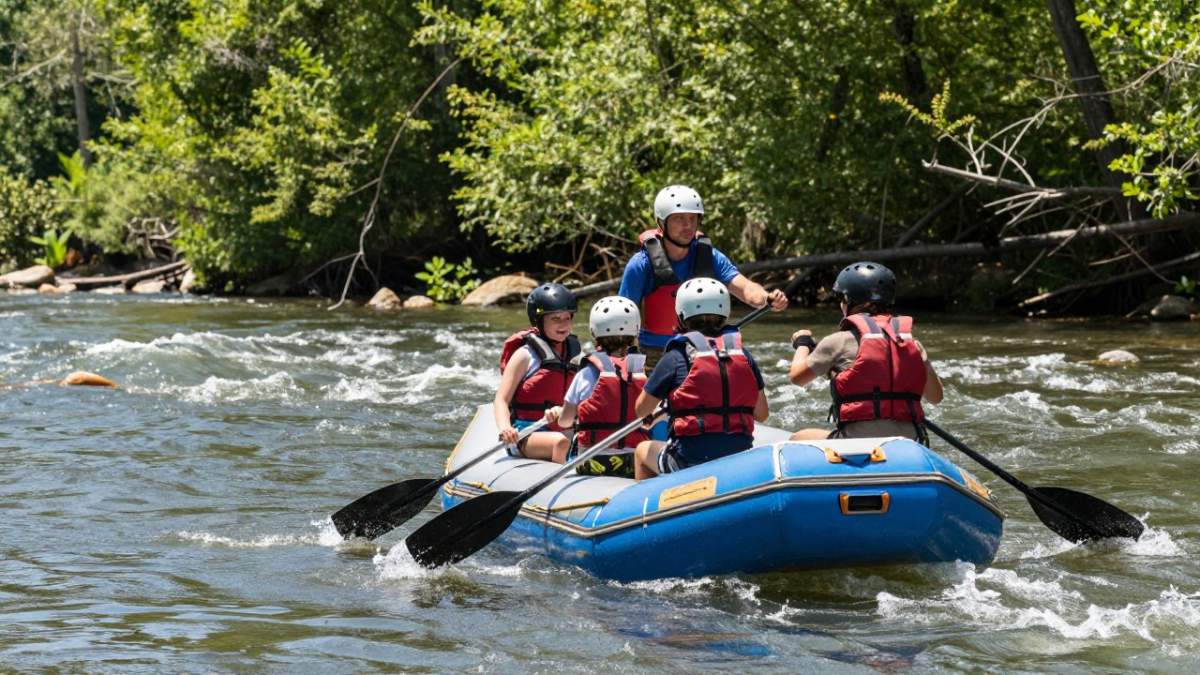
If you want the calm version, you can float Yosemite Valley on a self-guided easy raft trip. If you want the splash, look at the Merced River rafting trips instead. Both are legitimate ways to spend a river day; they just ask different things of you.
Yosemite Rafting Season: Snowmelt, River Flow, and Timing Your Trip
The season is set by snow, not by the calendar. Snowpack in the high country above the Merced River drainage melts through late spring and early summer, and that meltwater is what fills the river. The pattern most years looks like this: flows climb as the snowpack ripens, peak during the spring runoff window, then taper through midsummer as the remaining snow runs out. A heavy snow year pushes the peak later and keeps flows higher longer; a light year brings an earlier peak and a faster drop-off.
For a first-timer, flow is the single most useful number to understand, because it drives three things at once: how fast the current moves, how big the waves feel, and whether a given section is running at all. Higher flow means more push and less margin for a missed stroke; lower flow means softer rapids but also more exposed rock and, on some stretches, shallow water where a raft can drag. Neither extreme is automatically better for a beginner, the sweet spot is a moderate flow that keeps the rapids lively without turning them technical.
A practical way to time your trip:
- Late spring: highest water and fastest current of the year. Best for confident beginners on a guided trip; not the window to teach yourself.
- Early summer: flows settling, rapids still pushy, weather warming. Often the most forgiving combination of water and comfort.
- Midsummer: lower, softer water and the easiest floating conditions, but check that your chosen section still has enough flow to run.
- After the runoff: some stretches drop below runnable levels, and commercial schedules thin out. Confirm dates before you plan around them.
Before you book, check current conditions rather than relying on last year’s experience. Check current streamflow and park river and road status before your trip; both are worth a look in the week before your trip. Flow can move fast after a hot spell or a thunderstorm, and a section that was beginner-friendly on Monday can be a different river by the weekend.
Watch out: a warm rain-on-snow event in spring can spike flows well above the seasonal norm in a matter of hours, so treat any forecast of heavy warm rain as a reason to reconfirm your trip rather than assume your date is locked in.
For a fuller picture of how the months compare, our best month for white water rafting guide walks through the season month by month.
Class III Rapids for Beginners: What the Difficulty Ratings Actually Mean
Class III rapids are intermediate: clear, active waves and maneuvering that a beginner can handle with a guide and a paddle in hand. The scale runs from flatwater up to expert-only Class V, and most first-timers are happiest in Class II to III water.
What the ratings actually tell you:
- Class I to II: gentle riffles and small waves, minimal maneuvering.
- Class III: bigger, more continuous waves and a real need for paddle coordination.
- Class IV to V: strong, technical rapids for experienced paddlers.
A common mistake is assuming a lower class number means a boring float. Class III is where beginners get the genuine whitewater feel without being over their heads.
What to Wear Whitewater Rafting: A Beginner Packing Checklist
Dress for cold water and sun, even on a warm day. River water stays chilly, and you will get wet. Quick-drying layers beat cotton every time.
- Swimsuit or quick-dry shorts and shirt as a base layer
- Synthetic or wool layer for warmth if the water is cold
- Secure footwear that stays on in moving water
- Sunglasses with a strap, plus sunscreen
- A dry bag or change of clothes left at the takeout
- Any personal medication, kept in a waterproof pouch
Leave jewelry and loose items behind. Helmets and life jackets are provided on guided trips; wear them, and wear them properly.
Beginner Whitewater Rafting Tips: Safety, Swimming Ability, and Paddle Coordination
Safety starts with honest self-assessment. You do not need to be a strong swimmer for a guided beginner trip, but you should be comfortable in moving water and able to follow your guide’s commands. Rafting is not recommended for non-swimmers.
The skills that matter most:
- Paddle coordination: paddle in rhythm with your team, following the guide’s count.
- Listening: the guide’s calls (“forward,” “back,” “hold on”) are the whole game.
- Self-rescue basics: know how to float on your back with feet downstream if you swim.
Watch out: the biggest beginner error is trying to stand up in moving water. Float with your feet pointed downstream until you reach calm water or a guide reaches you.
Self-Guided Float vs. Guided Whitewater Rafting: Permits, Rentals, and Logistics
The choice between doing it yourself and booking a guided trip is really a choice about how much of the river day you want to own. Self-guided means you arrange the raft, the shuttle, the route, and the safety plan; guided means a professional carries those, and you carry a paddle.
Permits and park rules. The calm valley float inside the park and the whitewater stretches of the Merced outside it fall under different rules, and beginners routinely blur them. Floating rules inside the park change with conditions and season, so check the park’s current river guidance before you plan a DIY float.
Rentals and shuttles. A self-guided float usually means renting a raft or inflatable, arranging life jackets in the right sizes, and solving the shuttle problem, getting your group to the put-in and your vehicle to the takeout.
What is included, and what it costs. Rather than quote a single number that will be wrong next season, compare the two paths on inclusions. Compare the two paths on what each includes. When you weigh them side by side, add the cost of any shuttle, the time cost of driving both ends, and the value of having someone who knows the line through each rapid.
| Factor | Self-Guided Float | Guided Whitewater |
|---|---|---|
| Difficulty | Calm water | Class II to V |
| Gear | You arrange rentals | Provided |
| Shuttle | Usually your responsibility | Typically included |
| Permits and rules | You confirm with the managing agency | Outfitter holds commercial authorization |
| Logistics | You plan it | Handled for you |
| Best for | Independent families | First-timers, thrill-seekers |
Watch out: booking a rental without confirming the shuttle and the takeout can leave your group stranded at the end of the run with no ride back to the put-in, settle both before you pay.
For a guided trip, ask what is included before you book. To see exactly what a guided day involves, read what to expect on a guided river expedition.
Booking Your First Guided Rafting Trip with Sierra Mac
Booking your first guided trip is straightforward: choose your river and difficulty, confirm the date, and let the outfitter handle the rest. Sierra Mac has guided these rivers since 1965 as a family-owned, third-generation outfitter, and we run trips from mild floats to intense Class V expeditions on the Merced, Tuolumne, and Cherry Creek.
We are located just 15 miles outside Yosemite’s northwest entrance, which keeps logistics simple and gets you on the water without a long detour. Our guides are local. If you are weighing a guided trip against going it alone, here is the practical difference: a guided day removes the guesswork and puts an expert at the back of your raft.
Check our rates and dates for current schedules and a quote, then reserve your spot.
Your first river day should feel like an adventure, not a logistics project. Sierra Mac handles the shuttle, the gear, and the line through every rapid, with local guides who have run these rivers for generations. Choose a mild float or a Class V challenge, and we will match the trip to your group. Get started with Sierra Mac and book your first guided rafting trip on the Merced.
Frequently Asked Questions
Can a beginner do Class IV rapids?
Class IV rapids are a serious step up from beginner water and are not the right starting point for most first-timers. They involve large, unpredictable waves, tight maneuvering, and real consequence if a paddler misses a stroke. Beginners are better served by Class II and Class III sections, where guides can coach paddle coordination in calmer stretches between rapids. Build experience on guided trips first, then move up once you know how you respond to cold water, spray, and quick commands.
Is Class III whitewater rafting hard for a beginner?
Class III is manageable for beginners on a guided trip. Expect moderate waves, some technical maneuvering, and a few sections where everyone paddles hard on command. The difficulty comes less from raw power and more from listening and staying in sync with your paddling team. Guides pick lines that suit the group’s ability, and calm water between rapids gives you time to reset. If you can follow instructions and are comfortable in moving water, Class III is a reasonable first step.
What should a beginner wear for whitewater rafting?
Skip cotton and wear quick-drying layers: a swimsuit or synthetic base layer, shorts or leggings, and a fleece or wool midlayer for cool mornings. Secure shoes with a heel strap are essential, and Crocs or flip-flops are not appropriate because they slip off in a swim. Bring a hat, sunscreen, and a dry change of clothes for the takeout. Ask your outfitter what gear is provided.
When is rafting season on the Merced River?
The season follows snowmelt. Flows typically build through spring runoff in April and May, stay strong into June and July in heavier snow years, and taper by late summer. Peak flows bring bigger, faster rapids, while lower summer water means gentler waves and more exposed rocks. Early-season trips run colder and more powerful, so beginners should ask the outfitter which section matches their comfort level and the current flow before booking.
How long does a beginner rafting trip near Yosemite take?
Ask the outfitter for trip length, the meeting location, and the takeout point so you can plan transportation and park entrance timing.
Are Crocs okay to wear while rafting?
No. Crocs and similar slip-on shoes come off easily in a swim and offer little grip on wet rocks at the launch point. Wear secure footwear with a heel strap, such as rafting sandals or old sneakers that can get wet. Your feet need to stay planted inside the raft and hold up during a short walk to the river access. Leave the Crocs in the car for the drive home.