
Rafting with Children: Essential Tips for a Safe Family Trip
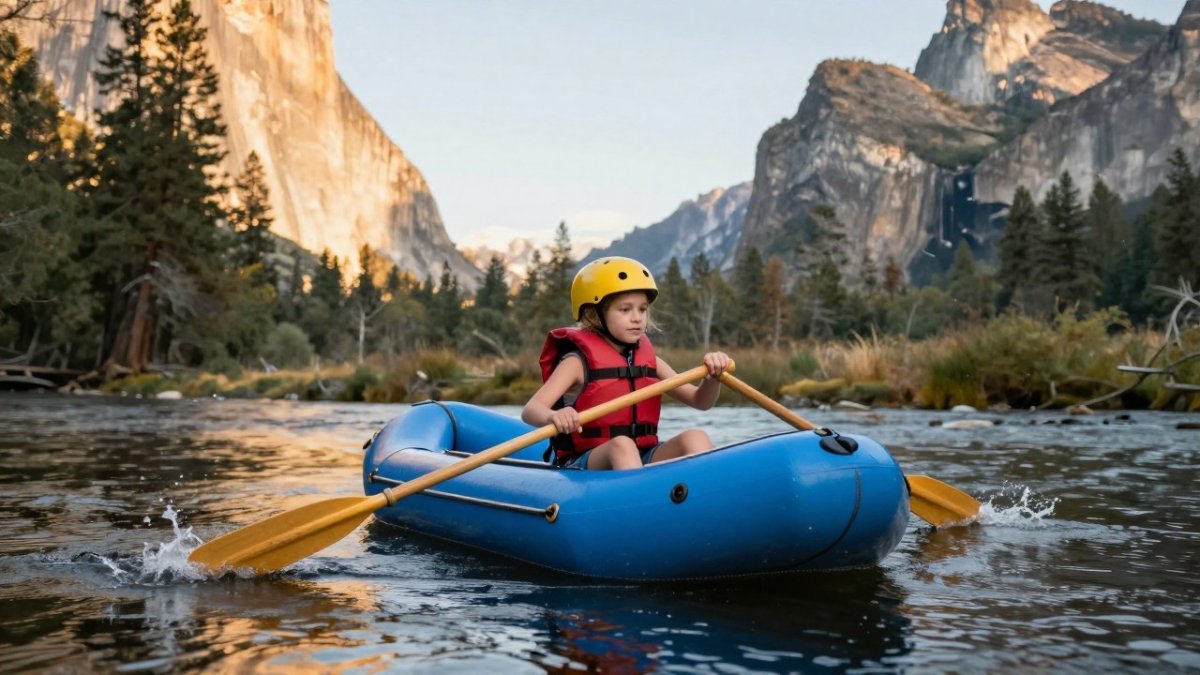
Last Updated: November 18, 2026
Quick Summary
Rafting with children works best when you choose a gentle river section and a family-friendly outfitter before booking anything else. Match the rapid class to your child’s comfort level, starting at Class II for beginners, and confirm the outfitter’s minimum age policy in writing. A properly fitted life jacket, clear guide signals, and a practiced plan for falling out cover most of family safety.
- Ask whether guides are trained in swiftwater rescue and how many guests ride in each raft.
- A child should swim 25 yards unassisted and tread water for about a minute.
- Mild Class II family floats often start around age six to eight, but policies vary.
- Test the life jacket on land: if it slides up past the ears, it is too loose.
- Children who fall out should float on their back with feet pointed downstream.
Table of Contents
- Start With the Right River and the Right Outfitter
- The Minimum Age for Whitewater Rafting and How to Judge Readiness
- Family Rafting Safety Tips: Life Jackets, Guide Signals, and Falling Out
- What to Wear Rafting with Kids
- A Rafting Gear Checklist for Families
- Calming Nerves, Motion Sickness, and Post-Trip Fatigue
- Book a Family Rafting Trip With Sierra Mac
- Frequently Asked Questions
Start With the Right River and the Right Outfitter
Rafting with children works best when you pick a gentle river section and a family-friendly outfitter before you book anything else.
The river has to fit the youngest paddler, not the boldest one. A Class II float with easy riffles gives a nervous eight-year-old room to relax.
Ask three questions before you commit: does the outfitter run trips for your child’s age group, are guides trained in swiftwater rescue, and how many guests ride in each raft?
Match the Rapid Class to Your Child’s Comfort Level
Rapid classes run from Class I, flat moving water, to Class V, expert-level whitewater.
If your child is new to whitewater, start at Class II. Our Tuolumne River rapid classes guide breaks down each section so you can judge the fit before booking.
You can also browse family rafting trips to see which routes we run for younger paddlers, and read our guide on choosing a rafting outfitter if you are still comparing companies.
The Minimum Age for Whitewater Rafting and How to Judge Readiness
The minimum age for whitewater rafting depends on the river and the outfitter, not one national number. Minimum ages vary by river and outfitter.
Age alone tells you little. A cautious ten-year-old often does better than a fearless seven-year-old.
Our own age policies and family-trip answers live on our frequently asked questions page. Read it before you assume your child is too young or old enough.
A Readiness Checklist Beyond the Age Number
Use this checklist before you book. A child who clears most of these is usually ready for a mild family trip.
- Can swim at least 25 yards or tread water briefly
- Feels comfortable getting face and head wet
- Can listen to and repeat a short set of instructions
If your child fails two or three items, wait a season or choose a calmer float. There is no prize for starting early.
A Four-Part Readiness Framework for Parents
Most outfitters publish a minimum age and stop there. That number is a floor, not a green light.
1. Swimming ability. The benchmark is 25 yards of unassisted swimming plus about a minute of treading water.
**2.
3. Instruction-following. Rafting depends on hearing a short command, “forward two,” “hold on,” “lean in”, and doing it immediately.
4. Temperament. A cautious child who watches and then commits often outperforms a fearless child who ignores the guide.
What to Do When Your Child Is Borderline
If your child lands in the middle of the framework, three options usually work better than forcing a decision:
- Book a shorter trip. A shorter Class II float gives you real information about how your child handles moving water without committing a full day.
Watch out: a child who says yes to please a parent is not the same as a child who wants to go. Ask once, casually, a week before the trip, and again the morning of. If the answer changes, believe the second one.
Age Bands in Practice
While exact policies vary by outfitter and river, a common pattern: mild Class II family floats often start around age six to eight; Class III sections commonly start around age eight to twelve; and Class IV and above is usually reserved for teens and adults. Treat these as starting points for a conversation with the outfitter, and confirm the specific river’s policy in writing before you pay a deposit.
Family Rafting Safety Tips: Life Jackets, Guide Signals, and Falling Out
Family rafting safety tips come down to three habits: a properly fitted life jacket, clear guide signals, and a plan for falling out. Get these right and most of the fear disappears.
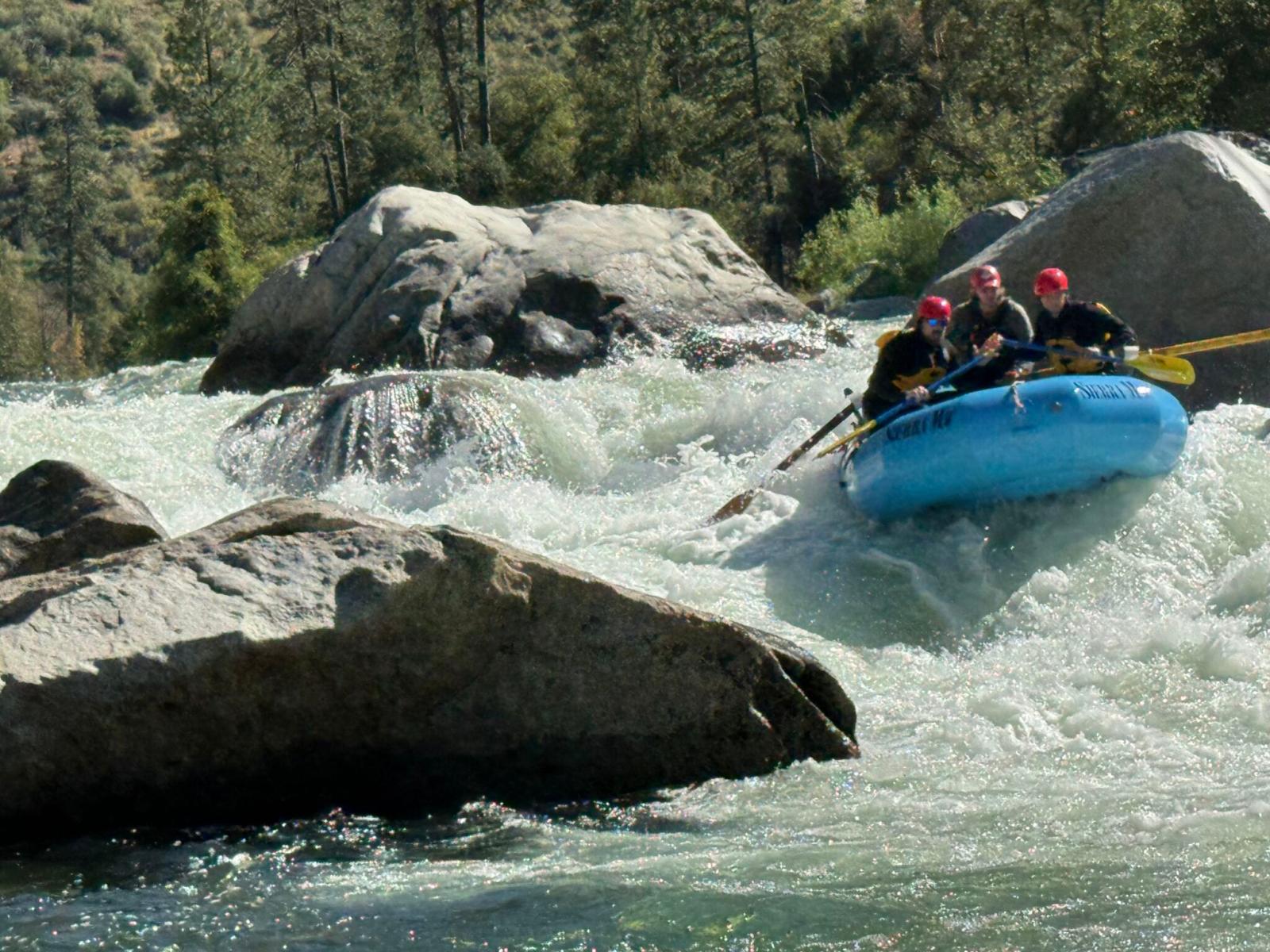
Life jackets. A personal flotation device must fit snugly and stay put when pulled up by the shoulders.
Guide signals. Before launch, guides explain paddle commands and whistle signals. Teach your child to listen for the guide’s voice and repeat commands back.
Staying seated. Hands and feet stay inside the raft. No standing, no leaning over the sides.
What to Do If a Child Falls Out of the Raft
If a child falls out, the guide takes over. Your job is to stay in the raft and follow instructions. Children should float on their back with feet pointed downstream and look toward the guide.
Teach this before the trip, calmly, as a game. A child who has practiced the position is far less likely to panic. Guides are trained to reach a swimmer quickly, and the life jacket keeps the head above water.
The Rescue Sequence, Step by Step
Understanding what happens after a fall helps parents stay calm, and calm parents keep children calm. The sequence most professional guides follow:
- The guide calls the command. You will hear a whistle or a shout, often “swimmer!”, and the guide will point toward the person in the water. Do not jump in; a second person in the water turns one rescue into two.
- The guide rows or reaches toward the swimmer. On many family rivers the guide uses a throw bag, a bag of rope tossed just past the swimmer. Teach your child to grab the rope with both hands and hold on, not to swim against the current.
- The swimmer moves to the downstream end of the raft. The guide will direct the swimmer to the back of the boat, where they can be pulled aboard without tipping the raft. Children should listen for “come to the back” and paddle toward the guide’s voice.
- The guide pulls the child in. Most guides use a two-handed pull on the life jacket’s shoulder straps or grab handle. Your child does not need to climb; the guide does the lifting.
- The raft regroups. The guide will check the child, confirm everyone is accounted for, and either continue or move to shore. Expect a pause; it is normal.
What Parents Should Rehearse Before Launch
A five-minute rehearsal on the beach covers most of what a child needs:
- The position. Lie on your back, feet downstream, eyes on the guide. Practice on the sand or a dock so the child feels what it is like.
- The grab. Toss a towel or rope and have the child grab it with both hands and hold, this mimics the throw bag without the current.
- The voice. Tell your child the guide will be the loudest voice they hear and that they should swim toward that voice, not toward a parent, who may instinctively reach for them and pull the raft off balance.
Watch out: a parent who stands up or leans over the side to reach a child in the water is the most common way a single fall becomes a raft-wide problem. Agree before launch that the guide is in charge of the rescue and the parent’s job is to stay seated and keep the other children calm.
After the Rescue
Once a child is back in the raft, expect shaking, tears, or silence, all normal. Wrap them in a dry layer, give them water, and let the guide decide whether to continue. Many families find a child who falls out and is quickly recovered becomes more confident, not less. If your child wants to stop, stop. The river will be there next season.
What to Wear Rafting with Kids
What to wear rafting with kids depends on the weather, but the rule is simple: quick-dry layers, secure footwear, and sun protection. Cotton holds water and chills kids fast, so leave it home.
- Top: synthetic or wool base layer, plus a light fleece on cool days
- Bottom: quick-dry shorts or leggings
- Feet: secure water shoes or old sneakers that strap on
Skip flip-flops and slip-on shoes. They wash off feet in moving water. Bring a dry change of clothes for the ride home.
A Rafting Gear Checklist for Families
A rafting gear checklist for families should keep everyone warm, fed, and dry at the end. Pack light, but pack the items you will actually use.
- Waterproof dry bag for phones and keys
- Reusable water bottles, one per person
- Snacks: trail mix, fruit, granola bars
- Towels, one per person
Packing by Weather and Trip Length
Cool, cloudy days call for an extra fleece layer and a warm hat. Hot days need more water and shade. A half-day float needs one dry bag and snacks. A multi-day trip needs a larger dry bag, camp clothes, and a headlamp.
| Trip Type | Extra Layers | Water | Food | Dry Storage |
|---|---|---|---|---|
| Half-day, warm | 1 light layer | 1 bottle each | Snacks | 1 small dry bag |
| Half-day, cool | Fleece + hat | 1 bottle each | Snacks | 1 small dry bag |
| Multi-day | 2-3 layers | 2 bottles each | Full meals | Large dry bag |
Water
Calming Nerves, Motion Sickness, and Post-Trip Fatigue
Nerves are normal, and the fix is preparation. Talk through what will happen, show your child photos of the river, and explain that the guide is in charge.
For motion sickness, offer a light meal before launch and keep water handy. Some families use motion-sickness bands. Ask your doctor before giving any medication to a child.
Plan a quiet evening after the trip. Rafting tires kids out, and a nap or early bedtime helps.
Book a Family Rafting Trip With Sierra Mac
The best family rafting trip starts with the right outfitter, and that is where we come in.
Our professional local guides know the rivers well. We put safety first on every trip.
Check our rates and dates to plan your family trip, then reserve your spot. Get started with Sierra Mac and give your kids a river day they will talk about for years.
Frequently Asked Questions
Can a 7-year-old go whitewater rafting?
Most guided outfitters set their own minimum age, and 7 is below the cutoff on nearly every commercial whitewater trip. On rivers with Class II and III rapids, common minimums sit around age 8 to 12, and Class IV and V sections usually require older teens. Call the outfitter before booking and ask two things: the minimum age for that specific river section and whether your child meets the swimming and weight requirements. A calm float trip is often the better first step for a younger child.
Are Crocs ok for rafting?
No. Crocs slip off in moving water and give no grip on wet rocks, so they are a poor choice for rafting with children. Closed-toe sandals with a heel strap or secure lace-up water shoes stay on your feet and protect toes from rocks. Avoid flip-flops and bare feet entirely. Bring a dry pair of shoes and socks to change into at the take-out, because wet feet get cold fast even on a warm day.
How do I choose a family-friendly rafting trip?
Ask about the rapid class, the minimum age, and the guide-to-guest ratio before you book. Class II sections suit first-timers and younger kids, while Class III adds bigger waves and requires solid swimming confidence. Confirm that the outfitter provides properly fitted life jackets and helmets in children’s sizes, and ask how guides handle a swimmer who falls out. A short half-day trip is the safest way to test whether your family enjoys the water.
What should children wear for whitewater rafting?
Dress kids in quick-drying layers, not cotton. A swimsuit or synthetic base layer under shorts and a rash guard works in warm weather, and a wool or fleece midlayer plus a splash jacket keeps them warm on cold water. Secure footwear with a heel strap is essential. Add a hat, sunglasses with a strap, and sunscreen on exposed skin, and pack a full change of dry clothes in a dry bag for the ride home.