
How to Properly Fit a Whitewater Life Jacket
Last Updated: November 17, 2026
Quick Summary
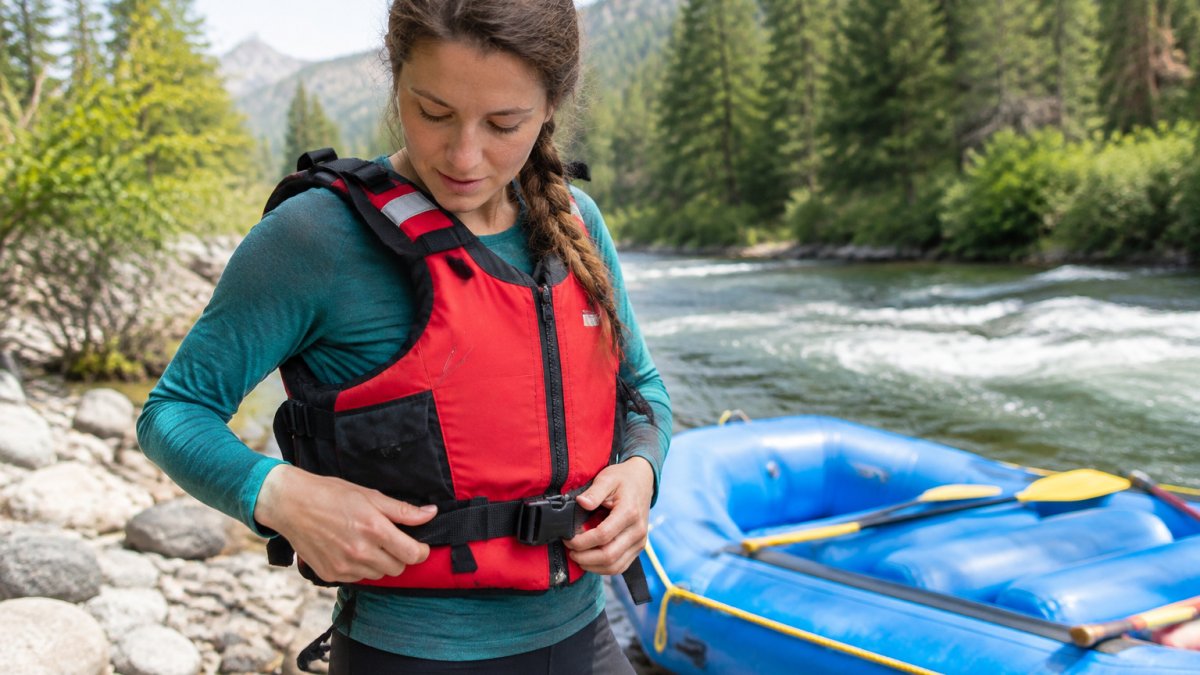
To properly fit a whitewater life jacket, fasten every buckle and tighten the straps from the bottom up: waist first, then sides, then shoulders last. The vest should stay seated at your waist through the arm-raise test while still letting you breathe fully and paddle freely.
- Your body weight should fall inside the label’s stated range, not at the very edge.
- Measure your chest with a soft tape at the fullest part, level under the arms, breathing normally.
- Loosen every strap before putting the vest on, then settle the bottom hem around your waist.
- If the vest rides up toward your chin during the arm-raise test, tighten the waist and side straps.
- Recheck every strap after exiting the water, since wet webbing loosens.
Table of Contents
- Why a Snug Whitewater Life Jacket Fit Matters on Class IV-V Rivers
- Life Jacket Sizes for Adults: Reading the Manufacturer’s Label
- How to Measure Your Chest for Life Jacket Sizes for Adults
- How to Wear a Life Jacket Step by Step: Layering, Fastening, and Tightening
- The Arm-Raise and Ride-Up Fit Check for Whitewater Paddling
- How Should a Life Jacket Fit a Child?
- Troubleshooting Poor Fit: Rescue Harnesses, Whitewater Gear, and Fit Changes Over Time
- Getting Fitted for Your Sierra Mac River Trip
- Frequently Asked Questions
Why a Snug Whitewater Life Jacket Fit Matters on Class IV-V Rivers
A whitewater life jacket only works when it stays exactly where you put it.
On flat water, a loose vest is an annoyance. On Class IV-V whitewater, it is a hazard. A life jacket that rides up over your ears does two bad things at once.
That is the tension most fitting guides miss.
The steps below are the same ones used to check paddler fit before a whitewater launch. For a deeper look at the safety standards behind them, see our Class V white water safety techniques and fitness guidelines.
Life Jacket Sizes for Adults: Reading the Manufacturer’s Label
Start with the label, not the mirror. Every PFD carries a manufacturer’s label listing a size and a weight range, and that label is the only reliable starting point for adult fit.
Read it before you try anything on:
- Weight range. Your body weight should fall inside the stated range, not at the very edge.
- Chest measurement. Many adult PFDs list a chest range in inches. Measure yours rather than assuming.
- Design type. A front-zip vest fits differently from a pullover or side-entry vest.
Sizing is not universal across brands. A medium in one design can fit like a large in another, so treat the label as a starting point and the fit check as the verdict.
How to Measure Your Chest for Life Jacket Sizes for Adults
To measure your chest for a life jacket, wrap a soft tape around the fullest part of your chest, keep it level under the arms, and breathe normally. Write down the number in inches.
A few details make the measurement trustworthy:
- Wear the layers you plan to paddle in, or add an inch for a wetsuit.
- Keep the tape snug but not tight.
- Measure twice. If the numbers differ, use the larger one.
Body type matters here. Broad shoulders and a short torso can push you up a size even when your weight fits a smaller vest. Trust the chest measurement over the tag on your rain jacket.
How to Wear a Life Jacket Step by Step: Layering, Fastening, and Tightening
Here is how to wear a life jacket step by step, in the order that produces a secure fit every time.
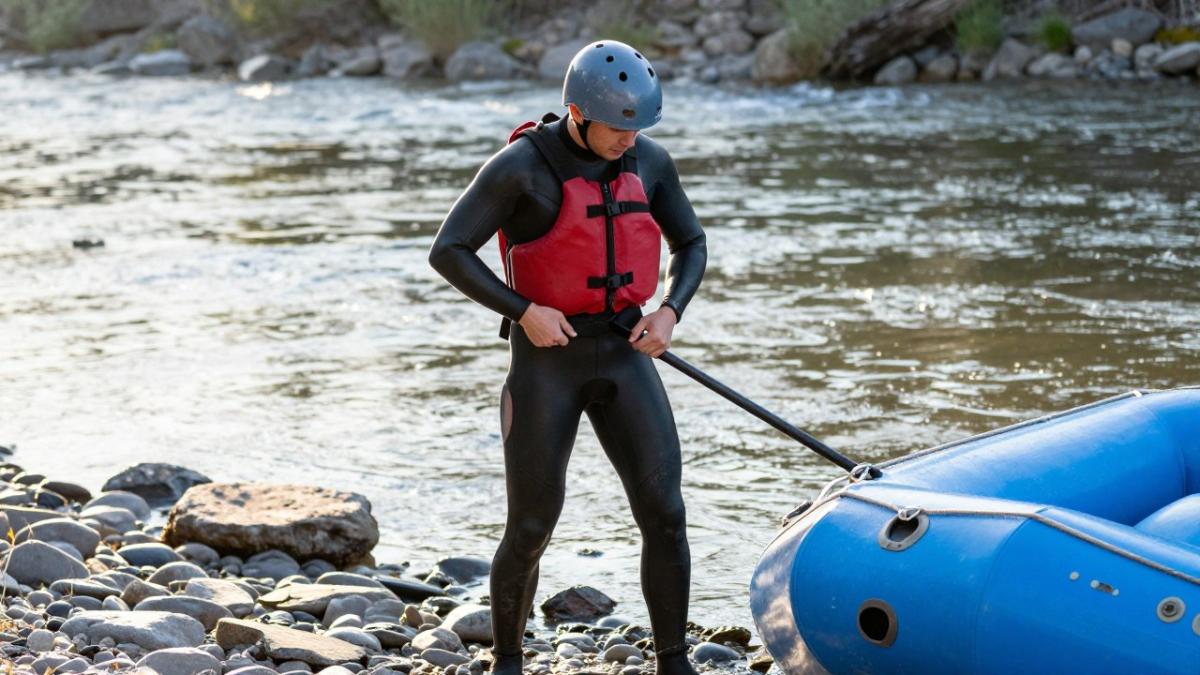
- Put on your paddling layers first. Wear the water clothing you will actually paddle in. A wetsuit or splash layer changes the fit, so fit the vest over it, never over a bare torso and then add layers.
- Loosen every strap before you put it on. Back the shoulder and waist adjustments off so the vest opens wide.
- Slide it on and settle it low. The bottom hem should sit around your waist, not up on your ribs.
- Fasten the zipper or snaps completely. Close every buckle and snap, including side releases and any chest strap.
- Tighten from the bottom up. Snug the waist strap first, then the side straps, then the shoulder straps last. Working bottom to top stops the vest from creeping upward.
- Pull the loose strap ends through their keepers. Dangling straps catch on raft frames and oars.
Cold water changes the calculation. A thick wetsuit adds bulk that shifts as it soaks, so recheck your straps after your first few minutes on the water. Our guide to essential whitewater rafting gear for cold water covers how layers interact with PFD fit.
The Arm-Raise and Ride-Up Fit Check for Whitewater Paddling
The arm-raise test is the fastest way to confirm a snug fit.
If the vest rides up toward your chin, it is too loose. Tighten the waist and side straps and repeat.
Treat that test as a screening check, not a verdict.
Run a whitewater-specific movement check that flat-water guides skip:
- Air paddle. Mimic a forward stroke and a brace. The vest should not shift across your shoulders or lift at the hem.
- Twist and reach. Turn your torso and reach across your body as if setting up a boof or a cross-bow draw. You should feel free movement, not restriction.
- Deep breath. Fill your lungs fully. You must be able to breathe without fighting the vest.
A snug fit is not a tight fit.
Watch out: A dry-land pass does not guarantee an in-water pass.
Verifying Fit in the Water
The only real test is supervised time in the water with the gear you will paddle in. Before you commit to a rapid, find a calm eddy or a pool and do this:
- Float in a defensive swim position. Cross your arms over the vest, lean back, and let the vest float you. The vest should keep your chin clear of the water without you treading.
- Swim a short front crawl. If the vest climbs toward your chin or restricts your shoulder rotation, the shoulder straps are too loose or the vest is sized wrong.
- Roll onto your back and kick. The vest should stay centered on your torso, not slide toward your head.
- Mimic a self-rescue. Reach for an imaginary throw bag, then pull yourself toward a simulated raft or eddy line. Your range of motion should let you reach without the vest shifting.
- Recheck every strap after exit. Wet webbing loosens. Retighten from the bottom up before you paddle again.
Do this with a partner and within reach of the bank. Cold water and a loose vest are a bad combination, and a fit check is not the time to test your roll.
How Should a Life Jacket Fit a Child?
A child’s life jacket should fit snugly enough that it cannot be pulled over the head, with the child’s weight inside the label range and every strap tightened from the bottom up.
Children need a dedicated child-size PFD, never an adult vest cinched down. Check these points:
- Lift the shoulders of the vest. If it slides up past the ears, size down or tighten further.
- Confirm the child can sit and breathe comfortably.
- Check that the crotch strap, where the design includes one, is fastened.
Proper fit is the first step toward safety on the river for young paddlers. Our best Yosemite rafting trips for families shows which runs suit first-timers.
Troubleshooting Poor Fit: Rescue Harnesses, Whitewater Gear, and Fit Changes Over Time
Most fit problems trace back to one of a handful of causes. Here is how to diagnose and fix each.
| Problem | Likely Cause | Fix |
|---|---|---|
| Vest rides up in a swim | Waist strap loose or vest sized too large | Tighten waist first, then shoulders; resize per label if it persists |
| Cannot breathe deeply | Chest strap overtightened | Loosen chest strap one notch and recheck the deep-breath test |
| Shoulder straps dig in | Straps tightened before waist | Retighten bottom to top |
| Vest shifts when paddling | Wrong size, worn foam, or straps routed wrong | Resize per label; inspect foam; reroute straps per maker |
| Pressure points under arms | Side straps too high or vest too short for torso | Lower the vest to the waist and adjust side straps |
| Rescue harness feels bulky or binds | Harness worn under vest or routed incorrectly | Route harness per maker’s instructions and fit the PFD with it in place |
| Knife or tow tether snags | Accessory mounted over a buckle or quick-release | Relocate accessory clear of all release points |
Rescue Harnesses and Accessory Safety
A rescue harness changes how a vest sits. The belt adds bulk at the waist, and the quick-release buckle must stay reachable with cold, wet hands. Fit the PFD with the harness in place, not before, and follow the harness maker’s routing instructions exactly.
Keep these clear of the harness and buckles:
- Quick-release buckles. Nothing should cross or cover the release. Test the release with gloves on.
- Knife access. Mount the knife where your dominant hand can reach it without looking, and confirm the sheath does not catch on the vest when you draw.
- Tow tethers and throw-bag attachments. Route them so they cannot wrap a buckle or a strap end.
Watch out: A harness routed over the outside of the foam can slide under load. If the maker specifies internal routing, use it.
Fit With Whitewater-Specific Gear
Your PFD has to coexist with a helmet, spray skirt, drysuit, and wetsuit. Each one changes the fit equation:
- Helmet. The helmet’s brim and retention system should not contact the vest’s shoulder straps. If the vest collar pushes the helmet forward, the vest is sitting too high.
- Spray skirt. The skirt’s tunnel and waistband sit under the vest hem. Fit the vest over the skirt you will actually wear, and confirm the skirt’s release tab is still reachable.
- Drysuit and wetsuit. Neoprene and drysuit fabric compress and shift when wet. Fit the vest over the layers you will paddle in, then retest after your first few minutes on the water.
Fit Differences by PFD Design
Pullover, front-zip, and side-entry vests fit differently, and the adjustment sequence changes with the design:
- Pullover. No front opening, so the fit is set almost entirely by the side and shoulder straps. It must pass over your head and shoulders with the straps fully loosened, then tighten bottom to top.
- Front-zip. The zipper carries less load than the straps. Fasten the zipper fully, then tighten the waist, sides, and shoulders in that order.
- Side-entry. Two or more side releases must be fully closed before you tighten anything. A partially closed side buckle will let the vest shift under load.
Fit Changes Over Time
Foam compresses and webbing stretches. A vest that fit snugly two seasons ago may now be loose, so recheck the fit at the start of every season and after any long swim. Replace any PFD with cracked foam, frayed webbing, or a zipper that will not stay closed. A vest that no longer passes the arm-raise and deep-breath checks is a replacement, not an adjustment.
Getting Fitted for Your Sierra Mac River Trip
If you are ready for Class V, the Cherry Creek and Upper Tuolumne rafting trips put that fitting to work on serious whitewater. Planning ahead? Check our rates and dates to schedule your run.
A loose life jacket is the one piece of gear you cannot afford to get wrong on a Class IV-V river. Sierra Mac has fitted paddlers for six decades as a third-generation, family-owned outfitter, with professional local guides, trips ranging from mild floats to Class V expeditions, and a location just 15 miles from Yosemite’s northwest entrance.
Frequently Asked Questions
How do you know if a life jacket is too big?
A whitewater life jacket is too big if you can pull it up over your chin or shoulders when the straps are fully tightened, or if it rides up past your ears during the arm-raise test. Check the manufacturer’s label first: if your chest measurement or weight falls outside the printed range, the jacket is the wrong size no matter how tight the straps get. A properly fitting PFD stays snug without restricting breathing and stays in place in the water.
How tight should the straps on a life jacket be?
Tighten the waist strap and side straps first, working from the bottom upward, then the shoulder straps. The jacket should feel snug against your layers but still let you breathe fully and paddle without chafing. Test it by raising both arms overhead: if the jacket shifts up more than an inch or two, tighten the lower straps further. A loose whitewater life jacket can ride up and interfere with your range of motion when you need it most.
Can you wear a life jacket over a wetsuit or other layers?
Yes, and you should fit your PFD over the same layers you will paddle in. A wetsuit, splash jacket, or fleece adds bulk, so a jacket that fits over a t-shirt may feel tight over cold-water gear. Put on your paddling layers, then fit and adjust the life jacket. If you add or remove layers later, recheck the straps and repeat the arm-raise fit check before launching.
What is the difference between a whitewater PFD and a regular life jacket?
A whitewater PFD is cut shorter in the torso so it clears a spray skirt and raft seating, and it usually includes a rescue harness, a quick-release belt, and attachment points for a throw bag or knife. Recreational life jackets prioritize flotation for calm water and may lack these features. For Class IV-V rivers, fit and harness security matter more, so follow the manufacturer’s label and tighten every strap from the bottom upward before you launch.