
Essential Whitewater Rafting Gear for Cold Water
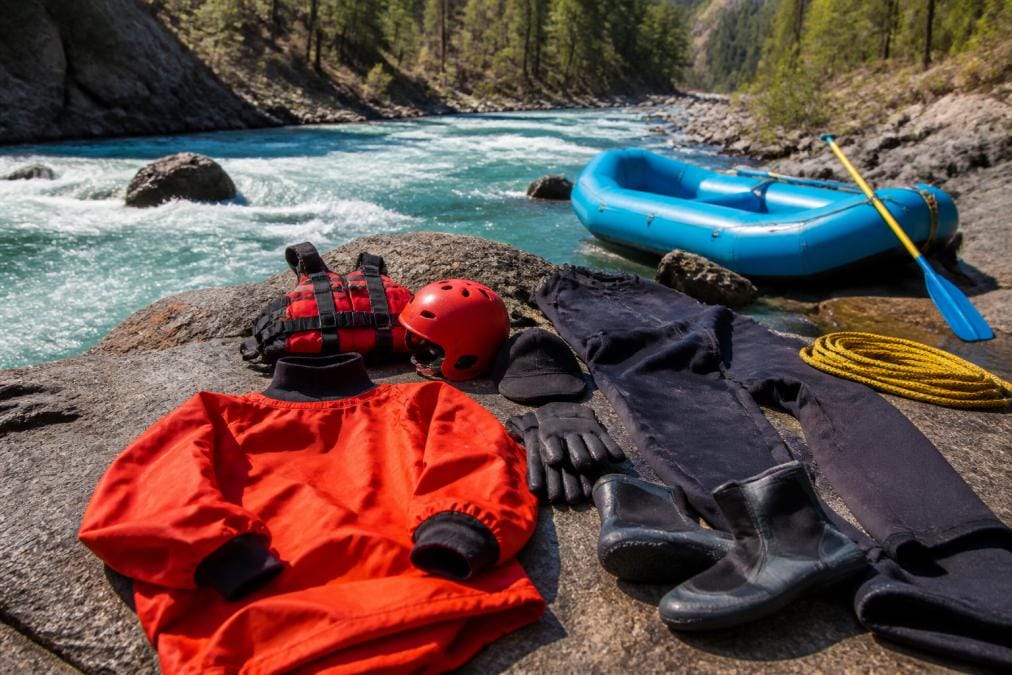
Table of Contents
- Why Cold Water Changes Everything About Your Gear
- The Best Layering System for Whitewater Rafting
- Wetsuit vs Drysuit for Rafting: Which One Keeps You Warmer?
- Whitewater Rafting Safety Gear Requirements You Can’t Skip
- What to Wear Rafting in Early Spring: Head-to-Toe Checklist
- Sizing, Fitment, and Gear Maintenance Tips
- Rental vs. Buying: What Makes Sense for Your Trip
- Post-River Recovery: Warming Up After Cold Water
- Frequently Asked Questions
Last Updated: September 19, 2026
Why Cold Water Changes Everything About Your Gear
Cold water doesn’t just feel uncomfortable. It drains heat from your body roughly 25 times faster than air at the same temperature, which is why essential whitewater rafting gear for cold water matters more than any other piece of trip planning. At Sierra Mac, we’ve guided trips on the Tuolumne, Merced, and Cherry Creek rivers since 1965, and the gear question comes up on early-season and fall bookings.
The Best Layering System for Whitewater Rafting
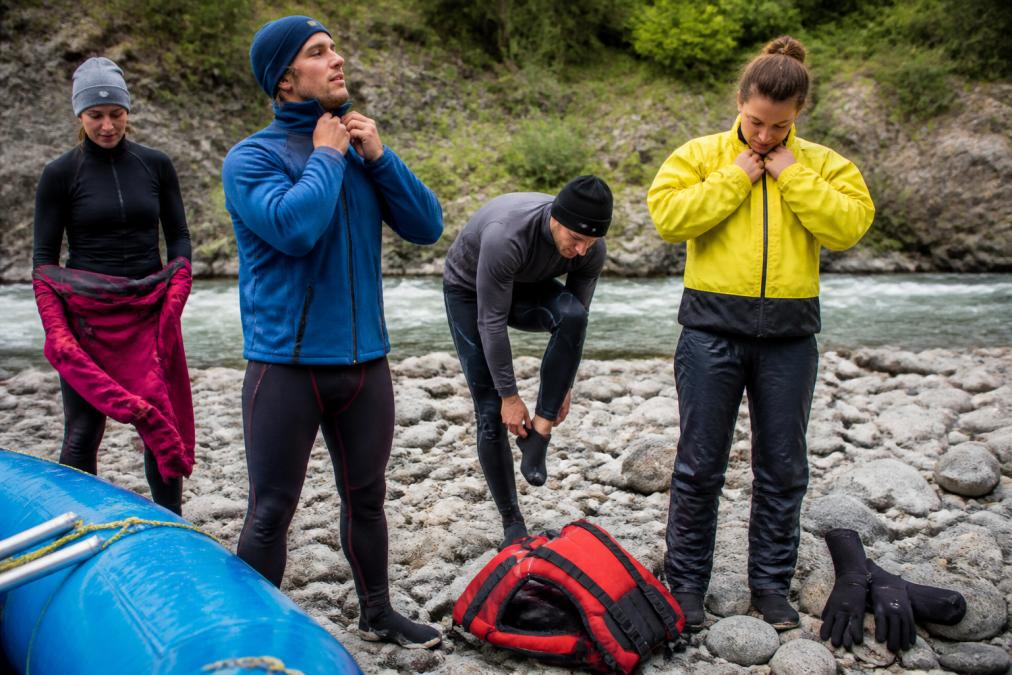
The best layering system for whitewater rafting is a three-part setup: a moisture-wicking base layer against your skin, an insulating mid-layer, and a waterproof splash jacket on top. Each layer handles a different job, and together they regulate your core temperature whether you’re paddling hard or sitting still in a shaded canyon.
Base Layer: Synthetic vs. Merino Wool
Synthetic base layers made from polyester or polypropylene move sweat away from your skin and dry quickly, which is why most river guides wear them. Merino wool does the same job, insulates even when damp, and resists odor on multi-day trips, though it costs more and dries more slowly. Avoid cotton entirely. Industry guidance for 2026 consistently recommends synthetic or wool base layers over cotton because cotton retains water and accelerates heat loss (Whitewatr packing checklist).
Mid-Layer and Splash Jacket
A fleece mid-layer traps warmth between your base layer and outer shell. Over it, a splash jacket with neoprene wrist and neck gaskets keeps spray and wave splash from soaking through. The gaskets are the part most people underestimate. A loose cuff seal lets cold water in on every rapid, and that trickle defeats the whole system.
Wetsuit vs Drysuit for Rafting: Which One Keeps You Warmer?
A practical decision framework most guides use:
- Water below roughly 50°F, high swim probability, or long exposure: drysuit with a fleece mid-layer underneath. The dry layer is what keeps you functional if you end up in the water.
- Water in the 50s to low 60s°F, moderate swim risk: a full wetsuit (3/2mm or 4/3mm) is usually the better call. It insulates while wet, so a swim doesn’t strip your warmth.
- Water in the 60s°F with warm air: a wetsuit or even a splash jacket over synthetic layers is often enough, especially on guided trips where the outfitter controls the line.
- Big Class IV-V rapids: ask your outfitter which option they provide and why.
If you’re renting, try the suit on before you launch. A wetsuit should feel snug, almost restrictive, across the chest and shoulders, with no loose folds at the lower back. If you can pinch more than an inch of fabric away from your spine, it’s too big and will flush on every rapid.
Some experienced paddlers argue a full wetsuit beats a dry top in high-swim-probability whitewater, precisely because a wetsuit keeps insulating when wet while a dry top only works if the seals hold (r/whitewater community discussion). That’s a legitimate position, the trade-off is that a wetsuit is colder when you’re standing around at the put-in and less comfortable on a multi-day trip where you can’t fully dry it overnight.
Whitewater Rafting Safety Gear Requirements You Can’t Skip
Whitewater rafting safety gear requirements start with a properly fitted personal flotation device, or PFD, and a helmet, both of which should be supplied and inspected by your outfitter. Never accept a PFD that rides up when you pull the shoulders. It won’t keep your head above water in a swim.
PFDs, Helmets, and Rescue Ropes
A PFD provides buoyancy and keeps your airway clear if you end up in the water. A helmet protects against rock strikes in shallow rapids. Rescue ropes, throw bags, and guided swiftwater training round out the safety kit, and professional outfitters now supply wetsuits, splash jackets, and booties as standard equipment on trips where water temperatures sit below 70 degrees Fahrenheit (REI Expert Advice on cold-water paddling).
What to Wear Rafting in Early Spring: Head-to-Toe Checklist
Early-spring water is often the coldest you’ll face all year, snowmelt-fed rivers can sit in the 40s°F even when the air is in the 60s. That temperature gap is what catches people out: they dress for the air, not the water. Cover every extremity, because fingers, toes, and ears lose heat first and are the hardest to rewarm once they’re cold.
- Synthetic or merino wool base layer, top and bottom, moves sweat off your skin so the next layer can insulate. Cotton is the one fabric to leave at home; it holds water and pulls heat from your core.
- Fleece mid-layer, traps warmth between your base layer and shell. Skip it and your splash jacket becomes a cold, wet shell with nothing underneath.
- Splash jacket with sealed cuffs and neck gasket, the gaskets are the part most people underestimate. A loose cuff seal lets cold water in on every rapid, and that trickle defeats the whole system.
- Wetsuit or drysuit, per outfitter recommendation, see the section above for how to choose. Fit matters more than thickness.
- Neoprene booties with a grippy sole, cold feet make everything worse, and a smooth sole slips on wet rocks at the takeout. Size them snug; loose booties flush and stay cold.
- Neoprene gloves or paddle gloves, your hands are in the spray constantly. If you run cold, bring a spare pair in a dry bag.
- Wool or synthetic beanie under your helmet, a huge amount of heat leaves through your head, and a wet cotton cap is worse than nothing.
- Quick-dry shorts or pants over the base layer, adds abrasion protection without holding water.
- Spare dry clothes sealed in a dry bag, this is the item people forget, and it’s the one that saves the day. See the recovery notes below.
Don’t wear cotton anywhere in this system, not as a base layer, not as socks, not as a hat. It soaks up water, loses what little insulation it had, and pulls heat away from your core. This is the one rule that has no exceptions on a cold river.
Sizing and Fitment: Where Cold-Water Setups Actually Fail
Most cold-water gear failures aren’t gear failures, they’re fitment failures. A base layer should sit snug against the skin with no bunching, because folds create air gaps that trap cold instead of warmth. Your splash jacket needs enough room to move your arms through a full paddle stroke without the hem riding up. Neoprene booties should feel tight but not cut off circulation; if your toes go numb before you launch, they’re too small.
Post-River Recovery: Warming Up After Cold Water
Warming up starts the moment you reach the takeout, not when you get back to the car. Peel off wet layers, towel dry, and pull on the dry clothes from your dry bag before you do anything else, standing around in a wet wetsuit is how a good day turns into a cold one. Warm, sweet fluids help, and so does moving around rather than sitting still.
Cold-water comfort comes down to three things: layers that stay dry, gear that fits snugly, and a dry change of clothes waiting at the takeout. Get those right and early-spring rafting is one of the best experiences on the river.
Sizing, Fitment, and Gear Maintenance Tips
Fitment is where most cold-water setups fail. A base layer should sit snug against the skin with no bunching, while your splash jacket needs room to move your arms through a full paddle stroke. Neoprene booties should feel tight but not cut off circulation. Rinse all neoprene gear in fresh water after every trip, dry it out of direct sun, and inspect gaskets and cuff seals for cracks before each season.
Rental vs. Buying: What Makes Sense for Your Trip
Renting beats buying for most first-time and occasional rafters, because a full cold-water kit runs into real money and takes up serious closet space. Outfitters supply wetsuits, splash jackets, booties, PFDs, and helmets as part of guided trips, so you only need to bring base layers, a mid-layer, and a warm hat. Buy your own gear if you raft several times a season or plan multi-day expeditions where fit and familiarity matter.
Post-River Recovery: Warming Up After Cold Water
Warming up after a cold-water run should start the moment you reach the takeout. Peel off wet layers, towel dry, and pull on dry clothes from your dry bag before you do anything else. Warm, sweet fluids help, and so does moving around rather than sitting still. Watch for cold shock symptoms in yourself and your group: uncontrollable shivering, slurred speech, and clumsy hands all signal that core temperature has dropped too far.
Frequently Asked Questions
What should you avoid wearing when whitewater rafting in cold conditions?
Cotton is the biggest mistake. It absorbs water and loses all insulating value, accelerating heat loss and raising hypothermia risk. Avoid jeans, cotton hoodies, and cotton socks. Also skip loose jewelry or anything that can snag on rigging. Stick to synthetic or merino wool base layers, neoprene footwear, and a properly fitted PFD. Industry guides consistently recommend eliminating cotton entirely for cold-water trips.
How do you prevent hypothermia while rafting in cold water?
Prevention starts before you launch. Wear a synthetic or wool base layer, add fleece insulation, and top it with a waterproof splash jacket or wetsuit. Protect extremities with neoprene booties, gloves, and a cap. Eat high-energy snacks and stay hydrated. If you swim, get out of the wind, remove wet layers, and change into dry clothing immediately. Guides on guided trips carry dry bags and extra layers for exactly this reason.
Is a wetsuit or drysuit better for cold water rafting?
It depends on water temperature and swim likelihood. A wetsuit traps a thin layer of water against your skin and keeps you warm even when soaked, making it ideal for high-intensity rapids where swimming is possible. A drysuit keeps water out completely but relies on insulation underneath and can be bulky. Many cold-water rafters choose a wetsuit paired with a splash jacket for the best balance of warmth and mobility.
Can beginners handle cold-water rafting trips?
Yes, with the right outfitter and gear. Reputable companies provide wetsuits, splash jackets, and booties as standard equipment for water below 70 degrees Fahrenheit. Guides brief beginners on paddle commands, self-rescue, and what to do if they fall in. Class III trips suit most beginners, while Class IV and V require more fitness. Always disclose your experience level when booking so the outfitter can match you to an appropriate river section.