
How to Choose Rafting Clothes for Plus Size Paddlers
Last Updated: November 5, 2026
Quick Summary
Choose rafting clothes for plus size paddlers as a three-layer system: a wicking synthetic or merino base layer with flatlock seams, an insulating fleece or neoprene mid layer, and a wind-and-water outer shell, each fitting close without pinching. Measure your chest, waist, hips, and inseam against the brand’s size chart rather than sizing up.
- Skip cotton entirely because it holds water, gets heavy, and chills you fast.
- A 3mm wetsuit handles most cool mountain water and stays flexible enough to paddle in.
- If you can pinch more than a half inch of fabric from your lower back, the suit is too big.
- A PFD that rides up over your ears when you raise your arms is too big.
- Pack quick-dry clothing, a full change of clothes, and a dry bag for the takeout.
Table of Contents
- Why Standard Rafting Clothes Fail Plus Size Paddlers
- What to Wear Whitewater Rafting: A Layering System That Works
- Plus-Size Swimwear for Rafting: What Actually Stays Put
- Plus-Size Wetsuits: Fit, Thickness, and When You Need One
- What to Pack for a Rafting Trip: Clothes and Extras
- How Rafting Clothes Should Fit When Wet
- Book Your Tuolumne River Trip With the Right Gear
- Frequently Asked Questions
Why Standard Rafting Clothes Fail Plus Size Paddlers
Most rafting gear is cut for a narrow range of bodies. If you wear a larger size, that becomes your problem on the river, not the manufacturer’s. This guide from Sierra Mac explains how to build rafting clothes for plus size paddlers that stay put, dry fast, and keep you warm when you get soaked.
Here is the core issue. A wetsuit that fits your chest but bags at the waist lets cold water pool against your skin. A PFD sized for a smaller torso rides up under your chin. Neither is a comfort problem. Both are safety problems.
The fix starts with a different layering approach, not a bigger version of the same suit.
What to Wear Whitewater Rafting: A Layering System That Works
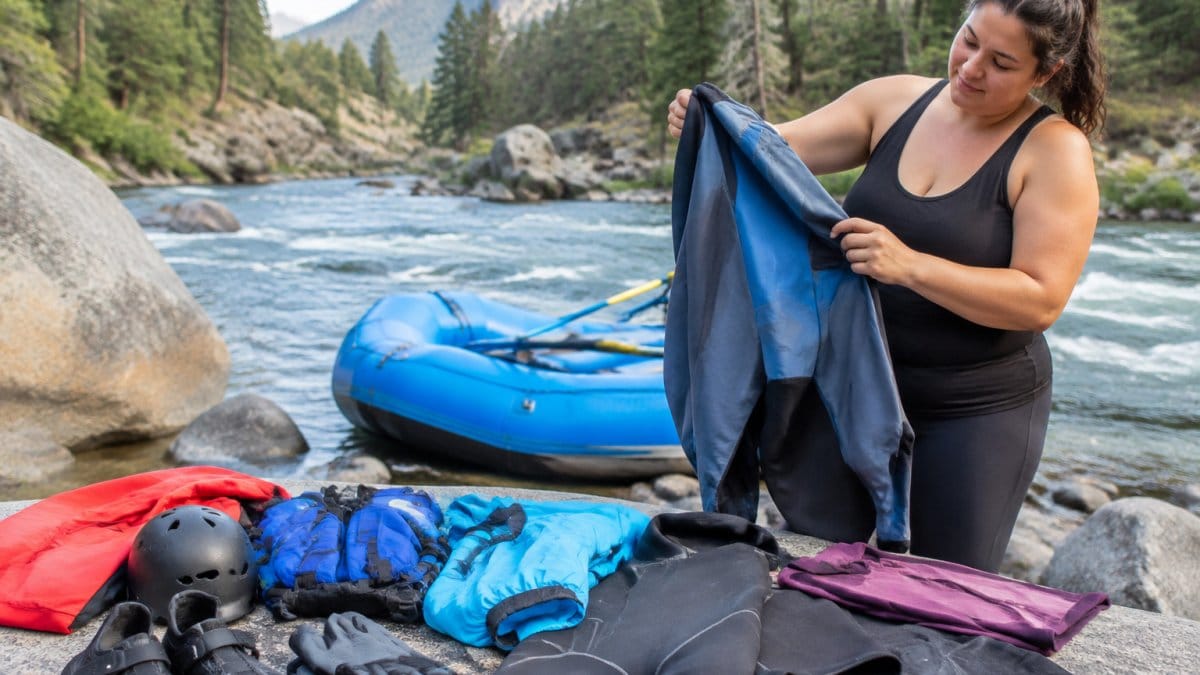
What to wear whitewater rafting comes down to three layers: a wicking base, an insulating mid layer, and a wind-and-water outer shell. Each layer should fit close to the body without pinching.
Base Layer: Moisture-Wicking and Seam-Friendly
Skip cotton entirely. It holds water, gets heavy, and chills you fast. Choose a synthetic or merino base layer with flatlock seams, which sit flush against the skin and cut down on chafing under a PFD.
Look for:
- Flatlock or welded seams at the shoulders and hips
- A longer torso length so the hem stays tucked
- Stretch panels at the waist rather than a tight elastic band
Mid Layer and Outer Layer for Cold Water
Cold water changes the math. Add a fleece or thin insulated mid layer under a splash jacket. For the coldest runs, a neoprene top or a well-fitted wetsuit does more than any shell.
For a deeper look at cold-water layering, read our guide to essential whitewater rafting gear for cold water.
Plus-Size Swimwear for Rafting: What Actually Stays Put
Plus-size swimwear for rafting needs two things: a secure fit and full coverage that won’t shift when you paddle hard. High-waisted bottoms and a snug rash guard beat a loose one-piece every time.
Plus-Size Wetsuits: Fit, Thickness, and When You Need One
A plus-size wetsuit works when the neoprene seals against your skin without restricting your stroke.
Start with thickness. A 3mm suit handles most cool mountain water and stays flexible enough to paddle in. A 2mm shorty works for warm summer flows where you mainly want splash and sun protection. Go to 4mm or 5mm only for genuinely cold water or long exposure, and expect a stiffer suit that takes more effort to pull on. Thicker neoprene is warmer but less forgiving across the shoulders and chest, which is exactly where plus-size paddlers need stretch.
Fit is where most people go wrong. The suit should feel snug like a second skin, with no loose folds at the lower back, under the arms, or behind the knees. You should be able to raise both arms overhead and rotate your torso without the suit pulling your shoulders forward or digging into your neck. If you can pinch more than a half inch of fabric away from your lower back, the suit is too big and will balloon with water.
Watch out: sizing up to get comfort is the most common mistake. Extra room lets water in, and a water-filled suit is heavy, cold, and hard to swim in. Measure your chest, waist, hips, and inseam and check them against the brand’s size chart rather than your usual clothing size. A close fit should follow your measurements without pinching, and the wetsuit sizing guide can help you judge where comfort ends and excess room begins.
A few fit checks before you commit:
- Pull the suit on dry and do a deep squat; the knees should bend without the neoprene cutting off circulation.
- Reach across your body as if paddling; the chest and shoulders should move freely.
- Check the neck and wrists; a loose seal there lets water in on every splash.
- Confirm the zipper sits flat and does not rub under a PFD.
If you paddle often, buy the suit that fits your measurements, not the size you wish you wore. For cold-water layering under and over the suit, see our guide to essential whitewater rafting gear for cold water.
Wetsuit thickness should match the water temperature and your exposure time.
| Thickness | Best for | Note |
|---|---|---|
| 2mm shorty | Warm summer flows | Splash and sun protection |
| 3mm suit | Most cool mountain water | Stays flexible enough to paddle in |
| 4mm or 5mm | Genuinely cold water or long exposure | Stiffer suit that takes more effort to pull on |
What to Pack for a Rafting Trip: Clothes and Extras
What to pack for a rafting trip breaks into three groups: what you wear on the water, what stays dry for the takeout, and what you leave behind. Pack quick-dry clothing, a full change of clothes, and a dry bag for anything that must stay dry. Then budget for the extras most guides never mention, because the gear and add-ons are where trip costs quietly climb.
What to wear on the water:
- Quick-dry shorts or leggings and a rash guard
- A warm mid layer for the shuttle and the takeout
- Water shoes with a secure heel strap, not flip-flops
- A hat with a retention strap and a strap for your glasses
- Reef-safe sunscreen and a refillable water bottle
What stays dry:
- A dry bag with a warm change of clothes, a towel, and dry shoes
- Any medication, in a waterproof container
- A phone in a waterproof case, if you carry one
What to leave behind: cotton, loose jewelry, and anything you would grieve if it went overboard.
Pricing depends on trip type, dates, and group size. For a current price or a quote, visit the Sierra Mac website, where you can also ask which items are included with your trip and which cost extra.
If you have questions about what your outfitter provides, check the frequently asked questions before you pack.
How Rafting Clothes Should Fit When Wet
Rafting clothes should fit close but never restrict movement when wet. Fabrics stretch and cling once soaked, so a piece that feels snug and dry in the shop can turn tight on the river. Do a squat, a reach, and a paddle motion in your gear before you commit.
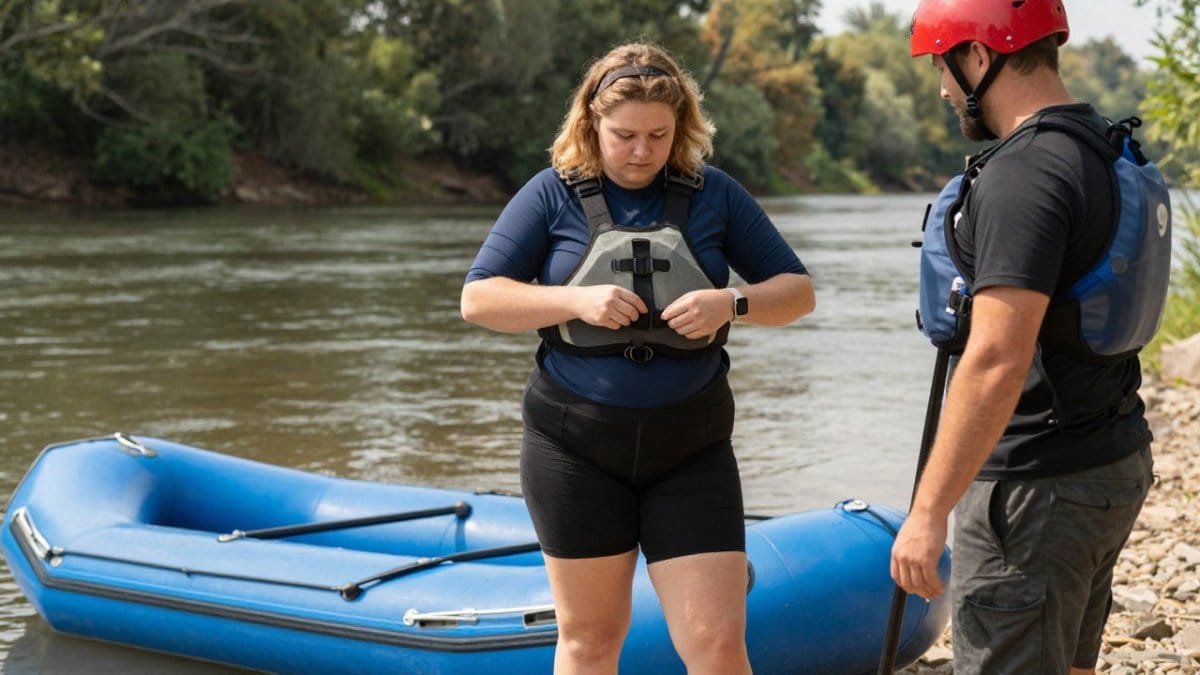
Watch out: a PFD that rides up over your ears when you raise your arms is too big, and one that digs into your neck is too small. Get the PFD fit right. It is the single most important piece of gear you will wear.
Book Your Tuolumne River Trip With the Right Gear
Gear sorted, the next step is picking your river. Sierra Mac runs guided trips on the Tuolumne, Merced, and Cherry Creek, from mild half-day floats to Class V runs.
When you are ready to plan, check our Tuolumne River rafting trips and our rates and dates to find the right fit for your group.
Frequently Asked Questions
What should plus-size paddlers wear for rafting?
Start with a moisture-wicking base layer and quick-dry shorts or leggings, then add a plus-size swimsuit underneath so nothing shifts when wet. Avoid cotton, which holds water and chills you. Add a fleece mid layer and a splash jacket in cold conditions. Your personal flotation device goes over everything, so choose smooth, low-bulk fabrics that let the PFD sit flat against your body without riding up.
Do you need a wetsuit for whitewater rafting?
Not always. On warm summer days, quick-dry layers and a swimsuit are enough. Wetsuits matter when water and air temperatures are low, such as spring runoff on Class IV-V stretches. For plus-size wetsuits, the suit should feel snug but let you raise your arms and sit in a paddling stance without pinching at the shoulders or hips.
Can you wear leggings whitewater rafting?
Yes, if they are synthetic and quick-drying rather than cotton. Leggings protect your legs from sun and minor scrapes and slide easily under a wetsuit. Look for flat seams and a high waistband that stays in place when wet. Avoid very thin leggings that turn transparent in water, and skip anything with loose cuffs that can catch on raft rigging or foot entrapment hazards.
How should rafting clothes fit when wet?
Fit should be snug but not restrictive. Wet fabric stretches and gains weight, so clothes that feel loose when dry can balloon in the water or drag. Check that you can sit, kneel, and swim in your layers before launch. Your PFD should tighten over your outermost layer, and nothing should bunch under the straps. Bring a dry bag with a warm change of clothes for the take-out.
The right clothes turn a cold, uncomfortable day into one you talk about for years. Sierra Mac has guided paddlers of every size and fitness level since 1965, with expert local guides, a range of trips from mild to intense, and a location just outside the park crowds. Get started with Sierra Mac and book a river trip built around your comfort and confidence.