
How to Pack Essential Camping Gear for a Yosemite Rafting Trip
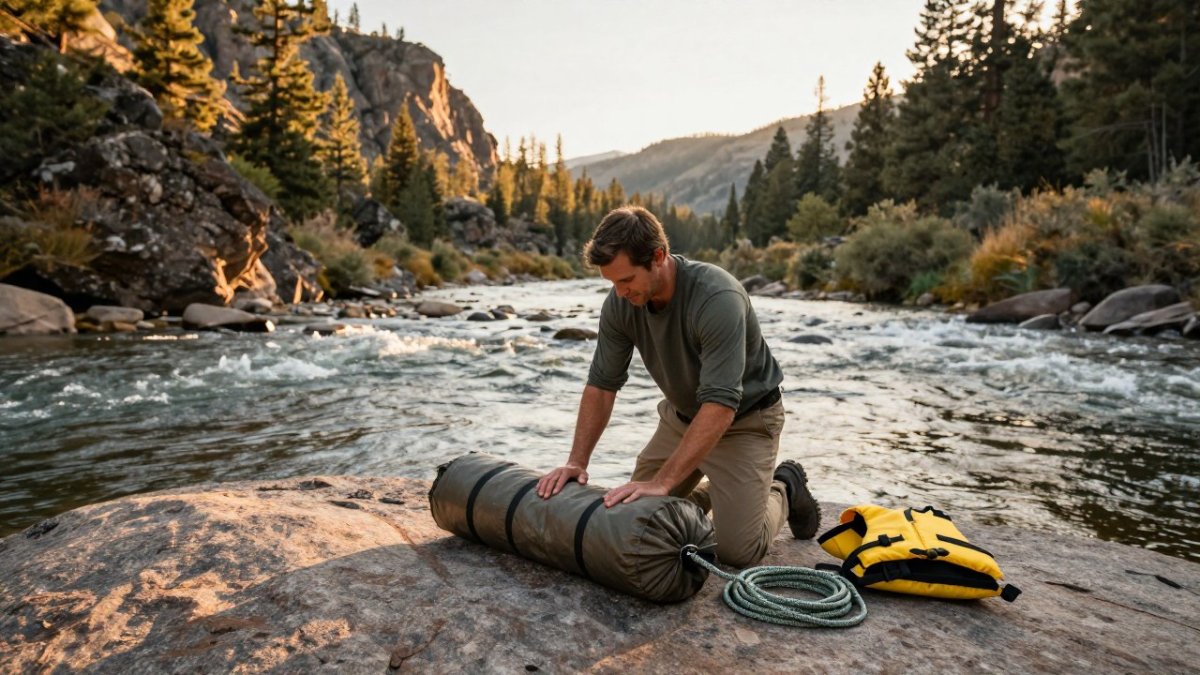
Last Updated: November 16, 2026
Quick Summary
To pack for yosemite rafting trips, plan your trip length, season and group needs first, then build your gear list around them. Use layered quick-drying clothing, rate sleeping gear for the coldest night, and keep gear in color-coded dry bags loaded in a fixed order.
- Decide early whether you are doing a day float or a multi-day trip, since that changes what you pack.
- Avoid cotton clothing, because once soaked it stays cold and heavy for hours.
- Pack sleeping bags in the innermost dry bag, since they are the hardest items to dry.
- Carry a filter as your main water treatment method and tablets as a backup.
- Yosemite has 13 campgrounds, but only four stay open year-round, so book early.
Table of Contents
- Plan Your Yosemite Rafting Trip Before You Pack
- Reserve Your Yosemite Camping Reservations Early
- What to Pack for Multi-Day Yosemite Rafting Trips
- River Camping Essentials: Keeping Gear Dry and Organized
- Food, Water, and Sanitation on the River
- Yosemite Camping Tips for Beginners: Safety and Regulations
- Booking Your Sierra Mac Trip and Next Steps
- Frequently Asked Questions
Plan Your Yosemite Rafting Trip Before You Pack
Packing for a Yosemite rafting trip starts long before you open the closet. At Sierra Mac, we have guided families and friends down the Tuolumne, Merced, and Cherry Creek rivers since 1965. Trips that go smoothly usually begin with a clear plan. Know your river, your dates, and your camping style first.
Decide early whether you are doing a day float or a multi-day trip. A day float means you return to a vehicle each night. A multi-day trip means everything you bring must survive being wet, sandy, and carried on your back.
A common mistake is packing for a generic camping trip. River camping adds its own needs: waterproof storage, quick-drying clothing, and gear that fits in a raft.
Plan for these questions before you buy or pack anything:
- Trip length: How many nights will you be on the river?
- Group size and ages: Who needs what, and who carries it?
- Season: Water levels and air temperatures change sharply from spring to late summer.
- Fitness level: Heavy packs and long days on the water are harder for some guests than others.
Write these answers down. They become the foundation for every packing decision that follows.
Reserve Your Yosemite Camping Reservations Early
Yosemite camping reservations fill fast, so book them as soon as your dates are firm. Yosemite has 13 campgrounds, according to the Yosemite Conservancy, but many close during the winter, and only four remain open year-round Yosemite Conservancy’s Know Before You Go guide for 2026. That means your options shrink quickly outside the busy season.
Check the National Park Service reservation system for current availability and rules. Plan around your rafting schedule so your camping nights line up with your river days.
Keep your reservation confirmation with you on the trip. Rangers may ask to see it, and having it on your phone or printed saves time at the entrance.
What to Pack for Multi-Day Yosemite Rafting Trips
Multi-day rafting trips reward careful packing. Bring enough gear to stay comfortable, but avoid extras that add weight and bulk to the raft. Our guides recommend organizing your gear into three groups: clothing, sleeping gear, and kitchen and water supplies.
For a complete packing list tailored to river trips, see our guide to what to pack for multi-day Yosemite rafting trips. It covers the essentials in more detail.
Clothing and Layering for Changing Weather
Mountain weather in Yosemite can shift from warm sunshine to cold, wet conditions in a single afternoon. Layering protects you from both heat and chill.
Pack these clothing items:
- Quick-drying synthetic or wool shirts and pants
- Warm wicking base layers for cool mornings and evenings
- A waterproof shell or splash jacket
- Wool or synthetic socks, plus a spare pair
- Waterproof boots or sturdy sandals with straps
- A hat, sunglasses, and gloves
Avoid cotton. Once cotton gets soaked, it stays cold and heavy for hours. Wool and synthetic fabrics dry faster and keep you warmer when wet.
Sierra Mac recommends a sun hat and waterproof sunscreen of at least SPF 30 for summer day trips Sierra Mac’s packing guidance for multi-day Yosemite rafting trips. The sun reflects hard off the water, so protection matters even on cloudy days.
Sleeping Gear, Tents, and Pads
Sleep is what keeps your group ready for the next rapid. Choose gear rated for the temperatures you expect, not the warmest weather you hope for.
Pack these sleeping essentials:
- A tent that packs small enough to fit in the raft
- A sleeping bag rated for the lowest nighttime temperature
- A sleeping pad for insulation from cold ground
- A headlamp or flashlight, with spare batteries
- A small pillow or a stuff sack filled with clothes
Camp at least 100 feet from water sources and trails, on a durable surface, as the National Park Service requires in its wilderness rules National Park Service wilderness regulations for Yosemite. Pitch your tent before dark so you can find a level, safe spot.
River Camping Essentials: Keeping Gear Dry and Organized
Wet gear is the most common problem on river trips, and most of it is preventable with a packing system decided before you launch.
A simple system most river campers settle into uses three tiers of bags:
- Overnight dry bags (largest): sleeping bags, sleeping pads, and camp clothes. These go in the raft’s center and come out only at camp.
- Day dry bags (medium): rain shells, warm layers, sunscreen, and lunch. These stay within arm’s reach on the water.
- Grab bags (smallest): phone, keys, medications, and a headlamp. These clip to a thwart or ride in a pocket so they never get buried.
Color-code the bags if you can. A common pattern is one color for sleep gear, another for kitchen and food, and a third for personal items.
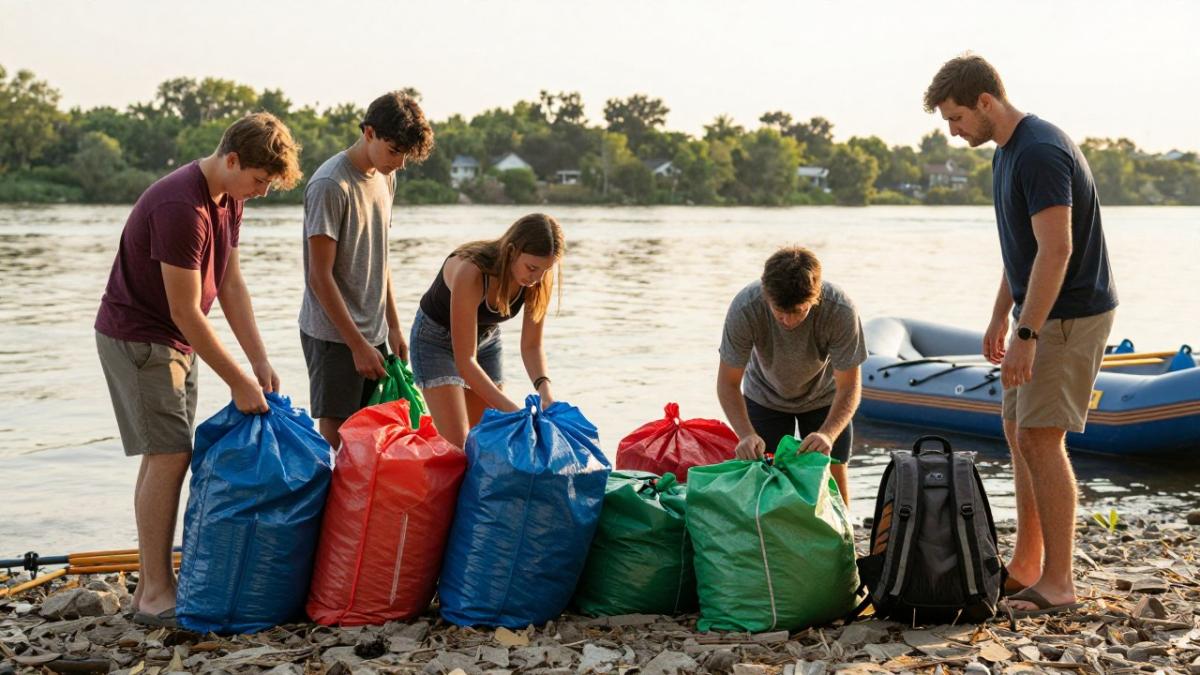
Roll-top dry bags seal reliably only when you roll the top at least three times and clip the buckle before the bag goes in the raft. Fold the bag closed so the opening faces down when you roll, which pushes trapped air out instead of sealing it in. Test every bag at home by filling it with a towel, sealing it, and submerging it in a bathtub for a minute.
Follow these loading and organization rules:
- Put sleeping bags in the innermost dry bag, since they are the hardest items to dry once soaked.
- Pack heavy items low and centered in the raft to keep it stable through rapids.
- Keep a small waterproof bag within reach for snacks, sunscreen, and your phone.
- Store sharp tools and trash in sealed containers, separate from food and sleep gear.
- Line the bottom of the raft with a mesh or perforated floor mat so water drains instead of pooling under your bags.
Watch out: a dry bag that is sealed with damp clothing inside will trap moisture and smell by the second morning.
For camping spot ideas along the Merced, read our Merced River rafting camping guide. It shows which riverside sites work well for overnight stays.
Food, Water, and Sanitation on the River
Plan meals that need little cooking and little cleanup, and plan your water as carefully as your food. On a multi-day river trip, drinking water is the item most likely to run short and the one most likely to make someone sick if it is handled carelessly.
Drinking-Water Planning
Plan generously for drinking water, adding more for hot afternoons on the water. Carry that water in rigid, food-grade containers rather than collapsible bags, which can puncture against raft frames. Keep a separate, clearly labeled container for wash water so no one mistakes it for drinking water.
Plan a reliable way to treat river or stream water before drinking it. The three common methods each have trade-offs:
- Pump or gravity filters: remove sediment and most pathogens, but can clog in silty water and need backflushing.
- Chemical tablets or drops: light and cheap, but take time to work and leave a taste some people dislike.
- Boiling: effective against pathogens, but uses fuel and time you may not want to spend at camp.
Most practitioners carry a filter as the primary method and tablets as a backup. Pre-filter cloudy water through a cloth before pumping so the filter element lasts longer.
Food Packing and Cooking
Pack food in sealed containers or dry bags to keep moisture and wildlife out. Choose meals that need only boiling water or no cooking at all, and pack ingredients in the quantities you will actually use so you are not carrying half-empty bags home.
Store all food and scented items securely at night, and never leave snacks in your tent. Follow the current National Park Service rules for food storage in Yosemite.
River-Camp Sanitation and Hygiene
Set up a simple handwashing station at camp: a water container with a spigot, a bottle of biodegradable soap, and a clean towel. Wash hands before cooking and after using the bathroom.
Use a sealed, dedicated trash bag for food scraps and wrappers, and pack out everything you bring in. Human waste rules vary by river corridor and season, so check current National Park Service requirements before your trip.
Watch out: dishwater dumped near the river bank concentrates food smells and attracts wildlife to camp.
For camping spot ideas along the Merced, read our Merced River rafting camping guide. It shows which riverside sites work well for overnight stays.
The table below summarizes the three common river water treatment methods and their trade-offs.
| Method | Strength | Trade-off |
|---|---|---|
| Pump or gravity filter | Removes sediment and most pathogens | Can clog in silty water; needs backflushing |
| Chemical tablets or drops | Light and cheap | Takes time to work; leaves a taste |
| Boiling | Effective against pathogens | Uses fuel and time at camp |
Yosemite Camping Tips for Beginners: Safety and Regulations
If you are new to camping in Yosemite, safety starts with knowing the rules. Check current National Park Service regulations before your trip, since they can change with conditions and seasons.
Keep these safety points in mind:
- Watch the water: River levels and flow change, so follow your guide’s instructions at all times.
- Wear your life vest: Keep it on whenever you are on or near the river.
- Tell someone your plan: Share your itinerary and expected return time with someone not on the trip.
- Check the weather: Conditions can change fast in the Sierra, so check the forecast before you leave.
- Respect wildlife: Keep your distance and store food properly.
Our guides are trained to handle river hazards and to keep groups safe. Always follow their directions on the water.
Booking Your Sierra Mac Trip and Next Steps
Once your gear list is ready, the next step is booking your river trip. Sierra Mac offers guided excursions on the Tuolumne, Merced, and Cherry Creek rivers, from mild half-day floats to multi-day Class V expeditions. Our location is just 15 miles from Yosemite’s northwest entrance.
Current prices and dates for each trip are listed on our rates and dates page. Pricing depends on the trip, the season, and the group size, so check the page or contact us for a quote.
When you are ready to reserve, use our online reservations page to secure your spot.
Frequently Asked Questions
What should I pack for a multi-day Yosemite rafting trip?
Pack a large waterproof backpack or dry bags, quick-drying wool or synthetic socks, waterproof boots, warm moisture-wicking layers, a waterproof shell, gloves, and a hat. Add a sun hat and waterproof sunscreen for summer days on the water. Keep a headlamp and a small flashlight in an easy-to-reach dry bag. Ask your outfitter for their current gear list, since requirements can vary by river and season.
What camping reservations do I need for Yosemite?
Many Yosemite campgrounds close during winter. Check the National Park Service reservation system early, especially for summer weekends, because popular sites book months in advance. If your rafting trip includes overnight camping, confirm with your outfitter whether they handle campsite arrangements or whether you need to secure your own spot.
How do you keep gear dry while river camping?
Use roll-top dry bags for clothing, sleeping bags, and electronics, and pack each category separately so you can grab what you need quickly. Place a liner inside your backpack and keep a small dry bag for items you reach for often, such as your headlamp and rain shell. Store food securely and keep water containers sealed to protect supplies.
What should I know before camping on a Yosemite rafting trip?
Check current Yosemite wilderness regulations for camping distances from water and trails before you go. Plan for changing water conditions and check forecasts before departure. Bring water treatment or filtration for drinking water, pack out all trash, and follow Leave No Trace practices to protect the river corridor for future visitors.