
Tuolumne River Rapid Classes: A Complete Guide
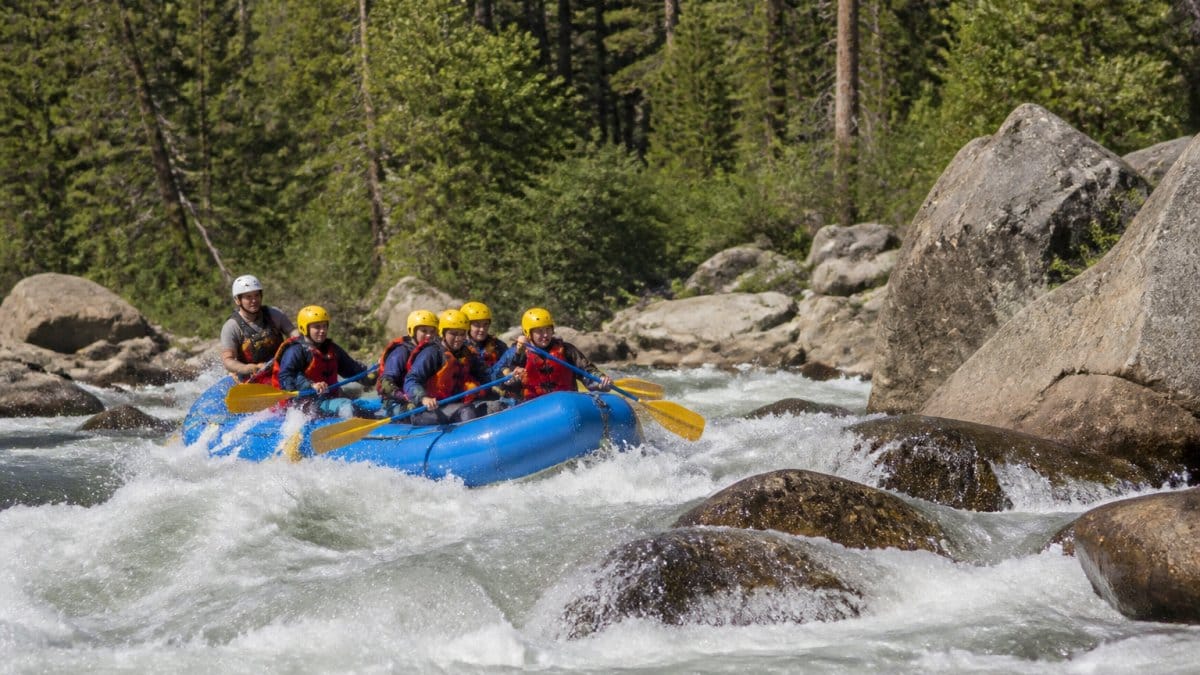
Table of Contents
- Understanding Tuolumne River Rapids and Whitewater Classification
- Main Tuolumne vs. Cherry Creek Rafting: Key Differences
- Tuolumne River Whitewater Difficulty: Mile-by-Mile Rapid Breakdown
- Tuolumne River Rafting for Beginners: What to Expect
- Tuolumne River Rafting Trip Length and Duration Options
- Notable Rapids and Landmarks You’ll Encounter
- Frequently Asked Questions
Last Updated: October 10, 2026
Understanding Tuolumne River Rapids and Whitewater Classification
The Tuolumne River offers some of the most challenging whitewater in California, and understanding what class rapids are on the Tuolumne River is essential before booking a trip. The river’s difficulty ranges from beginner-friendly Class II sections to expert-only Class V terrain, depending on which stretch you’re paddling and current water conditions. At Sierra Mac, we know that the classification system can feel confusing if you’re new to whitewater.
Rapid classification isn’t arbitrary. It’s a standardized system that helps paddlers, guides, and outfitters communicate risk, technical demand, and the specific skills required for safe passage. The Tuolumne River rapids demand respect, and knowing what you’re getting into before you push off is the difference between an unforgettable adventure and a dangerous miscalculation.
How Rapid Classes Are Rated
Whitewater rapids are classified on a scale from Class I to Class VI, with each level representing increasing technical difficulty, hazard, and consequence. Class I rapids are gentle ripples suitable for anyone in a boat. Class VI rapids are unrunnable by commercial outfitters and represent extreme danger.
The rating system considers several factors: the size and frequency of waves, the presence of obstacles like boulders and holes, the speed of the current, and the consequences of a mistake. A Class III rapid might have moderate waves and require active paddling but offers forgiving conditions if someone falls out.
One critical detail most guides skip: rapid classifications aren’t fixed. The same rapid can shift difficulty based on water flow. According to Sierra Nevada Ally’s Tuolumne rafting guide, Ram’s Head is typically classified as Class IV, but above 3,500 cubic feet per second, it becomes Class V.
Why Flow Levels Change Rapid Difficulty
Water flow, measured in cubic feet per second (cfs), fundamentally alters how a rapid behaves. At low flows, rocks protrude above the surface, creating obstacles but also offering natural stopping points. At high flows, those same rocks disappear underwater, but the current accelerates and creates larger, more powerful waves and holes.
A rapid that’s Class III at 1,500 cfs might become Class IV at 3,000 cfs and Class V at 5,000 cfs. The Tuolumne River’s flow varies seasonally, peaking in spring during snowmelt and dropping through summer and fall. This variability is why experienced outfitters check flow conditions before every trip and adjust their route recommendations accordingly.
Always ask your outfitter what the current flow is and how it affects the specific rapids you’ll encounter. A guide who knows the river at different flows can predict which sections will feel easier or harder than you might expect.
Main Tuolumne vs. Cherry Creek Rafting: Key Differences
The Tuolumne River has two primary commercial rafting routes: the Main Tuolumne and the Upper Tuolumne (also called Cherry Creek). These are distinct sections with different character, difficulty, and experience.
The Main Tuolumne is the classic run for intermediate and advanced paddlers. It spans roughly 18 miles and features consistent Class III and Class IV rapids with scenic canyon walls and manageable logistics.
The Upper Tuolumne, also known as Cherry Creek, is the serious expedition. According to Sierra Nevada Ally’s mile-by-mile Tuolumne guide, the Cherry Creek route contains nine miles of continuous Class IV and Class V rapids. This run is expert-only. There’s no coasting between rapids, it’s relentless, technical whitewater that demands constant focus and immediate paddle response.
For families and first-time paddlers, the Main Tuolumne delivers genuine adventure without overwhelming difficulty. For experienced rafters seeking the ultimate challenge, Cherry Creek is where you prove your skills against some of California’s most demanding whitewater.
Tuolumne River Whitewater Difficulty: Mile-by-Mile Rapid Breakdown
Understanding what class rapids are on the Tuolumne River means knowing the specific sections you’ll encounter. The Main Tuolumne route typically breaks down into three difficulty zones: early Class III sections, a sustained Class IV middle section, and a final technical push before takeout.
Main Tuolumne Rapid Sequence (Approximate Mile Markers)
Miles 0-5: Class II-III Warm-Up Section
The first few miles feature gentle Class II ripples and early Class III rapids that serve as warm-up terrain. Guides use this zone to assess paddler skill and build confidence before the more technical terrain. Suitable for beginners in good physical condition.
Miles 5-8: Class III Rapids
This zone contains several sustained Class III rapids including Jawbone and Tuolumne Falls (a scenic Class III drop). These rapids are characterized by moderate waves, manageable holes, and clear routes. Paddlers need basic whitewater experience and solid swimming ability.
Miles 8-14: Class IV Technical Section (The Heart of the Run)
This is where the Main Tuolumne demands serious attention. The river narrows, current accelerates, and technical lines become critical. Key rapids in this zone include:
- Clavey Falls (approximately mile 10-11): The most famous rapid on the Tuolumne. A technical Class IV drop at moderate flows (1,500-3,500 cfs), approaching Class V above 4,000 cfs. Water pours over a defined ledge into a churning pool. Guides approach with precision; paddlers hold tight as the boat drops and surges through the hole.
- Ram’s Head (approximately mile 11-12): An iconic Class IV rapid at moderate flows, climbing to Class V above 3,500 cfs. Named for the large boulder formation that creates the rapid’s character. Navigation requires reading the current and positioning the boat to avoid getting pinned on the rock.
- Hell’s Kitchen (approximately mile 12-13): A series of closely-spaced waves and holes that demand continuous active paddling. Relentless and technical, the kind of rapid that leaves paddlers breathless and grinning.
- Gray’s Grindstone and Boilermaker (approximately mile 13-14): Additional Class IV rapids that test paddler coordination and guide expertise. Each has its own character and demands specific boat positioning to run safely.
Paddlers must read the water, anticipate where the guide wants to position the boat, and execute strokes with purpose.
Miles 14-18: Class III-IV Exit Section
The final miles feature a mix of Class III and lighter Class IV rapids as the river opens up slightly. This section allows paddlers to recover and celebrate their accomplishment before takeout. Water is still technical but slightly more forgiving than the middle section.
Upper Tuolumne (Cherry Creek): Continuous Class IV-V Expert Terrain
The Upper Tuolumne, also called Cherry Creek, is a distinct and significantly more difficult run. According to Sierra Nevada Ally’s mile-by-mile Tuolumne guide, the Cherry Creek route contains nine miles of continuous Class IV and Class V rapids with minimal recovery sections between them. Notable rapids include:
- Clavey Falls (Cherry Creek section): Runs Class V at the flows typical for this section (often 3,500+ cfs).
- Priest Grade and Ishi are additional Class V rapids that demand expert-level decision-making.
There’s no coasting between rapids; it’s relentless, technical whitewater that demands constant focus and immediate paddle response. Multi-day trips on Cherry Creek are available for teams with genuine whitewater experience. This run is expert-only and not suitable for intermediate paddlers.
How Flow Changes These Ratings
The classifications above assume moderate spring flows (roughly 2,000-3,500 cfs). At lower summer flows (1,000-1,500 cfs), rocks protrude above the surface, creating obstacles but also offering natural stopping points; Class IV rapids may feel more like Class III. At high spring or early-summer flows (4,000-6,000+ cfs), those same rocks disappear underwater, the current accelerates, and Class IV rapids shift toward Class V. Always verify current conditions before booking, as your actual experience will depend heavily on the day’s flow.
Class V whitewater is not a place to test yourself if you’re unsure of your abilities. These rapids demand respect and humility. If you’re considering a Class V expedition, train on Class III and IV sections first.
Tuolumne River Rafting for Beginners: What to Expect
Many families worry that their children or less experienced paddlers won’t be ready for the Tuolumne River. The good news: the Main Tuolumne is absolutely suitable for beginners in good health who can follow instructions and stay calm.
A typical beginner trip starts with a safety briefing covering paddle strokes, brace techniques, and what to do if you fall out of the boat. Your guide will position less experienced paddlers in the middle of the raft where they’re most stable and can observe how more experienced paddlers contribute. The early Class III sections give everyone a chance to find their rhythm and build confidence before the Class IV terrain.
What makes the difference is choosing an outfitter with expert guides who understand how to manage mixed-ability groups.
Tuolumne River Rafting Trip Length and Duration Options
Trip duration on the Tuolumne depends on which route you choose and how much time you have.
Half-day trips (typically 3-4 hours on the water) focus on the gentler early sections of the Main Tuolumne. These are perfect for families with younger children or anyone wanting a taste of whitewater without a full-day commitment.
Full-day trips (6-8 hours including shuttle and breaks) cover the entire Main Tuolumne route. You’ll experience the full range of Class III and Class IV rapids, enjoy lunch on a beach, and finish with a sense of real accomplishment.
Multi-day expeditions on the Main Tuolumne or Cherry Creek allow deeper immersion into the river ecosystem. You’ll camp along the canyon, cook meals together, and experience the Tuolumne at a slower pace. These trips build camaraderie and let you develop paddling skills across multiple days of whitewater.
Notable Rapids and Landmarks You’ll Encounter
Several rapids define the Tuolumne River experience and deserve specific attention.
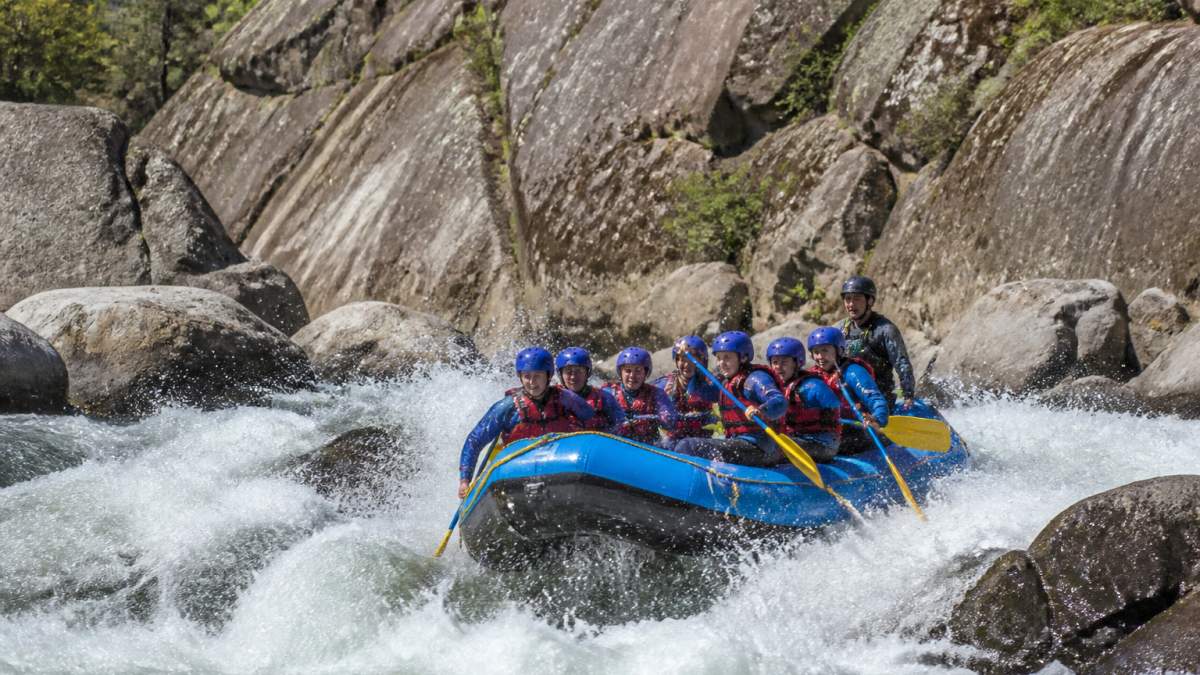
Clavey Falls is the most famous rapid on the Tuolumne, a technical Class IV-V drop that appears on most Main Tuolumne itineraries.
Ram’s Head is another iconic rapid, typically Class IV but climbing to Class V at higher flows. It’s named for the large boulder formation that creates the rapid’s character.
Hell’s Kitchen lives up to its name, a series of closely-spaced waves and holes that demand continuous active paddling. It’s relentless and technical, the kind of rapid that leaves paddlers breathless and grinning.
Gray’s Grindstone and Boilermaker are additional Class IV rapids that test paddler coordination and guide expertise. Each has its own character and demands specific boat positioning to run safely.
The Tuolumne’s canyon walls, granite formations, and pristine wilderness setting make these rapids more than just technical challenges.
The Tuolumne River’s whitewater classification system exists to help you make informed decisions about which trips match your skill and experience level. Sierra Mac has been guiding paddlers through these waters for over 60 years, and our expert local guides know how to match each guest with the right trip intensity. Check current river conditions and flow rates before booking to understand how conditions will affect your specific rapid difficulty on your chosen dates.
Frequently Asked Questions
What class are the rapids on the Tuolumne River?
The Tuolumne River contains Class III, Class IV, and Class V rapids depending on the section and water flow. The Main Tuolumne features primarily Class III and Class IV rapids suitable for intermediate paddlers, while the Upper Tuolumne section includes nine miles of continuous Class IV and Class V whitewater. Cherry Creek offers some of the most challenging Class V rapids in the region. Flow levels significantly affect classifications, the same rapid may rate Class IV at lower flows but Class V when water discharge exceeds 3,500 cubic feet per second.
Are Class IV rapids suitable for kids and beginners?
Class IV rapids are challenging and require intermediate paddling skills, making them unsuitable for complete beginners. However, younger paddlers aged 12 and up with swimming ability and some rafting experience can safely navigate Class IV sections with professional guides in a commercial trip. Beginners should start with Class II and Class III rapids to build confidence and skills. Always verify age and skill requirements with your outfitter before booking.
How long does a Tuolumne River rafting trip typically take?
Tuolumne River rafting trip length varies by section and outfitter. Half-day trips cover shorter sections with Class II-III rapids. Full-day trips tackle longer stretches including Class IV whitewater. Multi-day expeditions on the Upper Tuolumne allow paddlers to experience the full nine-mile Class IV-V section with camping. Trip duration also depends on water flow, which affects paddling speed and the time needed to scout or portage challenging rapids.
What is the difference between Main Tuolumne and Cherry Creek rafting?
The Main Tuolumne River offers a more accessible whitewater experience with Class III and Class IV rapids spread across a longer run, making it suitable for intermediate paddlers and families with older children. Cherry Creek is a shorter, more intense section featuring continuous Class V rapids and technical boulder gardens, reserved for expert paddlers only. The Main Tuolumne allows paddlers to build skills progressively, while Cherry Creek demands advanced whitewater experience and is typically offered as a guided commercial trip for thrill-seeking enthusiasts.