
Rafting vs Kayaking for Beginners: Which to Try First
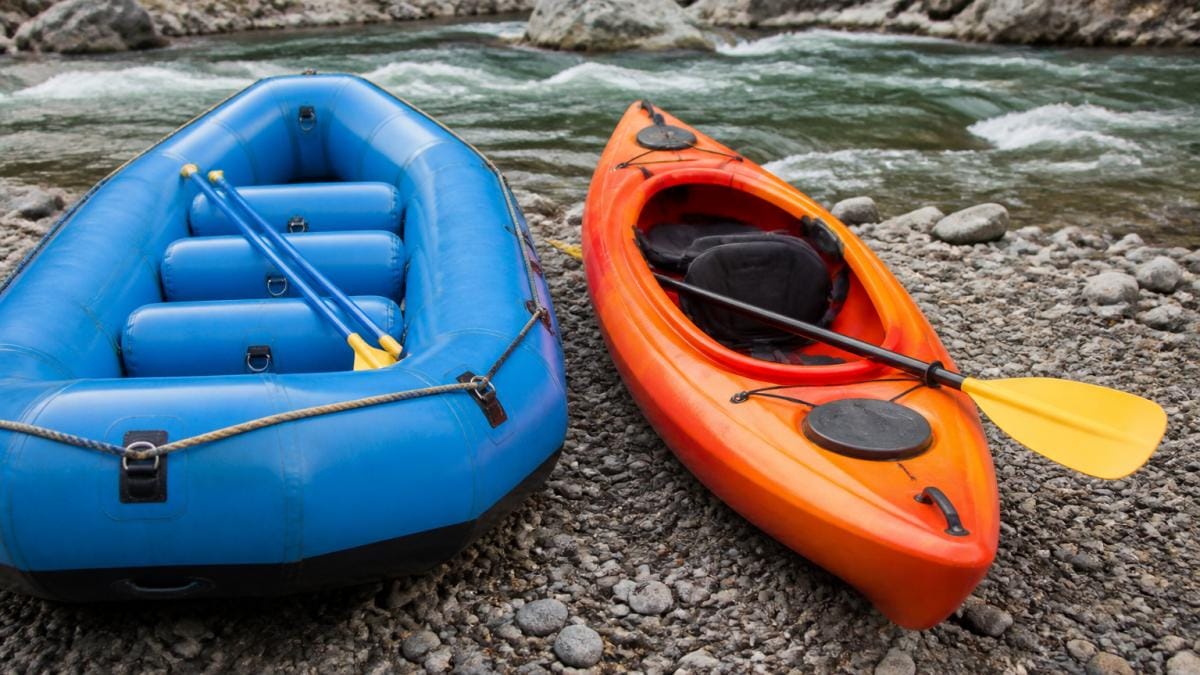
Table of Contents
- Rafting vs Kayaking for Beginners: The Quick Answer
- Rafting vs Kayaking: Side-by-Side Comparison
- Whitewater Class Ratings Explained
- Physical Requirements for Whitewater Rafting and Kayaking
- Beginner Whitewater Kayaking Gear: What You Actually Need
- Guided Raft Trip vs Kayak Lesson: Which Path Fits You
- The Beginner’s Decision Matrix: Matching Your First Trip to the Water
- Conclusion: Book Your First Whitewater Trip
- Frequently Asked Questions
Last Updated: October 4, 2026
Rafting vs Kayaking for Beginners: The Quick Answer
Rafting is the better first whitewater experience for most beginners. According to Paddling Life’s participation data, 13.6 million people kayak recreationally while 2.7 million take on whitewater, which tells you something important: most people who try paddling start where the water is forgiving.
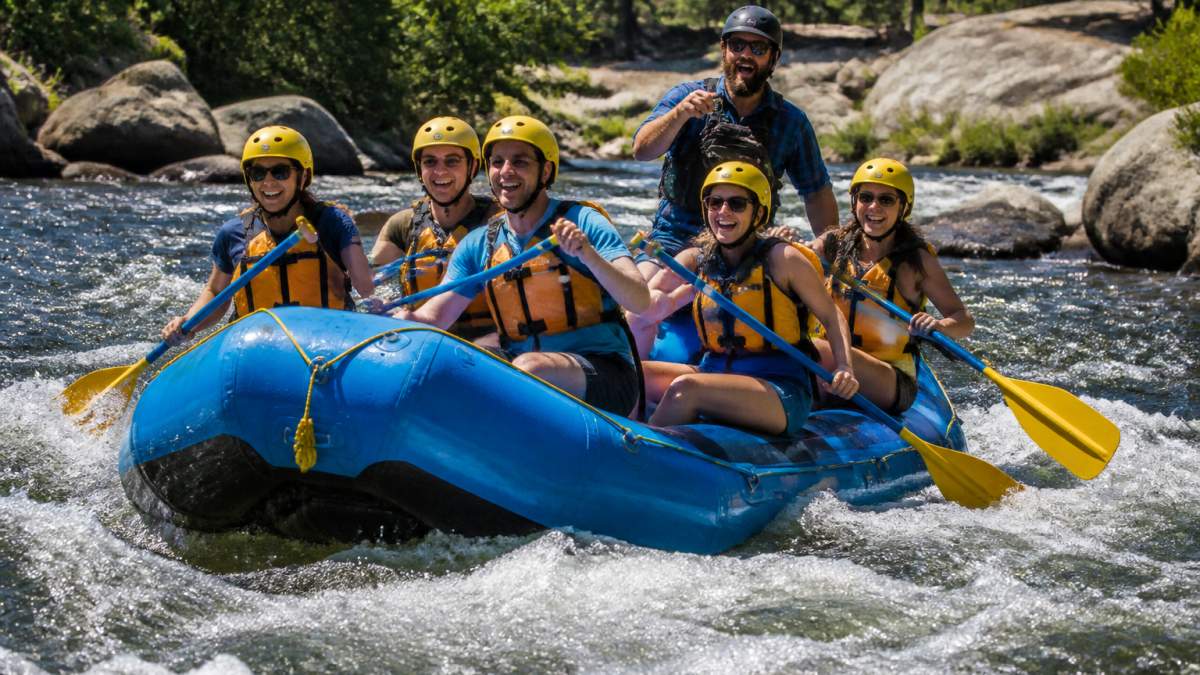
At Sierra Mac, we’ve watched this decision play out on the Tuolumne and Merced rivers since 1965. For thrills this weekend with your family, book a raft. For a skill you’ll build over seasons, start kayaking in a pool with an instructor.
Rafting gets you into Class III water in a single day. Kayaking typically takes several sessions of flatwater practice before you’re ready for the same rapids.
Rafting vs Kayaking: Side-by-Side Comparison
Whitewater rafting is a group activity in an inflatable boat steered by a guide, while whitewater kayaking is a solo sport in a decked, hard-shell boat you control yourself. That structural difference drives everything else: cost, safety, learning time, and next-day soreness.
| Factor | Rafting | Kayaking |
|---|---|---|
| Boat | Inflatable raft, 4-8 paddlers | Decked kayak, one paddler |
| Learning curve | Minutes to basic competence | Weeks to months for a reliable roll |
| Guide required | Yes, on commercial trips | No, but lessons strongly advised |
| Group size | 4-8 per raft | Solo, or small groups |
| Physical demand | Moderate, intermittent | High, continuous |
| Best for | Families, first-timers, groups | Independent, goal-driven paddlers |
What the Table Doesn’t Tell You
Cost structure. A guided raft trip is a per-person, per-day expense that includes the boat, guide, PFD, helmet, and shuttle, you show up with a swimsuit.
Injury exposure. Rafting injuries tend to be acute and incidental, a bumped knee, a tweaked shoulder, sunburn.
Adaptive and accessibility options. Both sports have entry points for paddlers with physical limitations.
The trade-off is simple. Rafting trades individual control for stability and collective effort.
If your deciding factor is fear of capsizing, limited mobility, or a single free weekend, raft. If it’s control, progression, and a skill you’ll own for decades, kayak, and budget a season, not a Saturday.
Whitewater Class Ratings Explained
Whitewater class ratings run from Class I to Class V, with Class I being smooth moving water and Class V being expert-only rapids with serious consequences. The American Whitewater system is the standard North American scale used by every commercial outfitter and kayak school.
Class I-II: Where Every Beginner Starts
Class I and II rapids are the standard beginner water for both sports: small waves, clear channels, few obstacles. This is where you learn a paddle stroke, how to sit a rapid, and how current pushes a boat. A Class II raft trip suits kids around 12 and up who are comfortable in water.
Class III-V: What Changes as the Water Gets Bigger
Class III brings bigger waves, tighter lines, and real consequences for a bad decision. Class IV is where guided experience becomes essential for most people. Class V is expert territory: large drops, complex hydraulics, little margin for error. Commercial Class V rafting exists, but only with highly experienced guides and rigorous safety protocols.
Most serious whitewater kayak accidents happen to paddlers with 12 to 18 months of experience, according to Inspired by Sports’ beginner safety guidance. That’s the danger zone: confident enough to run bigger water, not yet skilled enough to read it reliably.
Physical Requirements for Whitewater Rafting and Kayaking
Rafting asks for moderate fitness and a willingness to paddle hard for short bursts. Kayaking demands continuous core strength, shoulder endurance, and the ability to stay calm upside down. If you can hike a few miles and swim, you can handle most beginner raft trips.
What a Rafting Day Actually Asks of You
A commercial raft trip is interval work, not endurance work. You’ll paddle hard for 30 to 90 seconds through a rapid, then float and recover below it. The rest of the day is sitting, bracing your feet against the floor tubes, and reacting to the guide’s calls. What catches beginners off guard is rarely the paddling, it’s the bracing, the sun exposure, and the cumulative fatigue of four to six hours on the river.
What a Kayaking Day Actually Asks of You
Kayaking is continuous. You’re not resting between rapids, you’re eddying out, ferrying across current, and holding a brace angle while you wait your turn. The stroke is a core-driven rotation, not an arm pull, and beginners who paddle with their arms burn out in under an hour. The capacities that matter most:
- Core and trunk rotation, the engine behind an efficient forward stroke
- Shoulder endurance, you’ll take thousands of strokes in a session
- Hip flexibility and a reliable hip snap, the foundation of the roll and the brace
- Comfort being inverted, the wet exit is a skill, but tolerating the moment before it is a temperament
New kayakers often have a strong first hour followed by a sharp drop-off, because the muscles that stabilize the boat aren’t the ones most people train. Expect your first few sessions to end early, that’s normal.
Age, Size, and the Assumptions Beginners Make
Size and age matter less than people assume. We’ve taken paddlers in their late 60s down serious whitewater in a raft, and adaptive kayak programs exist for limited lower-body mobility. The boat does much of the work; your job is to stay relaxed and follow instructions. The real predictors of a good first day are comfort in moving water, a willingness to listen, and the humility to swim a rapid rather than fight it.
The Recovery Nobody Warns You About
Paddling is a full-body activity in an unfamiliar posture, and the day-after soreness is real:
- Forearms and grip. Death-gripping the paddle shaft is the most common beginner habit. Loosen your grip between strokes and the forearm burn drops dramatically.
- Shoulders and upper back. The day after a first kayak session, most people feel it between the shoulder blades. Gentle mobility work and hydration help more than rest alone.
- Low back. Seated bracing loads the lumbar spine. Stand up and walk around at every eddy and every takeout.
- Hands. Blisters are the beginner’s badge. Gloves or a paddle with a smaller shaft diameter solve most of it.
A practical rule: plan nothing strenuous the day after your first kayak session, and a light evening after your first raft trip. Second-day soreness is normal.
If you have a history of shoulder dislocation, rotator cuff injury, or chronic low-back pain, get a physician’s clearance before your first kayak session. Rafting is the gentler entry point for those conditions, but even a raft trip involves bracing and sudden loads.
Beginner Whitewater Kayaking Gear: What You Actually Need
The non-negotiable beginner kayaking kit is a helmet, a personal flotation device (PFD), a spray skirt, a paddle, and a boat appropriate to your local water. Everything else is comfort, not safety.
- Helmet: Impact-rated, snug, and never borrowed from a bike rack
- PFD: Type III or V, fitted so it doesn’t ride up when you’re in the water
- Spray skirt: Keeps water out of the cockpit so you can brace and roll
- Paddle: 194-200 cm for most adults, with a feathered or unfeathered blade depending on preference
- Throw bag and river knife: Standard on any moving-water trip, even a mild one
A commercial raft trip supplies all of the above. If you’re buying your own kayak kit, expect to spend real money before you ever touch Class III water.
Choosing Your First Boat: River Runner, Creek Boat, or Playboat
Three hull types dominate beginner conversations. A river runner like the Jackson Zen balances speed and stability, the default first boat for most people on Class II-III water. A creek boat such as the Dagger Code prioritizes volume and forgiveness, and it’s what most instructors hand to students. A playboat is for surfing and tricks; the wrong first purchase unless you already paddle well.
Buy your first kayak used. Beginner river runners hold their value, and you’ll know within one season whether you actually want to commit to the sport.
Guided Raft Trip vs Kayak Lesson: Which Path Fits You
**A guided raft trip gets you on real whitewater today with zero prior experience.
Guided rafting is the clear winner for families, groups of friends, and anyone whose priority is the experience rather than the skill.
Kayak lessons make more sense if you’re drawn to the technical side. Expect your first session on flatwater learning the wet exit, the brace, and the forward stroke before you see a rapid.
Families with kids 12 and up, groups of friends, and anyone who wants a real Class III rapid on their first river day.
The Beginner’s Decision Matrix: Matching Your First Trip to the Water
Match the boat to the water class, your group, and your goal. Use this framework before you book anything.
| Your Situation | Best First Choice | Why |
|---|---|---|
| Family with kids 12+ | Guided Class II-III raft trip | Stability, guide support, group fun |
| Solo adult, wants a skill | Beginner kayak lesson on flatwater | Builds the roll and stroke base |
| Group of friends, one day | Guided Class III-IV raft trip | Adrenaline without a months-long commitment |
| Nervous swimmer | Class II raft trip with a guide | Lowest psychological barrier, highest support |
| Fit, goal-driven, patient | Kayak course, then Class II river runner | Long-term skill progression |
| Limited lower-body mobility | Adaptive raft or kayak program | Both sports have accessible entry points |
Fear of capsizing stops more beginners than fitness does. A raft removes that fear almost entirely, which is why it’s the better gateway for most people.
Conclusion: Book Your First Whitewater Trip
The gap between wanting to try whitewater and actually doing it is usually logistics and nerves, not fitness. Start with a guided raft trip on Class II-III water, learn how a river moves, and decide afterward whether kayaking is worth the longer apprenticeship. Sierra Mac has run trips on the Tuolumne, Merced, and Cherry Creek rivers since 1965, with professional local guides, trips from half-day floats to multi-day Class V expeditions, and a put-in just 15 miles from Yosemite’s northwest entrance.
Frequently Asked Questions
Is rafting safer than kayaking for beginners?
Rafting is widely considered the safer entry point. You share a stable, high-buoyancy inflatable with five or six other paddlers, and a professional guide reads the current and calls every stroke. Kayaking puts one person in a small, tippy boat that demands a wet exit and roll before you can handle Class II water confidently. Industry guidance consistently names rafting as the more accessible first step, which is why most outfitters start beginners on guided trips rather than solo boats.
What gear do I need for my first whitewater trip?
For a guided raft trip, the outfitter supplies the raft, paddle, helmet, and personal flotation device, so you mainly need a swimsuit, quick-dry layers, secure footwear, and sunscreen. Beginner whitewater kayaking gear is a bigger commitment: a river runner or creek boat, spray skirt, helmet, PFD, paddle, throw bag, and a wet suit or dry suit for cold water. Many paddlers rent a kayak and take a lesson before buying anything, which keeps the initial cost manageable.
Can I go whitewater rafting if I don’t know how to swim?
Many commercial outfitters allow non-swimmers on Class I to III trips, provided you wear a properly fitted personal flotation device and listen carefully to the safety briefing. Your PFD keeps you buoyant and face-up, and guides are trained in water rescue with throw bags ready. That said, tell your outfitter before booking. They may steer you toward a milder stretch of river or a calmer section, and they will pair you with a guide who can keep an eye on you.
What is the 120 rule for kayaking?
The 120 rule is a cold-water safety guideline: if the air temperature plus the water temperature adds up to less than 120 degrees Fahrenheit, wear protective immersion gear such as a wet suit or dry suit. A 75-degree day on 45-degree snowmelt water adds up to 120 and still warrants insulation. Cold shock and loss of grip strength hit fast, and most beginner accidents trace back to underdressing for water temperature rather than air temperature.
What is a good first whitewater kayak for a beginner?
A forgiving river runner or creek boat is the standard recommendation. The Jackson Flow, Dagger Code, and Jackson Zen all appear in beginner instruction programs because their hull shapes stay predictable in turbulent water. Creek boats like the Dagger Code trade speed for stability, which suits learners who want forgiveness over performance. Avoid playboats and low-volume designs until you can roll and ferry confidently. Most beginners also take a professional course before buying a boat.