
Benefits of Guided Rafting Trips: 7 Life-Changing Perks
Table of Contents
- Why Guided Rafting Trips Are More Than Just a Thrill
- The Physical Benefits of Whitewater Rafting: Full-Body Fitness on the River
- Mental Health and Stress Reduction: The Psychological Payoff
- The Benefits of Multi-Day Rafting Expeditions: Deep Immersion and Lasting Bonds
- Whitewater Rafting Safety Standards: How Professional Guides Protect You
- Connection with Nature and Environmental Stewardship
- Accessibility and Inclusivity: Who Can Benefit from Guided Rafting?
- Frequently Asked Questions
Last Updated: October 1, 2026
Why Guided Rafting Trips Are More Than Just a Thrill
Participants in multi-day river expeditions reported a 29% reduction in PTSD symptoms and a 21% decrease in general stress levels just one week after their trip, according to Sierra Mac’s expedition outcomes data. That is not a marketing claim. It is the kind of result that shows up when you combine physical exertion, cold freshwater, and hours away from a screen. Guided rafting is a professionally led whitewater river trip in which a trained guide handles navigation, safety, and logistics so participants can focus on the experience itself.
The Physical Benefits of Whitewater Rafting: Full-Body Fitness on the River
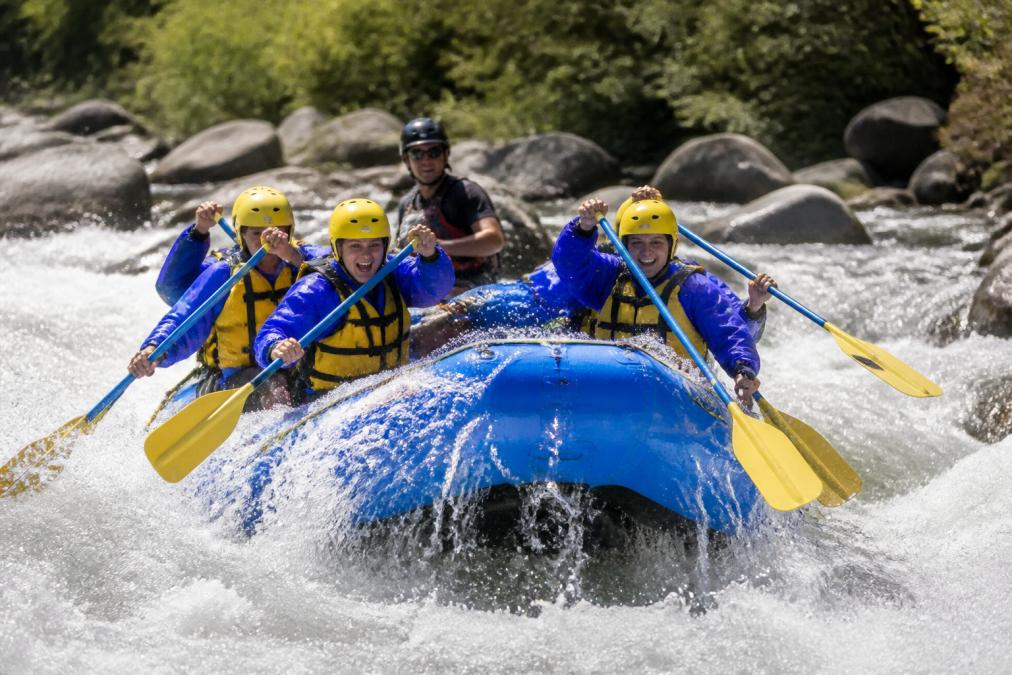
Whitewater rafting delivers a full-body workout most gym routines cannot replicate. Constant paddling engages the arms, shoulders, back, and core, while the unstable platform of a moving raft forces stabilizing muscles to work continuously.
Cardiovascular Health and Stamina
Sustained paddling raises heart rate into an aerobic zone for extended periods. On a half-day trip, that means 90 minutes or more of intermittent cardiovascular work, broken up by calmer stretches that let you recover before the next rapid.
Core Strength and Physical Stability
Every paddle stroke transfers force from your torso through your arms. Holding position against moving water requires continuous core activation, building functional stability that supports everyday movement and reduces injury risk in other activities.
Calories Burned and Muscle Engagement
According to GoWhitewater’s paddling exertion estimates, rafters burn roughly 350 to 700 calories per hour depending on water conditions, body weight, and how hard they paddle. That range reflects the reality that you control your own intensity. A relaxed scenic float burns less than an aggressive Class IV push.
| Benefit Area | What Happens | Typical Intensity |
|---|---|---|
| Cardiovascular | Sustained aerobic paddling | Moderate to high |
| Core strength | Continuous stabilization | Moderate |
| Muscle engagement | Arms, shoulders, back | Moderate to high |
| Calorie burn | 350-700 per hour | Varies by effort |
Paddle with your torso, not just your arms. Guides see beginners exhaust themselves in the first 20 minutes because they treat the paddle like a dumbbell. Rotating your trunk with each stroke spreads the load across larger muscle groups and keeps you fresh for the bigger rapids.
Mental Health and Stress Reduction: The Psychological Payoff
The psychological benefits of whitewater rafting often outlast the physical ones. A 2026 report from Idaho River Adventures on wellness travel trends found that stress reduction and anxiety relief have become primary reasons guests book guided river trips, not secondary perks.
Anxiety Relief and PTSD Symptom Reduction
Researchers attribute this to aerobic exercise, nature immersion, and the forced present-tense focus that rapids demand.
Digital Detox and Nature Immersion
Canyon stretches along the Tuolumne and Merced have no cell service. That is a feature, not a limitation. Dinosaur River Expeditions on disconnection trends notes growing demand for experiences that deliberately remove digital distractions. A few days without notifications resets attention in ways a weekend at home rarely does.
The mental health payoff of a guided rafting trip comes from stacking three things at once: aerobic exercise, nature immersion, and genuine disconnection. Remove any one of them and the effect weakens.
The Benefits of Multi-Day Rafting Expeditions: Deep Immersion and Lasting Bonds
A single-day float gives you a taste. A multi-day expedition changes the way your nervous system operates, through the compounding effect of sleeping outdoors, eating camp meals, paddling consecutive days, and living on river time. Most guests describe the shift somewhere on day two, when the mental static finally quiets.
Why Duration Matters More Than Difficulty
A Class III half-day trip and a Class III multi-day trip run the same whitewater but do not produce the same outcome. The American Camp Association has long documented that immersive outdoor programs of several consecutive days produce larger gains in confidence, social connection, and emotional regulation than single-session experiences, because the brain needs repeated exposure to a novel environment before it stops treating it as a threat.
Team Building and Social Connection
A raft is a small, interdependent unit. Paddling in sync, responding to guide calls, and navigating rapids together builds team coordination fast. Groups of friends or coworkers who share a multi-day trip consistently report stronger bonds than those who share a single afternoon, and the reason is structural: on a one-day trip, everyone returns to their separate lives that evening.
Confidence, Resilience, and Personal Growth
Running a rapid you were nervous about changes how you see yourself. Multi-day expeditions stack those moments: each successful rapid builds confidence for the next, and by the final day, hesitant guests are often asking about harder routes. Fear followed by competence followed by reward is the same loop that builds resilience in therapy, in sport, and in life.
Post-Trip Psychological Benefits: Sleep, Attention, and Digital Detox
One of the most underreported benefits of a multi-day trip is what happens after you get home. Guests routinely report sleeping better for one to two weeks following an expedition, a pattern consistent with research on nature immersion and circadian reset. The combination of physical exertion, morning light exposure, and the absence of artificial blue light after dark does something a weekend at home cannot replicate.
Multi-day trips are not just longer single-day trips. They are a different category of experience, because the benefits depend on duration, repetition, and the removal of everyday inputs. If you want the psychological payoff, book the overnight.
::: Extended immersion in the wilderness mirrors the profound psychological shifts often associated with wellness retreat benefits, allowing the nervous system to fully recalibrate away from the relentless pace of modern life.
Choosing the Right Multi-Day Format
Multi-day itineraries range from two-day introductory floats to five-day Class V expeditions. The right choice depends less on fitness than on how much time you can genuinely disconnect: a two-day trip is enough to feel the shift, while four or five days is where most guests report the deepest changes in mood, sleep, and perspective.
Whitewater Rafting Safety Standards: How Professional Guides Protect You
Most articles about rafting benefits skip safety entirely, treating it as a disclaimer rather than a feature. Learning to operate in a managed-risk environment is itself one of the most transferable benefits of a guided trip: you are not just getting a workout and a view, but a supervised lesson in how to assess risk, follow protocol, and stay calm when conditions change.
Understanding Risk and Injury Data
An analysis published in the Journal of Park and Recreation Administration examined 149 guest injuries reported across commercial trips over a five-year period from 2017 to 2021. That figure, drawn from outfitter-reported data, reflects a sport with real physical risk that operators track and manage systematically. The same data collection exists precisely so outfitters can refine protocols.
The Role of Expert Guides and Safety Protocols
Guides are the control layer. They read water conditions, set the line through each rapid, brief guests on paddle technique, and carry rescue equipment. Sierra Mac has guided these rivers since 1965, and its teams run the Tuolumne, Merced, and Cherry Creek, including commercial Class V expeditions on Cherry Creek.
Risk Management as a Personal Development Skill
Here is the benefit most articles miss. On a guided river trip, you watch professionals model risk assessment in real time: checking flows, scouting rapids, adjusting plans when conditions shift, and communicating clearly under pressure. Many guests leave with a sharper instinct for distinguishing real risk from perceived risk, a skill that transfers directly to driving, travel, parenting, and career decisions.
What to Ask Before You Book
A reputable outfitter will answer these questions without hesitation:
- What is your guide training program, and how many hours does it require?
- What is your guest-to-guide ratio on the trip I am booking?
- How often is equipment inspected, and who performs the inspection?
- What is your protocol if a guest is injured or a rapid is running above safe levels?
- Are guides certified in wilderness first aid or CPR?
If an operator dodges any of these, walk away. The cheapest trip is rarely the safest one, and the safest operators are usually the ones most willing to talk about their protocols in detail.
Never book a river trip based on price alone. Outfitters that cut corners on guide training, equipment inspection, or guest-to-guide ratios are the ones that generate incident reports. Ask any operator how they train guides and what their safety record looks like before you pay a deposit.
Connection with Nature and Environmental Stewardship
Spending a full day on a river changes how you relate to it. Guides who work these watersheds professionally tend to be the most vocal advocates for keeping them clean, and that ethic transfers to guests. Many outfitters, including Sierra Mac, follow leave-no-trace practices on every trip and brief guests on packing out what they bring in.
Accessibility and Inclusivity: Who Can Benefit from Guided Rafting?
Guided rafting is more accessible than its reputation suggests. Outfitters run trips across a wide difficulty range, from mild half-day floats suitable for families with kids aged 12 and up to intense Class V expeditions for experienced thrill-seekers. The key variable is not age or athleticism but choosing the right river section for your group.
| Trip Type | Typical Guest | Fitness Demand | Duration |
|---|---|---|---|
| Scenic float | Families, older adults | Low | Half day |
| Class III-IV | Active adults, teens | Moderate | Full day |
| Multi-day expedition | Groups, adventurers | Moderate to high | 2-5 days |
| Class V | Experienced rafters | High | Full day or multi-day |
Frequently Asked Questions
Is rafting good exercise?
Yes, rafting is excellent exercise. According to GoWhitewater (2026), you can burn 350 to 700 calories per hour depending on intensity. The constant paddling engages your core, arms, and shoulders, improving cardiovascular health and stamina. A guided trip ensures you use proper technique, maximizing the physical benefits of whitewater rafting while reducing injury risk.
What are the safety benefits of hiring a professional rafting guide?
Professional guides are trained in whitewater rafting safety standards, including reading rapids, rescue techniques, and first aid. They manage risks so you can focus on fun. Data from the Journal of Park and Recreation Administration (2022) shows that commercial outfitters report relatively few injuries, with 149 incidents over five years across many trips, thanks to strict safety protocols and expert leadership.
Why choose a multi-day rafting expedition over a day trip?
Multi-day trips offer deeper immersion and stronger bonds. The benefits of multi day rafting expeditions include more time for nature connection, digital detox, and team building. Plus, guides handle all logistics, so you relax and enjoy the journey.
How do professional guides enhance the rafting experience?
Guides enhance safety, skill, and enjoyment. They provide paddling technique instruction, navigate rapids, and share local knowledge. With expert guidance, you can confidently tackle challenging rapids and learn about the river’s ecosystem. This transforms a simple float into a rich, educational adventure that builds confidence and resilience.