
What to Expect on Class V Rapids: A Guide
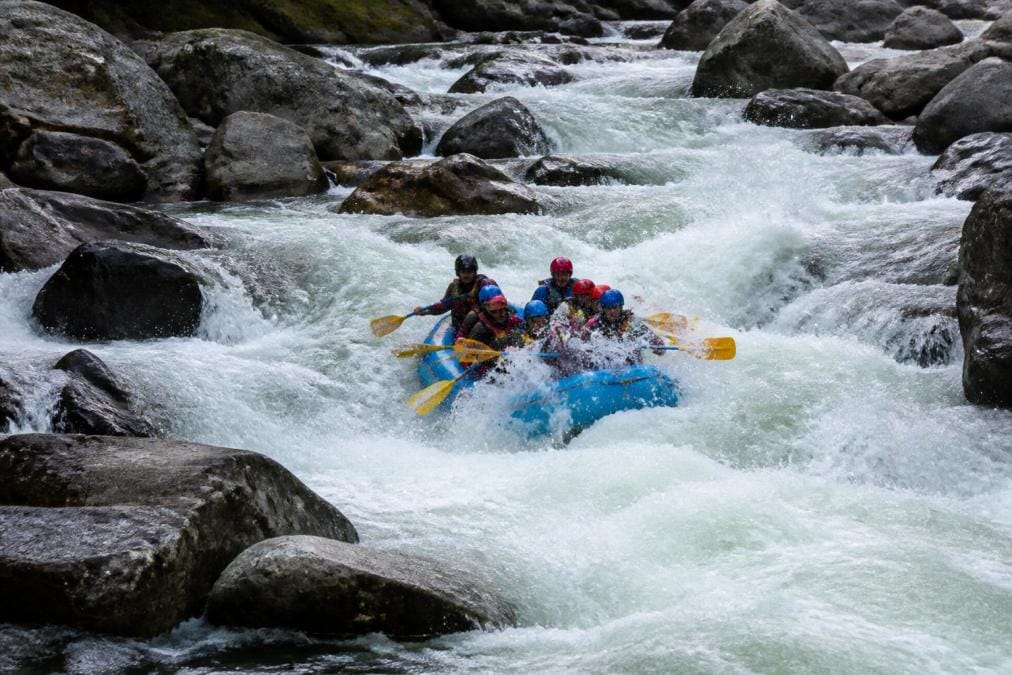
Table of Contents
- Understanding Class V Rapids and the Whitewater Classification System
- Physical Requirements for Class V Rafting
- What You’ll See: Hydraulics, Drops, and Chaotic Currents
- Whitewater Rafting Safety Protocols and Gear Requirements
- Risks of Class V Whitewater and Real Injury Data
- How to Prepare: Scouting, Paddle Technique, and Psychological Readiness
- What Happens After: Recovery and Debrief
- Frequently Asked Questions
Last Updated: September 2, 2026
Understanding Class V Rapids and the Whitewater Classification System
Class V rapids represent the upper boundary of what commercial outfitters safely guide on. These extremely difficult stretches feature steep drops, massive waves, holes that can trap paddlers, and constricted channels requiring critical maneuvering above unavoidable hazards.
The whitewater classification system ranges from Class I (flatwater) through Class VI (unrunnable). The classification is partly subjective and changes with water conditions, a Class III rapid becomes Class IV at high water and mellows to Class II when levels drop.
According to American Whitewater’s accident analysis, Category IV and V rapids are where most accidents happen among intermediate paddlers, while experienced kayakers tend to encounter trouble in Class V and VI waters. This reveals an important pattern: difficulty does not always reflect consequence. A “chill Class V” might be easier than a “big Class IV,” but the terminology doesn’t capture your actual risk exposure.
How Class V Differs From Other Rapids
Class V demands sustained, high-intensity effort with no breaks to regroup. Vertical drops of 5-15 feet are common. Massive waves create unavoidable hydraulics. Holes, recirculating currents where water flows backward, can hold a paddler underwater if they flip. Boulders constrict the channel, forcing the raft through narrow chutes with little margin for error.
The consequence scale shifts dramatically. A swim in Class II means a cold dunking and quick rescue. A swim in Class V can mean being pinned against a boulder, trapped in a hole, or separated from the group in chaotic currents where rescue becomes exponentially harder.
Why Classification Can Shift With Water Conditions
High water creates bigger waves and more powerful holes. Low water exposes rocks and creates new obstacles. The same rapid can genuinely feel like different classes depending on when you run it. This is precisely why scouting from shore is non-negotiable on Class V, you’re reading the actual water in front of you on the day you’re running it.
Physical Requirements for Class V Rafting
Class V demands genuine fitness, strong swimming ability, and the capacity to respond instantly to guide commands. Paddling Class V for hours straight exhausts even fit athletes. You’ll need to move quickly to the “high side” of the raft when called, a move that prevents capsizing but requires explosive agility.
Fitness, Swimming Ability, and Agility Demands
Your shoulders, core, and legs bear the load of bracing, pulling, and shifting weight. Swimming ability is non-negotiable. According to Adventure Idaho’s whitewater safety analysis, the fatality rate for whitewater rafting is roughly 0.55 deaths per 100,000 user-days, with the overwhelming majority of deaths involving private boaters on unguided trips, many of whom weren’t wearing life jackets. Commercial rafting fatality rates are five times lower, partly because professional outfitters position non-strong swimmers strategically and brief them explicitly on what to do if they end up in the water.
When the guide yells “High side!” you move. When they say “Get down!” you crouch. These are survival instructions, not suggestions.
A common mistake is overestimating your fitness level. If you haven’t paddled before or haven’t done intense cardio recently, Class V will humble you. Start with lower classifications to build conditioning and muscle memory.
Mental Readiness and Response to Guide Commands
The psychological demand of Class V often exceeds the physical one. Fear is rational. The difference between paddlers who succeed and those who panic is mental preparation.
Professional guides know that fear clouds judgment. They brief you on what to expect, position you based on skill level, and use clear, consistent commands. When a guide yells an instruction, it’s based on reading the rapid in real time. Your job is to execute without hesitation. Mental readiness means accepting that you might flip. Knowing this going in, and trusting that your guide has trained for exactly this scenario, changes how you respond when it happens.
What You’ll See: Hydraulics, Drops, and Chaotic Currents
Class V rapids assault your senses. The roar is deafening. Spray hits your face constantly. The raft pitches and drops as it navigates around boulders and through chutes.
Vertical Drops, Massive Waves, and Holes
Vertical drops are the signature feature of Class V, abrupt 5-15 foot falls where the riverbed suddenly drops away. The raft tips forward, your stomach lurches, and then you’re in the trough below, surrounded by whitewater and spray.
Massive waves follow the drops, often 8-12 feet tall. Your raft climbs the face, crests at the top, and plunges down the back side.
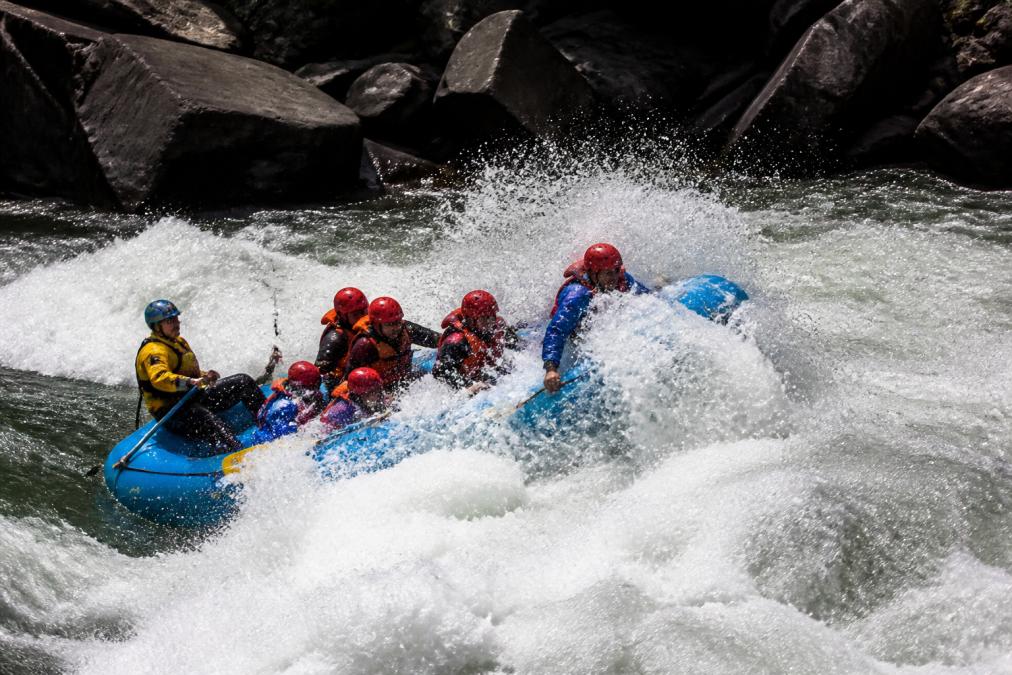
Holes form where water drops vertically and recirculates backward. If the raft flips into a hole, the recirculating current can hold it there, trapping paddlers underwater. Guides work constantly to avoid holes, reading the water to find the line that keeps you clear.
Congested Routes and Technical Lines
Boulders constrict the channel, forcing the raft through narrow passages where there’s little room for error. The guide must thread the raft through specific technical lines, precise paths through obstacles. Missing a technical line means hitting a boulder, getting pinned, or ending up in a hole.
Congestion also means rescue becomes harder if something goes wrong. If a paddler swims out in the middle of a congested rapid, retrieving them while navigating around boulders and through holes requires skill, speed, and experience. This is why Class V guides are trained rescue specialists.
Whitewater Rafting Safety Protocols and Gear Requirements
Commercial Class V rafting is safer than it appears because professional outfitters have built rigorous safety systems. According to Anesthesia Key’s whitewater medicine research, commercial rafting injury rates are 0.263 per 1,000 rafters, and fatality rates are significantly lower on guided trips than private expeditions. This gap exists because safety protocols work.
Essential Safety Equipment and Proper Fit
Coast Guard-approved life jackets keep you afloat if you end up in the water. Fit matters enormously, a life jacket that’s too loose won’t stay in place during a flip, while one that’s too tight restricts breathing and paddle movement. Professional outfitters fit each jacket individually.
Helmets protect your head from rocks and the raft itself. Most injuries in commercial rafting come from contact with the raft or rocks. Wetsuits or drysuits are essential on cold water trips, especially in spring when temperatures below 50°F cause cold shock and rapid incapacitation.
Throwbags are rescue equipment every guide carries. If a paddler swims, the guide throws a rope attached to a bag for the swimmer to grab.
Proper fit of safety gear is as important as wearing it. Ill-fitting spray skirts, loose helmets, and oversized life jackets create false security. Insist on gear that fits your body before you push off.
Pre-Trip Briefing and Rescue Conditions Planning
Every commercial Class V trip begins with a thorough safety briefing. The guide explains what Class V rapids are, what you’ll experience, what they’ll ask you to do, and what happens if you flip or swim.
Non-swimmers get positioned where they’re easiest to reach if they go overboard. Experienced paddlers sit where they can help with rescue. The guide explains hand signals, paddle commands, and what “high side” means. This briefing is the foundation of the rescue system. When something unexpected happens, everyone on the raft knows their role.
Risks of Class V Whitewater and Real Injury Data
Class V whitewater carries real risk. Understanding the actual risk helps you make an informed decision.
Common Injury Types and High-Consequence Scenarios
Most injuries in commercial rafting come from contact with the raft or rocks. According to Ovid’s commercial whitewater injury analysis, 51.3% of injuries sustained by commercial boaters occurred in the raft itself, with the face being the most frequently injured body part (33.3%), including the eye (12.1%), mouth (6.6%), nose (4.5%), and teeth (4.0%). Contusions and lacerations dominate. Shoulder injuries are common too, usually from paddle bracing.
High-consequence scenarios are rarer but real. A paddler pinned against a boulder can’t breathe. A paddler trapped in a hole can be held underwater. A paddler separated from the group becomes hard to locate and rescue. This is why guides train relentlessly and why every paddler needs to understand what they’re signing up for.
Fatality Rates and the Role of Professional Guides
The fatality rate for commercial whitewater rafting is roughly 0.55 deaths per 100,000 user-days, lower than recreational swimming or bicycling. But this rate applies specifically to commercial, guided trips. Private, unguided boating has fatality rates five times higher, primarily because private paddlers often don’t wear life jackets and lack professional rescue training.
This difference shows that professional guides, safety equipment, and rescue protocols work. A guide who’s run a rapid hundreds of times knows exactly where the hazards are. Experience provides some protection but not immunity. According to West Virginia Division of Natural Resources injury data, 59.8% of injured paddlers had previous rafting experience. Familiarity can breed overconfidence.
How to Prepare: Scouting, Paddle Technique, and Psychological Readiness
Preparation for Class V isn’t just about showing up fit. It’s about building the specific skills, knowledge, and mental resilience the river demands.
Why Scouting From Shore Is Non-Negotiable
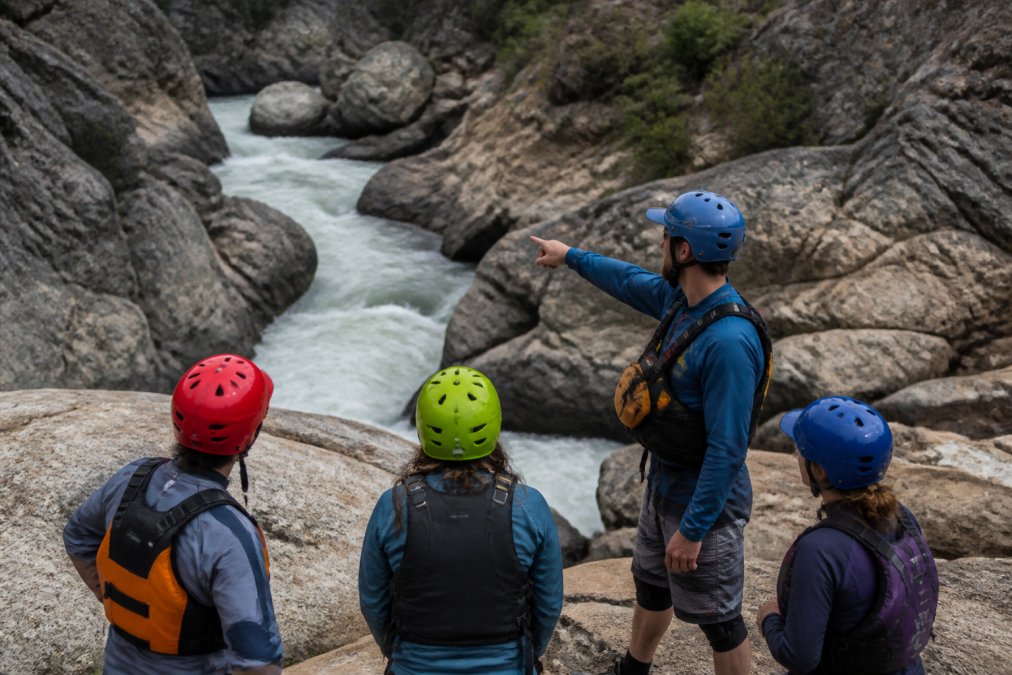
Professional guides scout every Class V rapid from shore before running it. From shore, they identify the technical line, spot hazards, assess water level and flow, and plan their approach. Scouting reveals details invisible from the raft, that hole you can’t see from water level becomes obvious from above.
As a paddler, ask to scout if the outfitter offers it. Walking the rapid with the guide and seeing the line they’ll take builds confidence and understanding. You’ll see exactly where the massive waves form, where the holes are, and why the guide will call specific moves.
Paddle Technique, Guide Commands, and Communication
Class V requires precise paddle technique. Your paddle is your tool for positioning the raft, bracing against waves, and responding to the guide’s commands.
The guide will teach you specific commands. “High side!” means move to the high side of the raft to keep it from flipping. “Get down!” means crouch low to keep your center of gravity stable. “Forward!” means paddle hard in the direction the raft is moving. “Back paddle!” means reverse your strokes to slow or stop the raft.
These commands are delivered loudly because the roar of the water is deafening. You need to hear them, understand them instantly, and execute without hesitation. Practice paddle technique before you go. Take a lower-class trip first if you’ve never paddled.
Mental Preparation and Managing Fear
Fear on Class V is rational. The river is loud, violent, and powerful. Acknowledging this fear is the first step to managing it.
Mental preparation means visualizing what you’ll experience. You’ll hear roaring water. You’ll feel the raft drop and pitch. Waves will crash over you. The guide will yell commands. You’ll paddle hard. And you’ll probably make it through fine, maybe even flip and get back in, and think it was the best thing you’ve ever done.
Trust the guides’ knowledge. When they give you an instruction, follow it. Mental readiness also means accepting that you might fail. If that happens, the guide’s job is to manage the situation and keep you safe. The system is built to handle it.
What Happens After: Recovery and Debrief
Class V takes a toll. Your shoulders ache. Your hands are raw from gripping the paddle. You’re exhausted. This is normal.
Recovery matters. Stretch out your shoulders and back in the hours after your trip. Eat and hydrate, you’ve burned thousands of calories and lost fluids through sweat and spray. Sleep well that night.
The debrief is equally important. Talk through what happened. Ask the guide questions about specific rapids. Process the fear you felt and the confidence you built. This reflection transforms a single experience into learning that makes you a better paddler. Many paddlers find that Class V changes how they see themselves. You discovered you could handle something genuinely difficult.
Class V rapids demand respect, preparation, and professional guidance. They’re not for everyone, and that’s okay. But if you’re drawn to whitewater and willing to put in the work, Class V offers an intensity and authenticity that few experiences match.
Sierra Mac has guided Class V expeditions on the Tuolumne River and Cherry Creek for decades, pioneering commercial rafting on some of the most technically demanding whitewater in the country. If you’re serious about Class V, booking with experienced guides who’ve run these specific rivers hundreds of times isn’t just safer, it’s the only way to truly understand what the river demands. Get started with Sierra Mac and discover what Class V rafting actually feels like.
=== FAQ ANSWERS (audit these too, same rules) ===
[1] Q: How difficult are Class V rapids compared to other whitewater classes?
A: Class V rapids are the second-highest difficulty on the whitewater classification scale, characterized by extremely violent, long rapids with steep drops, waterfalls, and massive waves. They require highly congested routes that demand critical maneuvering above dangerous hazards. The key difference: Class III-IV rapids are manageable with standard technique, while Class V rapids demand expert-level paddle technique, instant response to guide commands, and the ability to self-rescue or survive high-consequence scenarios. Water volume, gradient, and seasonal flow make Class V rapids unpredictable and unforgiving.
[2] Q: What physical requirements do you need for Class V rafting?
A: Participants must be in excellent health, capable swimmers, and physically fit enough for high-intensity paddling over long stretches. You need the agility to move quickly to the ‘high side’ of the raft to prevent flipping, the grip strength to hold a paddle through violent currents, and the cardiovascular endurance to maintain power when guides demand maximum effort. Most outfitters require prior whitewater experience on Class III-IV rapids. Age is less important than fitness; someone at 68 who trains regularly can handle Class V better than a sedentary 30-year-old. Professional guides assess fitness during pre-trip briefings and position paddlers accordingly.
[3] Q: What safety gear is mandatory for Class V expeditions?
A: Coast Guard-approved personal flotation devices (life jackets), properly fitted helmets, and wetsuits or drysuits are non-negotiable. Helmets protect against head injuries from boulders and the raft itself; face injuries account for 33.3% of commercial rafting injuries, with eye and mouth injuries being the most common. Wetsuits are essential for spring trips on natural flow rivers, where water temperatures below 50°F cause cold shock and rapid incapacitation. Professional outfitters provide all safety equipment and conduct full safety briefings before launch. Guides also carry throw bags and rescue equipment for emergency evacuation scenarios.
[4] Q: What is the fatality rate for Class V commercial whitewater rafting?
A: The fatality rate for commercial whitewater rafting is approximately 0.55 deaths per 100,000 user-days, which is lower than recreational swimming and bicycling. A multi-year American Whitewater study found 0.45 fatalities per 100,000 commercial user days. Fatality rates for commercial rafting are five times lower than for private, unguided boating. The overwhelming majority of whitewater deaths involve private boaters on unguided trips, many of whom were not wearing life jackets. Professional guides, proper equipment, and adherence to whitewater rafting safety protocols are the primary reasons commercial trips remain relatively safe despite the high-consequence nature of Class V rapids.
Frequently Asked Questions
Q: How difficult are Class V rapids compared to other whitewater classes?
A: Class V rapids are the second-highest difficulty on the whitewater classification scale, characterized by extremely violent, long rapids with steep drops, waterfalls, and massive waves. They require highly congested routes that demand critical maneuvering above dangerous hazards. The key difference: Class III-IV rapids are manageable with standard technique, while Class V rapids demand expert-level paddle technique, instant response to guide commands, and the ability to self-rescue or survive high-consequence scenarios. Water volume, gradient, and seasonal flow make Class V rapids unpredictable and unforgiving.
Q: What physical requirements do you need for Class V rafting?
A: Participants must be in excellent health, capable swimmers, and physically fit enough for high-intensity paddling over long stretches. You need the agility to move quickly to the ‘high side’ of the raft to prevent flipping, the grip strength to hold a paddle through violent currents, and the cardiovascular endurance to maintain power when guides demand maximum effort. Most outfitters require prior whitewater experience on Class III-IV rapids. Age is less important than fitness; someone at 68 who trains regularly can handle Class V better than a sedentary 30-year-old. Professional guides assess fitness during pre-trip briefings and position paddlers accordingly.
Q: What safety gear is mandatory for Class V expeditions?
A: Coast Guard-approved personal flotation devices (life jackets), properly fitted helmets, and wetsuits or drysuits are non-negotiable. Helmets protect against head injuries from boulders and the raft itself; face injuries account for 33.3% of commercial rafting injuries, with eye and mouth injuries being the most common. Wetsuits are essential for spring trips on natural flow rivers, where water temperatures below 50°F cause cold shock and rapid incapacitation. Professional outfitters provide all safety equipment and conduct full safety briefings before launch. Guides also carry throw bags and rescue equipment for emergency evacuation scenarios.
Q: What is the fatality rate for Class V commercial whitewater rafting?
A: The fatality rate for commercial whitewater rafting is approximately 0.55 deaths per 100,000 user-days, which is lower than recreational swimming and bicycling. A multi-year American Whitewater study found 0.45 fatalities per 100,000 commercial user days. Fatality rates for commercial rafting are five times lower than for private, unguided boating. The overwhelming majority of whitewater deaths involve private boaters on unguided trips, many of whom were not wearing life jackets. Professional guides, proper equipment, and adherence to whitewater rafting safety protocols are the primary reasons commercial trips remain relatively safe despite the high-consequence nature of Class V rapids.
This article was written using GrandRanker