
Merced River vs Tuolumne River Rafting: 2027 Guide
Table of Contents
- Merced River vs Tuolumne River Rafting at a Glance
- Tuolumne River Rafting Difficulty and Rapid Classes
- Merced River: Class III and IV Rapids for First-Timers
- The Best Time to Raft Near Yosemite
- Multi-Day Rafting Trips in Yosemite: What to Expect
- Logistics, Gear, and What to Pack
- Which River Fits Your Group?
- Frequently Asked Questions
Last Updated: September 30, 2026
Merced River vs Tuolumne River Rafting at a Glance
Merced River vs Tuolumne River rafting comes down to one question: do you want a forgiving first run or a serious test of nerve? According to All Outdoors California Whitewater Rafting’s 2026 season pricing, a one-day Tuolumne trip ran $374 in 2026, while a two-day trip with camping and meals cost $669. The Merced, by contrast, suits first-timers and families. The Tuolumne suits paddlers chasing Class IV+ whitewater. This guide from Sierra Mac breaks down difficulty, timing, and logistics so you can pick the right river.
Factor | Merced River | Tuolumne River |
|---|---|---|
Rapid classes | Class III and IV | Class IV+ |
Named rapids | Fewer, spaced out | 40+ |
Best for | First-timers, families | Strong intermediate paddlers |
Typical trip | Half-day to full-day | 1-day to multi-day |
Season peak | Spring runoff | Spring runoff |
Both rivers run on natural Sierra Nevada snowpack, not dam releases. That makes timing everything.
Tuolumne River Rafting Difficulty and Rapid Classes
Tuolumne River rafting difficulty sits at Class IV+, making it one of the more demanding commercial runs in the region. Industry guidance for 2026 classifies the Tuolumne as a more challenging option than the Merced, with over 40 named rapids (ARTA’s Merced vs Tuolumne comparison).
Class IV+ Rapids and 40 Named Drops
Class IV rapids demand precise paddling and quick reactions. Class IV+ adds bigger drops and tighter lines. You need a solid safety briefing, a properly fitted life jacket, and a guide who knows every eddy.
- Big water hydraulics on the main drops
- Technical rapids requiring paddle commands
- Remote wilderness canyon with limited exit points
- Cold water temperatures, even in summer
Sierra Mac has guided these waters since 1965 and was the first outfitter to run commercial trips on the Tuolumne.
Merced River: Class III and IV Rapids for First-Timers
The Merced River is the better pick for first-timers because its Class III and IV rapids deliver real whitewater without overwhelming new paddlers. The commercially rafted stretch of the Merced tumbles through a pine-and-granite canyon. A 2026 packrafting report measured Upper Merced flows at roughly 250 cfs in late June, described as a good medium flow (American Whitewater’s Upper Merced flow report).
What the Rapids Actually Feel Like
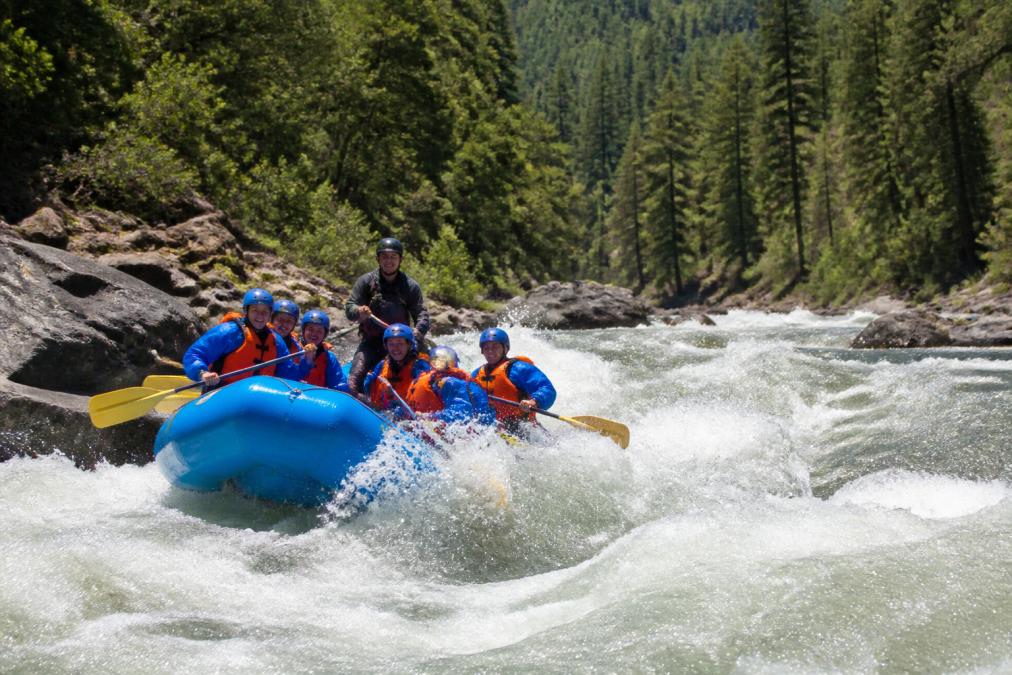
Class III rapids bring waves, maneuvering, and the occasional splashy drop, you paddle, you get wet, you stay in the boat. Class IV adds stronger hydraulics, bigger holes, and tighter lines that demand a real paddle stroke, not just a grip on the T-grip. The Merced River features named drops that guides often call out, including House Rock, Buckshot, and Split Rock. Between them, the river eases into Class II riffles and calm pools, which is exactly why families and nervous beginners do well here: the hard sections are short, and the recovery water is long.
How Flow Changes the Merced
The Merced runs on natural Sierra Nevada snowpack, not dam releases, so the same rapid can feel completely different week to week.
- High runoff (roughly 2,000-4,000 cfs): big, pushy waves; some outfitters move to larger rafts or reroute around the biggest holes.
- Medium flow (roughly 500-1,500 cfs): the sweet spot most first-timers get, punchy but forgiving.
- Low flow (under roughly 300 cfs): the river turns technical and rocky; commercial trips often stop running altogether.
Families with kids 12 and up do well here. So do groups wanting a scenic float with a few adrenaline spikes. If your group has never paddled before and you want a genuine Class IV taste without a Class IV commitment, the South Fork Merced is the honest answer.
The Best Time to Raft Near Yosemite
The best time to raft near Yosemite is late spring through early summer, when snowmelt feeds peak spring runoff. Both rivers depend on Sierra Nevada snowpack, so water levels swing year to year, a wet winter can push the season later, a dry one can end it early. By mid-July 2026, the Merced had dropped to 2.09 feet, and commercial raft rentals closed for the season (r/Yosemite float trip report, July 17, 2026). The Tuolumne season had also wrapped by July 2026.
Snowmelt, Spring Runoff, and Water Levels
Water levels drive everything. High runoff means faster, punchier rapids. Low water means a slower, more technical run. A rough planning guide:
- May to early June: peak flows, biggest whitewater, coldest water. The Tuolumne is at its most demanding; the Merced is at its most exciting but still manageable for strong beginners.
- Mid-June to early July: dropping levels, still runnable, warmer air, and the most comfortable window for families.
- Mid-July onward: many commercial operations wind down as flows fall below safe or runnable thresholds.
Permits, Seasons, and Why Dates Fill Early
The Tuolumne’s commercial stretch runs through a federally designated Wild and Scenic corridor, and outfitters operate under limited-use permits that cap how many rafts go out per day. That cap, not demand alone, is why peak-season slots on the Tuolumne fill weeks in advance. The Merced’s South Fork is less restricted, but its season is shorter and more flow-dependent, so late bookings often mean no availability at all.
How to Time Your Trip
- Book 4-8 weeks out for peak May-June weekends; Tuolumne multi-day trips sell out first.
- Watch the flow gauge, not the calendar. A cool, wet spring pushes good rafting into July; a hot, dry one pulls it into May.
- If you’re flexible, aim for mid-week in late June, the best odds of runnable water, warm weather, and open slots.
Book early. Peak season slots fill fast.
Multi-Day Rafting Trips in Yosemite: What to Expect
Multi-day rafting trips Yosemite style mean camping in a river canyon, meals included, and no crowds. The 2026 two-day Tuolumne trip ran $669 per person with camping and meals included (All Outdoors California Whitewater Rafting).
Days blend paddling, beach stops, and camp setup. Evenings are quiet. You’re deep in remote wilderness with no cell service.
What are you paying for? Guides, permits, gear, food, and camp logistics. Everything gets handled so you just paddle.
- Riverside camps with gear hauled in
- Meals prepared by the crew
- Multiple rapids across two days
- Stargazing without light pollution
Logistics, Gear, and What to Pack
Transportation and shuttle logistics are where most first-timers get caught out. Outfitters typically handle the shuttle from the meeting point to the put-in and back from the take-out. Confirm this before you book.
Gear you’ll want:
- Swimsuit or quick-dry layers
- Secure footwear (no flip-flops)
- Sunscreen and lip balm
- Waterproof phone pouch
- Change of clothes for after
The outfitter supplies the raft, PFD, helmet, and paddle. Wetsuits are often available.
Shuttles, Put-Ins, and Post-Raft Amenities
Ask where the put-in is and how long the shuttle takes. Some put-ins sit well outside the park, so plan your day around drive time. After your run, nearby towns offer food, showers, and places to relax.
Which River Fits Your Group?
Pick the Merced if you have first-timers, kids 12 and up, or anyone wanting a scenic float with moderate rapids. Pick the Tuolumne if your group has paddling experience and wants Class IV+ technical whitewater and big water.
Sierra Mac runs trips on both rivers, plus Class V expeditions on Cherry Creek. Founded in 1965, the company sits 15 miles from Yosemite’s northwest entrance and offers trips from mild half-day floats to intense multi-day runs. That range means one outfitter can match your group’s comfort level.
One honest caveat: rafting scenery differs from hiking scenery.
Frequently Asked Questions
What is the difference in difficulty between the Merced and Tuolumne rivers?
The Merced River runs Class III and IV rapids, making it the better choice for first-time rafters. The Tuolumne River is rated Class IV+ with over 40 named rapids, requiring stronger paddling and quicker reactions. Industry guidance for the 2026 season confirms the Merced suits beginners while the Tuolumne delivers a more challenging, high-adrenaline experience for those with prior whitewater exposure.
Is it possible to go rafting on the Merced River in California?
Yes, but timing matters. The Merced is a natural flow river fed by Sierra Nevada snowmelt, so commercial raft rentals typically close once water levels drop in mid-summer. Commercial raft rentals typically close once water levels drop in mid-summer. Book early in the season for the best conditions.
Are there multi-day rafting trips available on the Tuolumne River?
Yes. Multi-day rafting trips on the Tuolumne include camping and meals. Pricing depends on quantity, dates, and delivery. Visit Sierra Mac’s website for current prices. Multi-day expeditions let you experience remote wilderness sections and overnight canyon camping that day trips cannot reach, making them a strong option for groups wanting deeper immersion.
What time of year is best for rafting near Yosemite?
Late spring through early summer is the best time to raft near Yosemite. Snowmelt feeds both rivers, and spring runoff produces the most consistent flows. The Tuolumne season typically concludes by July, and Merced rentals often close when the river hits lower flows in mid-July. Aim for May and June for peak conditions on both rivers.
Choosing between these two rivers comes down to matching difficulty to your group, not chasing the “best” one. Sierra Mac has guided both since 1965, with expert local guides, trips ranging from half-day floats to multi-day Class V expeditions, and a base 15 miles from Yosemite’s northwest entrance. Get started with Sierra Mac and book the river that fits your crew.