
Tuolumne River vs Cherry Creek Rafting: 2026 Guide
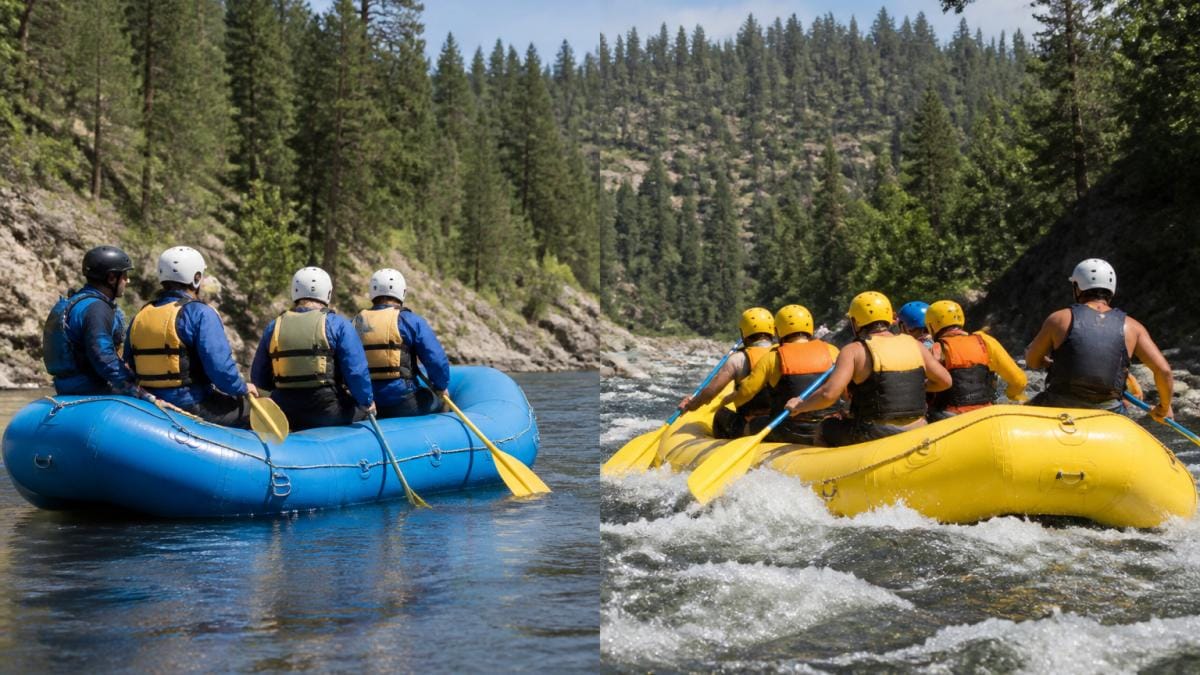
Table of Contents
- Tuolumne River Whitewater Rafting vs Cherry Creek Rafting: The Core Difference
- Cherry Creek Rafting Difficulty: Class V, 12 Named Rapids, High Consequence
- Tuolumne River Rafting for Beginners: What First-Timers Can Realistically Book
- Cherry Creek Rafting Trip Length: Day Runs and Multi-Day Combos
- Tuolumne River Rafting Season: When Each Run Actually Flows
- Choosing Between the Two: Decision Framework for Groups, Families, and Experienced Paddlers
- Frequently Asked Questions
Last Updated: October 8, 2026
Tuolumne River Whitewater Rafting vs Cherry Creek Rafting: The Core Difference
Tuolumne River whitewater rafting vs Cherry Creek rafting comes down to one fact: Cherry Creek is the hardest commercially run stretch of whitewater in the country, while the Tuolumne offers a challenging but more forgiving Class IV experience. The Sierra Nevada Ally’s rafting coverage describes a Cherry Creek/Upper Tuolumne trip as nine miles of continuous Class IV and Class V rapids. At Sierra Mac, we’ve guided both since we pioneered commercial Class V rafting on Cherry Creek, so we know exactly how different those two days feel. Below, we break down difficulty, trip length, season, and who should book which run.
Two Runs, One River System
Cherry Creek is a tributary that joins the Tuolumne River in the Sierra foothills below Yosemite. When outfitters say “Cherry Creek rafting,” they mean the steep upper section; “Tuolumne rafting” usually means the main run below the confluence.
Both sit in the same wild canyon country. The character of the water is what separates them.
- Cherry Creek: narrow, steep, technical, Class V
- Upper Tuolumne: wider, big-water, Class IV to IV+
- Combined trips: run Cherry Creek one day and the Tuolumne the next
Side-by-Side Comparison at a Glance
| Feature | Cherry Creek | Tuolumne River |
|---|---|---|
| Difficulty | Class V, 12 named rapids | Class IV to IV+ |
| Typical minimum age | 17 | Varies by section |
| Character | Steep, technical, high consequence | Big-water, continuous |
| Best for | Experienced rafters | Fit first-timers and families |
| Trip length | Day runs and multi-day combos | Half-day to multi-day |
Cherry Creek Rafting Difficulty: Class V, 12 Named Rapids, High Consequence
Cherry Creek rafting difficulty sits at the top of the commercial scale. All-Outdoors counts 12 Class V rapids and numerous Class IV drops on the run, and the American Whitewater Cherry Creek flow guidance notes commercial trips typically launch in early to mid-July around 1,100 to 1,400 cfs.
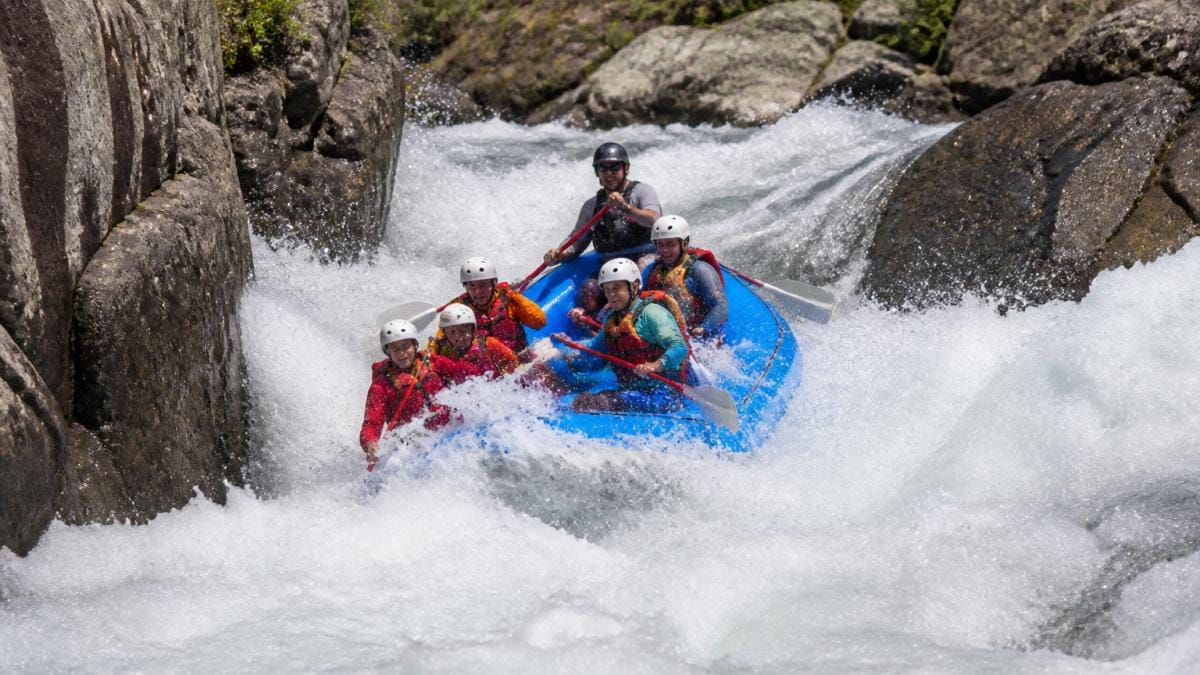
The consequence level is the real story. On Cherry Creek, a missed line means a swim in continuous whitewater, not a calm pool. That’s why outfitters screen participants carefully.
Don’t book Cherry Creek as a step up from a lazy Class II float. The gap between Class II and Class V is enormous, and arriving underprepared is the fastest way to have a miserable day.
Tuolumne River Rafting for Beginners: What First-Timers Can Realistically Book
Tuolumne River rafting for beginners is realistic on the main run, provided you’re fit and comfortable in moving water. It’s Class IV, not a float trip, but first-timers with good swimming ability handle it well. The key is knowing which stretch you’re booking, because “Tuolumne” covers everything from a manageable big-water day to water that behaves nothing like a beginner trip.
Minimum Age, Swimming, and Screening
Age minimums vary by outfitter and section. On the main Tuolumne run, minimums are typically lower and depend on the specific section and the day’s flow.
Most outfitters screen participants before they’ll take a reservation. A common pattern is a short questionnaire and a phone conversation covering:
- Swimming ability: Can you swim in moving water, not just a pool? Comfort being submerged and resurfacing is the real test.
- Prior rafting or paddling experience: Not always required for the main Tuolumne run, but it changes which seat and which section a guide will assign you.
- General fitness: Can you paddle hard on command, hold a brace position, and help pull a teammate back into the raft?
- Medical conditions: Heart conditions, recent injuries, pregnancy, and some medications are common disqualifiers or require a doctor’s clearance.
- Age: Enforced strictly, and it can differ between the main run and Cherry Creek even under the same outfitter.
For Cherry Creek specifically, expect the bar to be higher. Outfitters generally want participants who have run Class IV whitewater before, are strong swimmers, and can self-rescue if they swim. Some operators require a prior trip with them or a demonstrated paddling background. This is not gatekeeping for its own sake, it’s the screening that keeps a Class V swim from becoming a serious incident.
What “Beginner-Friendly” Actually Means on Class IV
Class IV is not a gentle introduction. It means big, continuous rapids where a guide’s line matters and a swim can last longer than you’d expect. What makes the main Tuolumne run work for fit first-timers is the combination of professional guiding, predictable flow windows, and rapids that reward teamwork rather than demanding technical paddling skill.
If you’re new to whitewater, be honest about it when you book. Guides would rather place a first-timer in the right seat on the right section than discover the mismatch at the put-in.
If you’re a first-timer, ask specifically which section you’re booking. “Tuolumne” covers a lot of water, and the difficulty changes from one stretch to the next. Ask, too, whether the trip uses paddle rafts or oar rigs, paddle rafts ask more of you physically, while oar rigs let a guide do more of the work.
Don’t treat a Class III trip elsewhere as automatic preparation for Class IV. The step up in volume, consequence, and continuous action is real, and the screening questions exist because of it.
A Quick Self-Check Before You Book
You’re likely a good fit for the main Tuolumne run if you can answer yes to all of these: you’re comfortable in moving water, you can follow shouted commands while paddling hard, you have no disqualifying medical conditions, and you meet the outfitter’s age minimum. If any answer is no, call the outfitter before you book, many will steer you to a gentler section or a different river entirely, which is a better outcome than a miserable or unsafe day.
Cherry Creek Rafting Trip Length: Day Runs and Multi-Day Combos
Cherry Creek rafting trip length runs from a single demanding day to a two- or three-day combination. Day runs and shorter combos generally sit below that range, while longer itineraries with more nights on the river push toward the top of it.
How the Formats Compare
- Single-day Cherry Creek: one intense run, no overnight. Best for strong paddlers who want the Class V experience without committing to a multi-day schedule.
- Two-day combo: Cherry Creek plus the main Tuolumne, usually one run per day. The most common way to experience both characters of water in one trip.
- Three-day combo: more time on the water, more recovery between hard days, and typically the most expensive option per person.
A typical combo works like this: one day on Cherry Creek, the next on the Tuolumne. A 2018 Tripadvisor reviewer described exactly that format and called both days fantastic.
What’s Usually Included, and What Isn’t
Multi-day pricing on these runs is not just the rafting. A common pattern is that the per-person rate bundles:
- Professional guides and all rafting equipment (raft, paddle, helmet, life jacket)
- Meals on the river and at camp for overnight trips
- Camping gear and permits for overnight itineraries
- Shuttle between the meeting point and the put-in or take-out
What’s often not included: gratuities for guides, personal items like wetsuits or river shoes in some cases, travel to the meeting location, and lodging before or after the trip. Ask the outfitter for a written inclusion list before you compare prices, because two trips at similar rates can differ significantly in what they cover.
Season, Operating Dates, and How Flows Reshape the Trip
Cherry Creek’s commercial season is short. Trips typically launch in early to mid-July, when snowmelt and dam releases bring flows into the range outfitters consider runnable. Outside that window, the run is generally not commercially available, which is why booking early matters if Cherry Creek is the goal.
The main Tuolumne run has a longer operating window, which is one reason it’s the more accessible of the two. But availability on either run is ultimately a function of flow, and flow is a function of snowpack, weather, and reservoir management, none of which are fixed from year to year.
Trip length and price are downstream of flow. A year with a big snowpack can extend the Cherry Creek season and change which dates are bookable; a dry year can shorten it. If your dates are flexible, ask the outfitter which windows they expect to run and how that affects the format and cost of your trip.
Booking Logistics to Nail Down Early
Before you commit, confirm the meeting time and location, whether the shuttle is included, what the cancellation and rescheduling policy looks like if flows change, and how far in advance the outfitter needs a final headcount. On short-season Class V runs, dates can fill quickly, and a flow-driven cancellation is a real possibility rather than a rare edge case.
Tuolumne River Rafting Season: When Each Run Actually Flows
Tuolumne River rafting season is driven by snowmelt and dam releases, so timing matters more than most people expect. Cherry Creek’s commercial season is short, often starting in early to mid-July.
Water Level, Flow, and Why cfs Decides the Day
Flow, measured in cubic feet per second, changes everything. American Whitewater warns against attempting Cherry Creek above 2,000 cfs because the rapids become far less forgiving.
Higher flow means bigger water and faster decisions. Lower flow means more technical, rock-dodging lines. Neither is “easier” in a simple sense.
The same rapid can feel completely different at 1,200 cfs versus 1,900 cfs. Ask your outfitter what flow range you can expect for your dates before you commit.
Choosing Between the Two: Decision Framework for Groups, Families, and Experienced Paddlers
Pick the Tuolumne if your group includes fit first-timers, teens, or anyone who wants a full day of big-water rafting without Class V consequence. Pick Cherry Creek if everyone is an experienced, physically capable paddler chasing the pinnacle of commercial whitewater.
Here’s how we’d decide:
- Families with teens: Tuolumne main run
- Mixed-ability friend groups: Tuolumne, then consider Cherry Creek next trip
- Experienced paddlers: Cherry Creek, or the combo
- Anyone unsure: start with the Tuolumne
At Sierra Mac, we run both, so we can match your group to the right river rather than pushing everyone toward the hardest option. Our guides have worked these canyons since 1965, and we’re located just 15 miles outside Yosemite’s northwest entrance.
Frequently Asked Questions
What is the difference between rafting the Tuolumne River and Cherry Creek?
Cherry Creek is the steep upper stretch of the Tuolumne River, run commercially as an advanced Class V trip with roughly 12 named Class V rapids. The standard Tuolumne run below is typically described as Class IV and Class 4+, with a longer, more continuous day on the water. Same river system, two very different levels of demand, screening, and consequence.
Which is more difficult: Tuolumne River rafting or Cherry Creek rafting?
Cherry Creek. Outfitters market it as Class V, and one source describes a Cherry Creek/Upper Tuolumne trip as nine miles of continuous Class IV and Class V whitewater. The standard Tuolumne run is identified as Class 4+. If your group has mixed experience, the Tuolumne is the realistic choice; Cherry Creek suits paddlers chasing the hardest commercial run in the region.
Can beginners raft Cherry Creek?
No. Cherry Creek requires prior whitewater experience, comfort in moving water, and the ability to swim. Beginners should book the standard Tuolumne run instead, then work up to Cherry Creek once they have Class III and IV trips behind them.
How long does Cherry Creek rafting take, and when is the Tuolumne River rafting season?
Cherry Creek rafting trip length is typically a full day, or two to three days when combined with the Tuolumne. Commercial Cherry Creek rafting generally begins in early to mid-July at roughly 1,100-1,400 cfs. The Tuolumne River rafting season runs longer, so spring and early summer dates favor the Tuolumne while mid-summer favors Cherry Creek.
The hardest part isn’t choosing a river; it’s committing to a date before the short season closes. Sierra Mac offers expert-guided trips on the Tuolumne, Merced, and Cherry Creek, from mild half-day floats to intense multi-day Class V expeditions, all led by local guides who know every rapid. Get started with Sierra Mac and book the run that actually fits your group.