
What to Expect on a Guided Rafting Excursion
Last Updated: October 31, 2026
Quick Summary
A guided rafting excursion follows a predictable arc: check-in and gear fitting, a safety briefing, paddle practice, time on the water, and a shuttle back to base. The first hour is logistics, not paddling, and the safety briefing covers paddle grip, seating, commands, and what to do if you fall in. Trip duration ranges from about three hours on the water to several days of camping between river sections.
- Choose a gentler section with a shorter duration for your first time whitewater rafting.
- Wear quick-drying layers and secure footwear, and leave cotton and flip-flops behind.
- The whitewater rafting safety briefing is the most important 20 minutes of your day.
- Half-day trips put you on the water for 3-4 hours and suit families and first-timers.
- Tell the outfitter about mobility limits, injuries, or health conditions when you book, not on trip day.
Table of Contents
- What to Expect on a Guided Rafting Excursion From Start to Finish
- First Time Whitewater Rafting: How to Pick a Trip That Fits
- What to Wear Whitewater Rafting and What to Leave Behind
- The Whitewater Rafting Safety Briefing and Your Guide’s Role
- Guided Rafting Trip Duration: Half-Day, Full-Day, and Multi-Day Options
- Fitness, Age, and Accessibility: Who Can Join a River Trip
- Weather, Water Temperature, and Seasonal River Conditions
- Trip-Day Logistics, Costs, and How to Book Your Excursion
- Frequently Asked Questions
What to Expect on a Guided Rafting Excursion From Start to Finish
A guided rafting excursion follows a predictable arc: check-in and gear fitting, a safety briefing, paddle practice, time on the water, and a shuttle back to base. Knowing that sequence removes most of the anxiety first-timers bring to the river. Sierra Mac has run trips on the Tuolumne, Merced, and Cherry Creek rivers since 1965.
A Time-Stamped Look at a Typical Trip Day
Exact times shift with water levels and river choice. Confirm the itinerary for your chosen trip with Sierra Mac when you book.
The first hour is logistics, not paddling. For the full prep picture, our guide on how to prepare for a guided rafting adventure walks through it step by step.
First Time Whitewater Rafting: How to Pick a Trip That Fits
For first time whitewater rafting, choose a gentler section with a shorter duration. That gives you real moving water without demanding technical skill. A common mistake is booking the biggest rapid you can find, then spending the trip scared instead of paddling.
Ask three questions before you book:
- What rapid class does the section run?
- How long is the trip, including shuttle time?
- What swimming ability does the outfitter require?
Rapid Classes and River Conditions Explained
Rapid class is a difficulty rating from I to V. Class I is flat moving water. Class III has moderate waves and requires active paddling. Class V is expert-level, with long, violent rapids and serious consequences for a mistake.
River conditions change the rating. High water makes a Class III section push harder; low water exposes rocks. For how individual rapids are rated, see our Tuolumne River rapid classes guide.
What to Wear Whitewater Rafting and What to Leave Behind
What to wear whitewater rafting comes down to one rule: quick-drying layers, secure footwear, nothing you would mourn. Cotton holds water and chills you. Leave it at home.
Wear:
- Synthetic or wool base layer
- Swim trunks or quick-dry shorts
- Secure sandals or old sneakers that strap on
- Sunglasses with a retention strap
Leave behind:
- Jewelry and loose valuables
- Cotton hoodies and jeans
- Flip-flops
- Anything in an open pocket
Cold water changes the list. Our guide to essential whitewater rafting gear for cold water covers the specific gear to add.
The Whitewater Rafting Safety Briefing and Your Guide’s Role
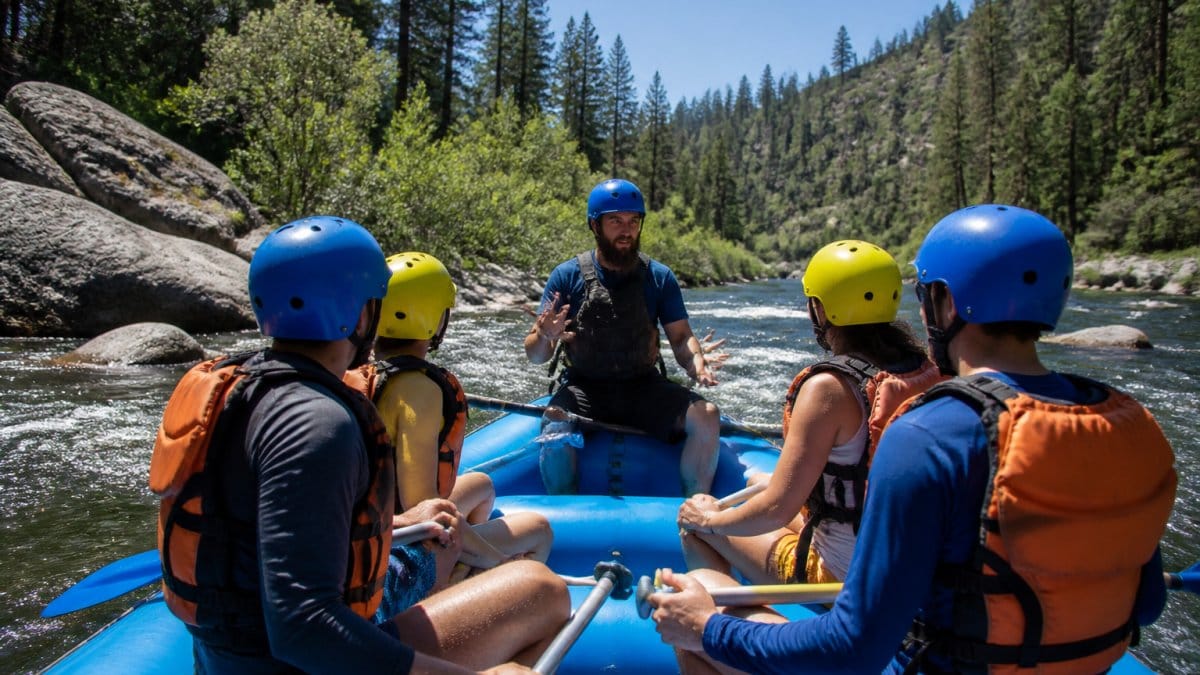
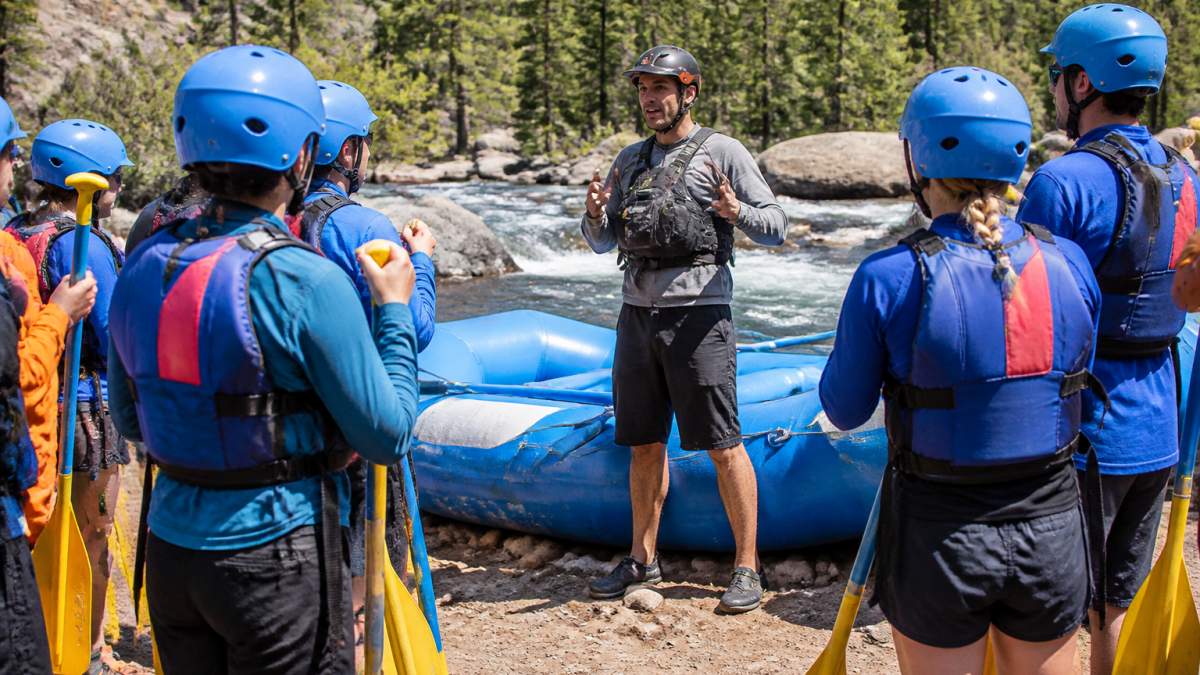
The whitewater rafting safety briefing is the most important 20 minutes of your day. It covers how to hold your paddle, how to sit, what each command means, and what to do if you end up in the water.
Your rafting guide is not a passenger with a paddle. Your guide reads the river, calls the line, and adjusts the plan when conditions shift.
Paddling commands are simple and worth memorizing:
- Forward: paddle together, normal pace
- Back paddle: reverse to slow or turn
- Left back, right forward: spin the raft
- High side: lean hard toward the named side
What Happens If Someone Falls Out of the Raft
Falling out is uncommon on guided trips, and the briefing prepares you for it. Here is the sequence most outfitters teach.
The moment you go in. Do not fight the current or grab the raft on the way down. Tuck your chin, keep your mouth closed, and let your life jacket bring you to the surface; the personal flotation device is designed to roll you face-up.
The defensive swim position. Float on your back with your feet downstream and slightly apart, toes up, knees soft, so your feet push off rocks instead of catching on them. Keep your eyes downstream. Do not try to stand in moving water, a foot wedged under a rock is the most common way a swim turns dangerous.
After the swim. Expect to be cold, shaky, and embarrassed. All three are normal.
A 2022 case study in the Journal of Park and Recreation Administration examined guest injuries across five seasons of commercial trips on West Virginia rivers, a reminder that even guided whitewater carries real risk that briefings are designed to manage.
Guided Rafting Trip Duration: Half-Day, Full-Day, and Multi-Day Options
Guided rafting trip duration ranges from about three hours on the water to several days of camping between river sections. Pick based on how much time you want and how much paddling your group can handle.
| Trip Type | Time on Water | Best For | Effort Level |
|---|---|---|---|
| Half-day | 3-4 hours | Families, first-timers | Light to moderate |
| Full-day | 5-6 hours | Groups wanting more rapids | Moderate |
| Multi-day | 1-3 days | Adventurers, repeat rafters | Moderate to high |
Fitness, Age, and Accessibility: Who Can Join a River Trip
Most guided river trips ask for basic swimming ability and general fitness, not athletic conditioning. If you can walk a flight of stairs and get in and out of a raft, you can usually handle a beginner section. Extended excursions require more preparation than a simple afternoon float, so understanding the nuances of packing for river trips ensures you remain comfortable and well-equipped throughout your time on the water.
The Physical Demands, Broken Down
A guided rafting trip asks for four specific things, best assessed separately rather than as a single yes-or-no:
- Getting in and out of the raft. You will step or slide over an inflated tube roughly 18 to 24 inches high, often from a rocky or sandy bank. This is the most common point where guests with knee, hip, or balance limitations need help. Guides stabilize the raft and offer a hand, but you should be able to bear weight on at least one leg.
- Sitting and bracing. You will sit on the raft tube or floor for two to four hours, feet braced against the foot cups, core engaged through rapids. Mention lower-back issues and recent abdominal surgery at booking.
- Paddling. Forward strokes in a raft are short bursts, not endurance work; a half-day beginner trip might involve 20 to 40 minutes of actual paddling. Guests who cannot paddle can usually be seated in the center or placed in an oar-assisted raft where the guide rows.
- Swimming, if it happens. You need not be a strong swimmer, but you should be comfortable being submerged and floating with a life jacket. If cold water triggers panic, say so, a guide can route you around the biggest swimmer-prone spots or seat you next to them.
Age Requirements and What They Actually Mean
Age minimums vary by river and rapid class and are set by the outfitter, not by a single national rule. Treat the minimum as a floor, not a target: a 9-year-old strong swimmer may do better than a nervous 13-year-old.
Mobility, Health Conditions, and the Pre-Booking Conversation
Tell the outfitter about mobility limits, old injuries, recent surgeries, pregnancy, epilepsy, heart conditions, or anything that could matter in cold water or at altitude when you book, not on the morning of the trip. Good guides adjust seating and pacing, but they can only adjust for what they know about.
Use these questions when you contact the outfitter:
- What is the minimum age on this section, and is there a maximum or health screening?
- Can a guest who cannot swim participate, and how is that handled?
- Is an oar-assisted raft available, and does it change the price?
- What is the walk like from the shuttle drop to the put-in, and from the take-out back to the vehicle?
- Are there accessible changing facilities or a shuttle that can accommodate a wheelchair or mobility device?
- What happens if a guest needs to leave the trip early, is there a mid-trip exit point?
Accessibility Realities on the River
River access varies by section. Ask specifically about the put-in and take-out for the section you are booking.
Ask directly whether accessible trip options are available, and which section or trip type comes closest to what you need.
The best time to have the fitness and accessibility conversation is before you pay, not at the put-in. A five-minute call with the outfitter’s office, using the six questions above, prevents the most common trip-day disappointment: a guest who arrives expecting an accommodation the river cannot provide.
Weather, Water Temperature, and Seasonal River Conditions
River conditions shift with the season, and the best time to go depends on what you want. Spring runoff means bigger, faster water. Late summer means lower, warmer flows and gentler rapids.
Water temperature matters more than air temperature. Water temperature matters more than air temperature, so layering is important. Weather can change conditions on the water.
Trip-Day Logistics, Costs, and How to Book Your Excursion
Confirm with Sierra Mac which logistics, including shuttles and gear, are included with your trip.
Costs depend on trip length, river section, group size, and season, so pricing varies. Check current rates and trip dates before you commit. Our Yosemite rafting pricing guide explains what drives the cost of a trip, and our general information page covers group discounts, payment, and cancellation details.
Booking early is recommended for popular dates. Confirm your group size and any dietary or accessibility needs when you book.
Guided rafting rewards preparation more than nerve. The groups that have the best days are the ones who know what the briefing is for, dress for cold water, and trust their guide’s line. Sierra Mac, a family-owned outfitter founded in 1965, offers trips ranging from mild floats to multi-day Class V expeditions, with a base just 15 miles from the park’s northwest entrance. Get started with Sierra Mac and book a trip that matches your group’s comfort level.
Frequently Asked Questions
Do you have to know how to swim to go rafting?
Swimming requirements vary by trip. If swimming confidence is a concern, ask Sierra Mac about the swimming requirements and about milder trip options before you book.
How long does a guided rafting trip usually take?
Guided rafting trip duration depends on the river and route. Sierra Mac offers trips ranging from mild half-day floats to multi-day Class V expeditions, so confirm total time on the water and door-to-door time when you book.
What safety instructions do rafting guides give before a trip?
Guides give a safety briefing before launch. Listen closely, ask questions, and repeat the commands back so they stick when the rapids start.
What should I wear and bring on a rafting trip?
Wear quick-drying synthetic layers or a swimsuit, secure footwear that stays on in moving water, and sunscreen. Avoid cotton, which stays wet and cold, and leave jewelry, phones, and loose items behind. Bring a dry bag for essentials, a change of clothes for the ride home, and a towel. Check with Sierra Mac on what gear is supplied with your trip.