
Is Class 5 Rafting Safe for Beginners? What to Know
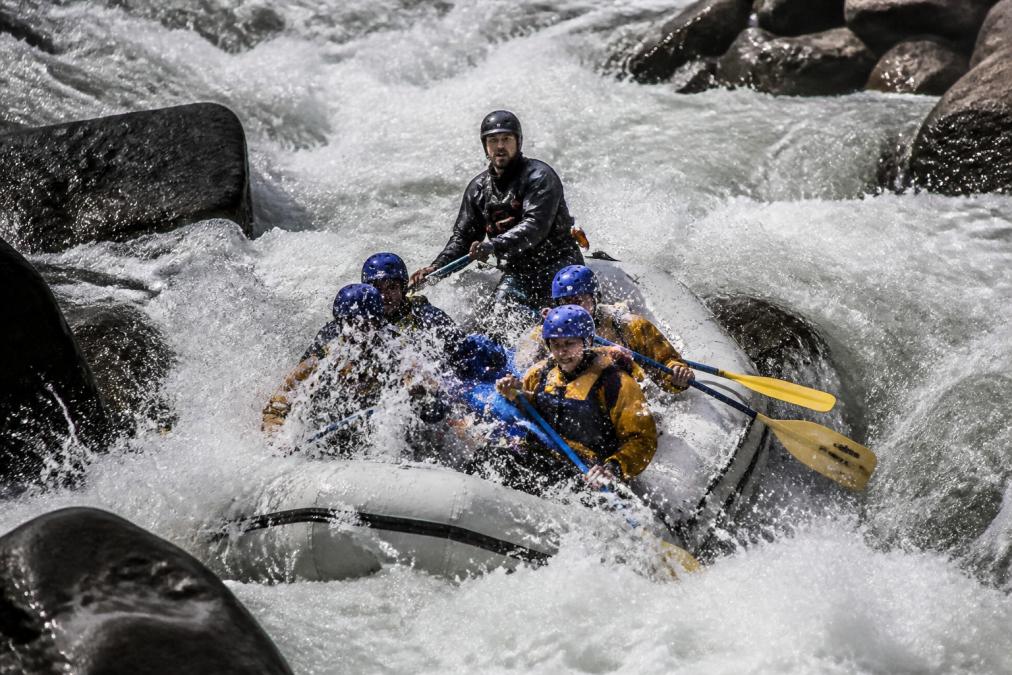
Table of Contents
- Whitewater Rafting Difficulty Levels: Where Class 5 Fits
- What Makes Class 5 Rafting Dangerous for Beginners
- Physical Requirements for Class 5 Rafting
- What to Expect on a Class 5 Rafting Trip
- How Professional Guides Make Class 5 Rafting Safer
- When Beginners Should Choose a Lower Class Instead
- Frequently Asked Questions
Last Updated: September 11, 2026
Whitewater Rafting Difficulty Levels: Where Class 5 Fits
Class 5 rafting is not safe for beginners as a first whitewater experience. The American Whitewater classification system defines Class V rapids by the near-certainty of injury or death if a swimmer is caught in the hydraulic, and that reality makes them unsuitable for anyone without substantial prior paddling experience. Beginners who skip the progression from Class II and III often end up as passengers in a situation they cannot help manage.
How the Classification System Works
The whitewater classification system runs from Class I to Class VI and rates rapids on difficulty, consequence, and required skill. Class I is moving water with small waves. Class VI is essentially unrunnable and attempted only by expert teams at specific flows. The jump from Class IV to Class V is not incremental. It is a different category of river.
Class 3, 4, and 5 Compared
| Class | Skill Level | Swim Risk | Scouting Required |
|---|---|---|---|
| Class 3 | Intermediate | Moderate, self-rescue likely | Sometimes |
| Class 4 | Advanced | Serious injury possible | Usually |
| Class 5 | Expert only | High likelihood of injury or death | Always |
Class 3 rapids have moderate, irregular waves that intermediate paddlers can read and manage. Class 4 demands precise boat control and reliable self-rescue. Class 5 rapids add violent currents, congested routes, and hydraulics that hold swimmers under. The American Whitewater safety resources document this progression in detail, and the gap between 4 and 5 is where beginners get into trouble.
The most common mistake beginners make is booking a Class 5 trip because they’ve “done rafting before” on a Class 2 float. Prior commercial rafting on easy water does not build the paddle timing, brace reflex, or swim confidence that Class 5 requires.
What Makes Class 5 Rafting Dangerous for Beginners
Class 5 rapids combine high water volume, technical maneuvers, and hazards that punish delayed reactions. The danger isn’t a single feature. It’s the compounding effect of reading a line correctly while executing a paddle stroke under adrenaline, and beginners have neither the muscle memory nor the river-reading experience to do both.
Hazards: Holes, Strainers, and Undercut Rocks
Holes are recirculating hydraulics that can hold a swimmer and a boat. Strainers are obstructions like fallen trees that let water pass but trap people and gear. Undercut rocks have water flowing beneath them, and a swimmer pushed under may not surface. Add sieves, sieves, and shallow rock gardens at low flow, and the hazard list grows. Each of these requires a specific response that only comes from repetition.
Why Swimming in Class 5 Rapids Is Different
A swim in Class 5 is a rescue, not a float. The community discussion of Class V swim consequences is blunt: a Class V swim carries a high likelihood of injury or death. Swimmers face violent currents, must assume a defensive position, and often need a throw bag from shore or a boat-based rescue. A personal flotation device and helmet buy time. They do not guarantee a clean outcome.
Physical Requirements for Class 5 Rafting
Class 5 paddling demands real physical stamina, not just general fitness. A full day on a technical river means repeated high-effort paddle strokes, bracing through drops, and the ability to pull yourself back into a boat after a flip. Grip strength, core stability, and shoulder endurance matter more than raw cardio. Paddlers need to hold a line through a drop and pool sequence without losing form.
A Self-Assessment Before You Book
Most outfitters won’t hand you a fitness test, so run your own. A common pattern among guides is that guests who struggle on Class V share a few traits: they can’t do a controlled wet re-entry into a raft from deep water, they can’t hold a brace position through a sustained push, and they fatigue within the first hour. Before booking, ask yourself:
- Can you swim 100 yards in moving water while wearing a personal flotation device and helmet, without touching bottom?
- Can you pull yourself over a raft tube from deep water, unaided, on the first or second try?
- Can you sustain 45-60 minutes of hard paddling with short rest breaks?
- Can you hold your breath and stay oriented for a 10-15 second submersion?
If any answer is no, the honest move is another season on Class 3 and 4 water. Fitness is trainable; the river won’t wait for you to catch up mid-rapid.
Medical Contraindications Beginners Should Screen For
This is the part most guide pages skip. Certain health conditions make a Class V swim disproportionately dangerous, and a reputable outfitter will ask about them. Conditions commonly flagged as high-risk for Class V participation include:
- Cardiac conditions, prior heart attack, arrhythmia, or uncontrolled hypertension. Cold-water immersion and adrenaline spikes can trigger cardiac events.
- Seizure disorders, even well-controlled, because a seizure during a swim is unsurvivable in a hydraulic.
- Neck, spine, or recent orthopedic injury, the impact forces in a flip are substantial, and a pre-existing injury raises the stakes of any hit.
- Pregnancy, most commercial outfitters will not take pregnant guests on Class IV or V water.
- Severe asthma or respiratory conditions, cold water and exertion can trigger attacks in a setting where rescue is measured in minutes.
- Anticoagulant use or bleeding disorders, a laceration on a rock garden is a different problem when your blood won’t clot.
Disclose everything on the medical form. Guides plan rescues around known risks; they can’t plan around what you hide.
The Mental Bar Is Higher Than the Physical One
Mental requirements are just as steep, and this is the gap most beginner guides ignore. You need the composure to follow a guide’s commands when the boat is bouncing and the next eddy is close. If a paddler freezes, the whole raft pays for it.
Fear in Class V water is normal and useful, it sharpens attention. Panic is the failure mode. The difference is whether you can keep breathing, keep your eyes on the guide, and execute the command you were given even when your body is screaming at you to do something else. Beginners often discover in the moment that their instinct is to grab the raft, curl up, or stop paddling. All three are wrong.
A few practical ways to build that composure before you ever see a Class V rapid:
- Practice a flip drill and a wet re-entry in Class 2 or 3 water until the motions are boring.
- Swim a set of easy rapids on purpose, in a PFD and helmet, with a guide watching, so the sensation of moving water stops being novel.
- Rehearse the commands out loud on dry land, “forward two,” “back one,” “high side right”, until they’re reflex, not translation.
- Learn box breathing or another simple technique you can run in the two seconds before a drop.
The physical bar for Class 5 is high, but the mental bar is higher. A strong paddler who panics is a liability; a moderately fit paddler who stays calm and follows commands is an asset. Train both, and be honest with yourself about which one you’ve actually worked on.
What to Expect on a Class 5 Rafting Trip
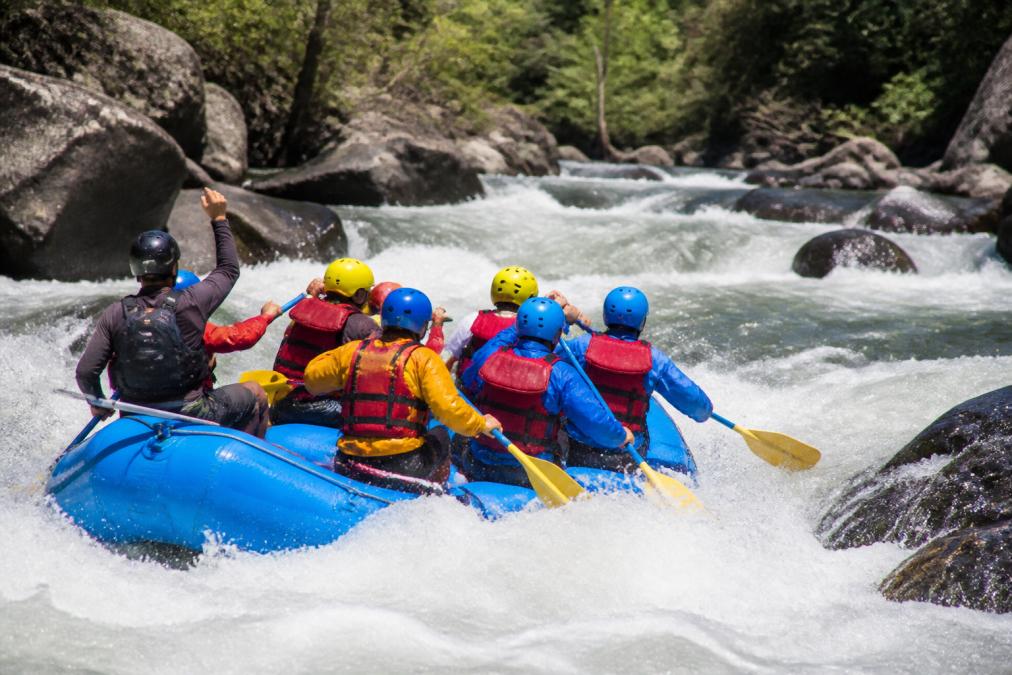
A Class 5 trip runs on a tighter script than a beginner float. Expect a thorough safety briefing, a flip drill, and mandatory scouting from shore before the biggest rapids. Commercial rafting operators typically require prior Class 3 or 4 experience, and many ask about swim ability and medical history before confirming a booking.
Scouting, Safety Briefings, and Flip Drills
Scouting means getting out of the boat to read the rapid from shore and pick a line. Guides point out the eddy, the holes, and the rescue setup. Then comes the flip drill: practice reorienting a capsized raft and pulling paddlers back in. A throw bag demonstration follows. These aren’t formalities. They are the difference between a managed swim and a serious incident.
A typical Class V day on a technical run looks roughly like this:
- Put-in briefing (20-40 minutes). Paddle commands, swim position, throw bag use, whistle signals, and what to do if you’re separated from the boat.
- Warm-up stretch of Class 2-3 water. This is where the guide reads the group, who’s paddling in sync, who’s lagging, who looks nervous.
- First significant rapid with shore scouting. Everyone out of the boat, guide walks the line, points at the hazards by name.
- The committing section. Multiple Class IV-V rapids in sequence, minimal eddy access, no easy portage. This is where the day’s risk concentrates.
- Take-out and gear breakdown. Often the most physically demanding 30 minutes of the day.
The Post-Trip Toll Nobody Warns You About
This is the part competitors leave out. A full Class V day is physically punishing in ways beginners don’t anticipate. Common after-effects reported by first-time Class V guests include:
- Forearm and grip fatigue that lasts a day or two, you’ll notice it opening jars.
- Shoulder and lower-back soreness from bracing and rotating through strokes.
- Adrenaline crash in the hours after the take-out, sometimes mistaken for illness.
- Difficulty sleeping the first night, especially after a swim.
- Mild dehydration and calorie deficit from hours of cold-water exertion.
Plan for it. Hydrate before, during, and after. Eat more than you think you need. Don’t schedule a long drive or a flight the same evening. Give yourself a light next day.
Debriefing: Why It Matters More Than the Trip Recap
A serious outfitter debriefs after the run, and beginners should take that debrief seriously rather than treating it as a formality. A good debrief covers what went well, what nearly went wrong, what each paddler did under pressure, and what the guide would do differently at a different flow. That information is what turns one Class V trip into a foundation for the next one, or into a clear signal that you need another season on easier water.
If your outfitter skips the debrief, ask for it. If you swam, talk through what happened while it’s fresh. If you froze, say so. The debrief is where fear gets converted into skill instead of into a story you tell at dinner.
Ask any outfitter two questions before booking a Class 5 trip: how many years have your guides run this specific river, and what is your swimmer-to-guide ratio on the biggest rapid? Vague answers are a red flag.
How Professional Guides Make Class 5 Rafting Safer
Professional guides reduce risk through route knowledge, precise maneuvering, and practiced rescue protocols. The RaftingInfo guidance on Class V requirements notes that Class V rapids demand precise maneuvering and expert knowledge beyond beginner capabilities, which is exactly what a trained guide brings. Class V expeditions demand precise maneuvering and expert knowledge beyond beginner capabilities, which is exactly what a trained guide brings. This standard is reflected in operations that prioritize scouting every rapid, running conservative lines at high flow, and pairing experienced guides with boats that match the group’s ability.
Ask any outfitter two questions before booking a Class 5 trip: how many years have your guides run this specific river, and what is your swimmer-to-guide ratio on the biggest rapid? Vague answers are a red flag.
When Beginners Should Choose a Lower Class Instead
Beginners should start on Class 2 and 3 water and build up over multiple seasons. The industry consensus, echoed by Wet Planet Whitewater’s classification guide, is that Class V is “extremely difficult” with violent rapids that require shore scouting. That is not a first-timer’s environment. A better path looks like this:
- Book a half-day Class 2 or 3 float to learn basic paddle commands and boat position.
- Take a second trip on Class 3 or easy Class 4 with a focus on self-rescue and swimming in current.
- Practice a flip drill and a throw bag rescue in a controlled setting.
- Only then consider a guided Class 5 trip, and only with an outfitter that requires prior experience.
For families with kids 12 and up, the right starting point is a mild half-day float, not a Class V expedition. Sierra Mac runs trips across that full range on the Tuolumne and Merced rivers, so a family can build experience on easier water and return for the harder stuff when everyone is ready.
Class 5 rafting isn’t a beginner activity, but it is a reachable goal for paddlers who put in the time on lower classes first. The challenge is finding an outfitter who will tell you honestly whether you’re ready, then guide you safely when you are. Sierra Mac has run these rivers since 1965, with professional local guides, expert-led Class V expeditions on Cherry Creek, and trips ranging from mild floats to multi-day adventures just 15 miles from Yosemite’s northwest entrance. Get started and book the trip that matches your actual experience level.
Frequently Asked Questions
Can a beginner do class 5 rapids?
Generally, no. Class 5 rapids are rated extremely difficult and carry a high likelihood of injury or death in the event of a swim, according to whitewater community standards. Beginners lack the paddling technique, self-rescue skills, and river-reading experience these runs demand. The exception is a commercial trip with an expert guide, where guests paddle under close direction. Even then, outfitters typically require prior rafting experience before accepting someone on Class 5 water.
Can you swim in class 5 rapids?
A Class 5 swim is a survival situation, not a swim. Violent currents, hydraulics, and obstructions like undercut rocks and strainers can hold a person underwater or pin them against debris. That is why guides brief every guest on self-rescue, throw bag use, and flip drills before launch. A properly fitted life jacket and helmet are mandatory, but they reduce risk rather than eliminate it. The goal on Class 5 is to stay in the raft.
What physical requirements are needed for Class 5 rafting?
You need enough upper body and core strength to paddle hard on command for sustained stretches, plus the stamina to keep going through multiple rapids in a row. Good cardiovascular fitness matters because adrenaline and cold water raise your heart rate. You should also be comfortable in moving water and able to follow precise directions quickly. Outfitters may ask about medical conditions, so disclose anything that affects your ability to paddle or self-rescue.
How do professional guides ensure safety on Class 5 rivers?
Guides scout rapids from shore, set the line before anyone enters the water, and position safety kayakers or catchers downstream. They run flip drills and self-rescue practice, carry throw bags, and give commands that keep paddlers synchronized. Professional operations also track river flow and water volume daily, since conditions change the difficulty of a rapid. Professional operations track river flow and water volume daily, since conditions change the difficulty of a rapid, and their preparation reflects this.