
How to Prepare for a Class IV Rafting Trip: 2026 Guide
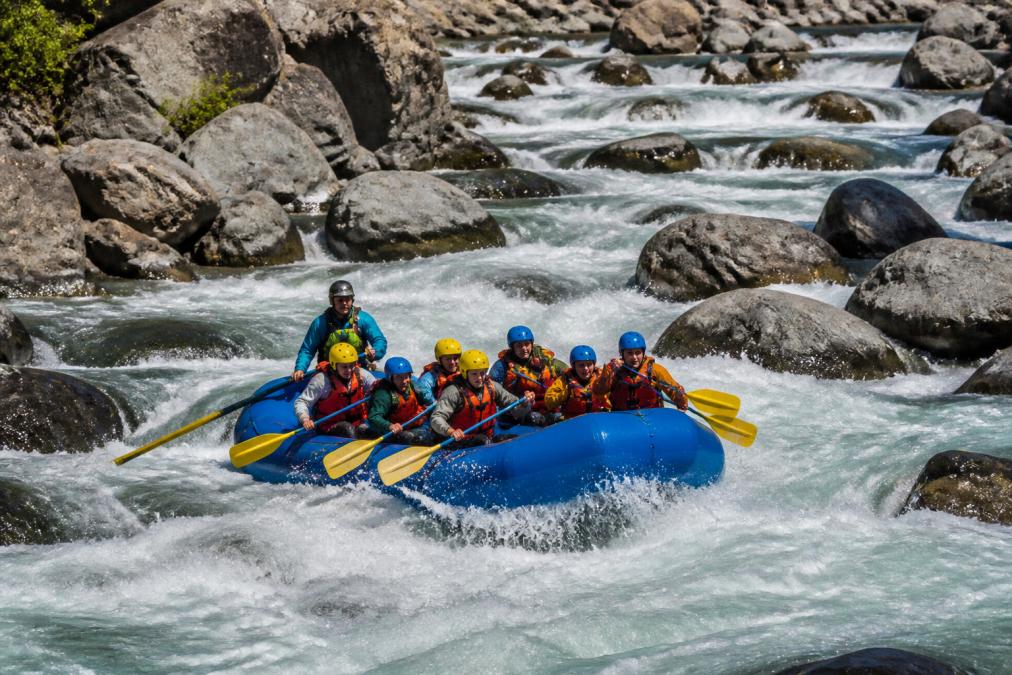
Table of Contents
- What Defines a Class IV Rafting Trip
- Physical Requirements for Class IV Rafting
- What to Wear Whitewater Rafting: Gear Checklist
- How to Paddle in Whitewater: Commands and Technique
- Safety Gear and the Guide’s Role on Class IV Rapids
- Mental Preparation and Managing Fear on the River
- Post-Trip Recovery and Muscle Care
- Final Pre-Trip Checklist and What to Leave Behind
- Frequently Asked Questions
Last Updated: September 7, 2026
Whitewater rafting is statistically far safer than most people assume, with a documented fatality rate of roughly 0.55 deaths per 100,000 user-days and an injury rate of just 0.26 per 1,000 user-days (Sierra Mac 2026 river safety data). Still, a Class IV trip is a different animal than a scenic float, and knowing how to prepare for a class iv rafting trip is the difference between a day of exhilaration and one of unnecessary risk. This guide from Sierra Mac, a family-owned outfitter running rivers near Yosemite since 1965, breaks down exactly what you need physically, mentally, and practically to handle advanced whitewater. Below, we cover the fitness baseline, gear choices, paddling commands, and the mental game that most first-timers overlook.
What Defines a Class IV Rafting Trip
A Class IV river is defined by powerful, technical rapids that demand precise boat handling, quick decisions, and a real risk of flipping. These runs feature large, unavoidable waves, strong hydraulics, and narrow passages where scouting is often required. The key distinction from Class III is consequence: the margin for error is thin.
Expect continuous action with few calm stretches to recover. Water volume and gradient combine to create features that push the raft hard. Professional guides scout ahead, set safety lines, and call precise commands to navigate hazards. This is not a passive ride; the crew’s teamwork directly influences how cleanly the boat runs each drop.
This intensity is why many outfitters set age minimums. Industry guidance for high-intensity trips often requires participants to be at least 16 years old on Class IV-V water (Citi 2026 rafting industry guidelines). Commercial trips also require you to sign a waiver acknowledging the inherent risks of hydraulics and swift current.
Physical Requirements for Class IV Rafting
Class IV rafting demands a specific blend of aerobic endurance, muscular power, and core stability. You are not just paddling; you are bracing against hydraulic forces, pulling your body weight back into the raft after a hit, and sustaining explosive effort for up to four hours. A common mistake is training only the arms. The power for a paddle stroke comes from your legs and torso rotation, not your biceps.
Start your preparation at least six weeks before your trip. The goal is not to become an athlete but to build a baseline that lets you enjoy the day rather than survive it. A practical benchmark: sustain 30 minutes of moderate-to-vigorous cardio without stopping, then immediately perform 20 push-ups and 15 squat jumps.
The Six-Week Training Window
Weeks 1-2: Build the Aerobic Base. Engage in 30-45 minutes of cardio three times per week. Swimming is ideal because it mimics the upper-body engagement and breath control you will need; if you cannot swim laps, use a rowing machine or elliptical. Keep your heart rate in Zone 2 (roughly 60-70% of your max).
Weeks 3-4: Add Power Intervals. Twice a week, replace one cardio session with interval training. On a bike or rower, do 10 rounds of 30 seconds of maximum-effort work followed by 90 seconds of easy pedaling. This simulates the rhythm of a river: a burst of hard paddling through a rapid, followed by a calm stretch.
Weeks 5-6: Sport-Specific Strength. Two days per week, perform 3 rounds of the following circuit with minimal rest between exercises:
- Kettlebell Swings (15 reps): Develops explosive hip drive, which is the true engine of a paddle stroke.
- Renegade Rows (10 per side): Forces your core to stabilize while your lats pull, mimicking the anti-rotation demands of bracing in a raft.
- Plank with Shoulder Taps (20 taps): Builds the rotational stability needed to keep your torso square to the bow.
- Push-ups (15 reps): Prepares your chest and triceps for the high-side maneuver, where you throw your body weight onto the tube.
- Farmer’s Carry (60 seconds with heavy dumbbells): Strengthens your grip and traps, which are taxed when you hold the paddle shaft under load.
The Overlooked Component: Grip Strength. Your forearms will fatigue faster than any other muscle group. The constant isometric contraction required to hold the paddle t-grip is uniquely taxing. To prepare, hang from a pull-up bar for 30 seconds at a time, or squeeze a tennis ball for 5 minutes daily.
Swimming and Breath Control. Most commercial Class IV trips require you to swim a short distance in a pool during the safety briefing. If you are not a confident swimmer, take a few lessons before the trip. You must be comfortable putting your face in turbulent water and swimming 25 meters with a PFD on. Practice ‘dead man’s float’ (floating on your back with your feet downstream) to build comfort with the position you will take if you swim a rapid.
The Day Before and Morning Of. The day before, do a light 20-minute jog and a full-body stretch. On the morning of the trip, eat a meal of complex carbohydrates and moderate protein, oatmeal with fruit and eggs is ideal, about 90 minutes before launch. Hydrate aggressively the day prior and bring a water bottle with electrolytes to sip during the shuttle ride.
A final note on honesty: if you cannot comfortably perform a flight of stairs without getting winded, a Class IV trip is not the right choice yet. Consider a Class III trip to build your river legs; the river will still be there next season.
What to Wear Whitewater Rafting: Gear Checklist
What to wear whitewater rafting comes down to one rule: avoid cotton entirely. Cotton absorbs water, chills you rapidly, and adds weight when you swim. Instead, wear wool or synthetic layers like polypropylene or fleece, which retain warmth even when wet (Citi 2026 technical apparel guidance).
Secure footwear is non-negotiable. Old sneakers or dedicated water shoes protect your feet when walking on slick rocks and give you traction if you need to brace in the raft. Flip-flops and bare feet are unsafe on riverbanks and in the boat.
Your outfitter typically supplies the critical safety items, but you should confirm what is included. A well-fitted PFD (personal flotation device) and a helmet are mandatory on Class IV. Bring a change of dry clothes, a towel, and a waterproof dry bag for your keys and phone. Sunscreen and a hat are essential even on overcast days.
| Item | Purpose | Recommendation |
|---|---|---|
| Base layer (wool/synthetic) | Warmth when wet | Avoid cotton at all costs |
| Secure footwear | Traction on rocks | Old sneakers or water shoes |
| PFD and helmet | Core safety gear | Supplied by outfitter |
| Dry bag | Protect valuables | Waterproof, sealed |
| Sunscreen and hat | UV protection | Water-resistant formula |
How to Paddle in Whitewater: Commands and Technique
The guide calls the shots, and your job is to react instantly. The core paddle command is “forward,” which means everyone digs in simultaneously for a powerful stroke. “Back paddle” stops momentum, while “left back” or “right back” turns the boat. The “high-side” command is the most critical: everyone moves to the raised side of the raft to prevent a flip.
Your grip matters. Hold the t-grip at the top of the paddle with one hand and the shaft lower with the other. Keep your arms relatively straight and rotate from your torso rather than pulling with just your arms. This engages your core and reduces fatigue.
Bracing is the skill that keeps you in the boat. When you feel the raft tip, plant your paddle flat against the water’s surface on the downhill side and push down. A common mistake is holding the paddle too tight; a relaxed grip allows for better control and prevents forearm cramping.
Practice the “flip drill” mentally before you launch. If the raft goes over, your guide will give clear instructions. Tuck your paddle under the raft, stay with the boat unless told otherwise, and keep your feet pointed downstream to avoid snagging on rocks. Your PFD does the work of keeping you afloat.
Safety Gear and the Guide’s Role on Class IV Rapids
The guide is the most important safety asset on a Class IV river. Their training covers swiftwater rescue, emergency protocols, and reading the river’s hydraulics to choose the safest line through each rapid. They scout ahead, place safety kayakers at technical drops, and direct the crew with clear commands.
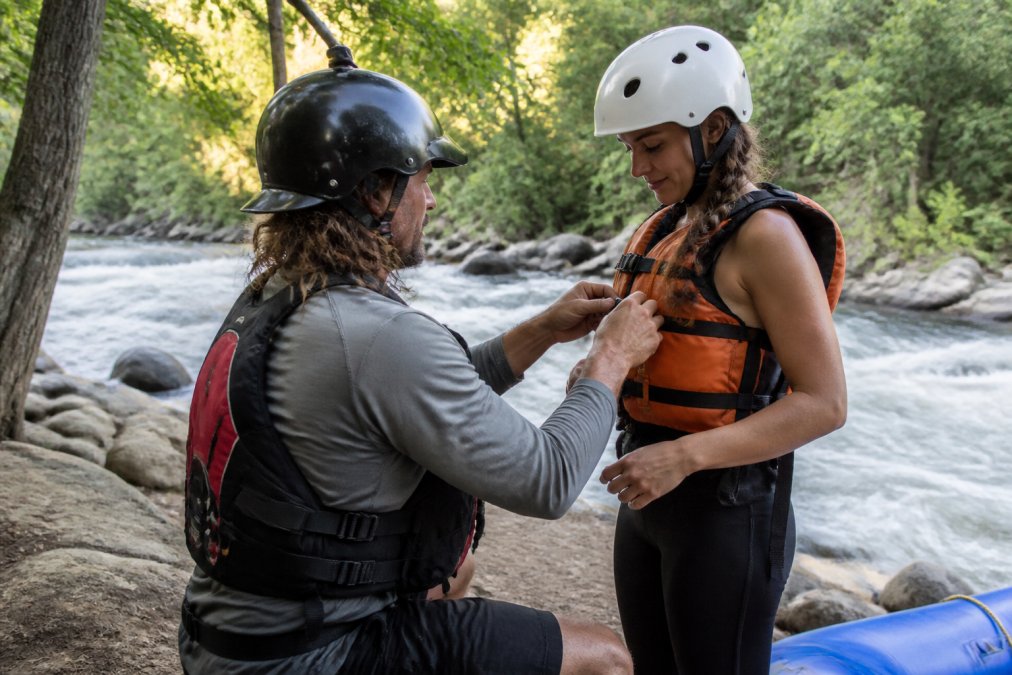
Your PFD must fit snugly. It should not ride up over your chin when you lift your arms. The helmet should sit level on your head, covering your forehead without blocking your vision. Adjust both before you board, and ask your guide to double-check the fit. durable survival gear.
A professional operation runs a tight safety net, including throw bags, first-aid kits, and communication systems. The guide’s risk assessment is continuous, factoring in water temperature, flow rate, and the skill level of the crew. Your primary job is to listen, paddle hard, and stay in the raft.
Mental Preparation and Managing Fear on the River
Fear on Class IV water is not a weakness; it is a physiological response to a genuine threat. Your amygdala detects the roar of a hydraulic and signals a cortisol and adrenaline dump before your conscious brain can process the scene. The goal is not to eliminate this response, that would dull the experience, but to build a cognitive toolkit that prevents the fear from hijacking your motor skills.
Cognitive Reframing: From Threat to Challenge. Your appraisal of the situation dictates your physiological response. If you label the rapid as a ‘threat,’ your body prepares for defense; if you label it a ‘challenge,’ your body prepares for performance. Before each rapid, silently repeat a challenge-oriented phrase. Instead of ‘Don’t flip,’ say ‘Drive through the hole.’ Instead of ‘I’m scared,’ say ‘I’m amped up.’
Box Breathing for Adrenaline Spikes. When you feel the spike coming, usually as the guide calls ‘Forward!’ for the first big drop, use the box breathing pattern: inhale for four, hold for four, exhale for four, hold for four. One or two rounds will lower your heart rate by stimulating your vagus nerve. Do not try to take deep belly breaths while paddling; instead, time your exhale with your stroke, exhaling forcefully as you plant the blade.
The 3-Second Rule for Panic Interruption. When you feel the spiral of catastrophic thinking (‘What if I flip? What if I hit a rock?’), you have roughly three seconds before the thought loop gains momentum. Use a physical anchor to interrupt it: squeeze your paddle shaft as hard as you can for two seconds, then release. Alternatively, count the strokes: ‘One, two, three, four’ as you paddle.
Visualization with ‘If-Then’ Planning. General visualization is helpful, but specific ‘if-then’ plans are more effective. Before the trip, run this scenario: ‘If the raft tips, then I will tuck my paddle under the raft, keep my feet up, and count to ten before I surface.’ Rehearse the physical motions of tucking and bracing. When the real event occurs, your body will follow the script you have practiced.
The ‘Worst-Case Scenario’ Audit. Anxiety thrives on vagueness. Sit down before the trip and write out your worst-case scenario in concrete terms. ‘The raft flips, I go under, I hit my head, I drown.’ Now audit that scenario against reality: you are wearing a USCG-approved Type V PFD with 15.5 pounds of buoyancy, a helmet rated for impact, there are two safety kayakers downstream and a guide with a throw bag on the shore, and the rescue time in a commercial setting is under two minutes. When you examine the fear with logic, the gap between the catastrophic thought and the actual risk becomes clear.
Managing the Adrenaline Hangover. The adrenaline high will be followed by a crash. After the trip, you may feel exhausted, irritable, or oddly emotional; this is a normal neurochemical drop. Plan for a low-stimulation evening: eat a solid meal, hydrate, and avoid alcohol. The next day, light exercise and sunlight will help reset your circadian rhythm.
The Guide as Your Cognitive Anchor. Your guide is trained to manage panicked guests. If you feel overwhelmed, do not look at the water; look at the guide’s face. Their calm demeanor is a social cue that your brain can use to down-regulate its own alarm. Tell your guide before launch that you are nervous. They will give you a specific job, ‘You are the bow lookout’, which gives your brain a task to focus on other than the fear.
Post-Trip Recovery and Muscle Care
A day on Class IV water is a full-body workout, and recovery matters as much as preparation. Your shoulders, back, and core will feel the strain hours after you take off your PFD. Stretch those muscle groups gently within an hour of finishing.
Hydration is critical post-trip. You lose fluids through exertion and sun exposure, so drink water steadily through the afternoon. Replacing electrolytes helps if you were paddling hard in warm conditions. A protein-rich snack within two hours supports muscle repair.
Expect some soreness the next day, particularly in your lats and forearms. Light activity like walking helps flush lactic acid. If you experience sharp pain rather than dull soreness, that signals overexertion, and you should rest. The mental fatigue is real too; give yourself time to decompress.
Final Pre-Trip Checklist and What to Leave Behind
Run this checklist the night before so the morning of your trip is relaxed. Confirm your outfitter’s meeting time and location, and know whether transportation to the put-in is provided. Pack your dry bag with a change of clothes, a towel, and any medications you need. Wear your base layer and secure footwear to the river.
Leave behind items that do not belong on the water. Jewelry, watches, and loose items can snag on gear or be lost in a swim. Phones and cameras stay in the dry bag unless they are in a waterproof case. Do not bring glass containers on a rafting trip; they are a hazard if the boat flips.
Environmental stewardship is part of a responsible trip. Pack out everything you bring in, including sunscreen residue and food wrappers. Respect the riverbanks and wildlife, and follow your guide’s instructions on where to stop.
Frequently Asked Questions
Are Class IV rapids safe for beginners?
Class IV rapids are not recommended for first-time rafters. These rapids feature powerful currents, large waves, and technical maneuvers that require precise paddling and quick reactions. Most outfitters require participants to be strong swimmers and in good physical condition. If you are new to rafting, start with Class II or III trips to build your skills and confidence before attempting a Class IV adventure.
What physical fitness level is required for Class IV rafting?
Class IV rafting demands good cardio endurance, upper body strength, and core stability. You should be comfortable swimming in moving water and capable of performing rapid, forceful paddle strokes for extended periods. Expect to brace hard against strong hydraulic forces. A regular routine of swimming, rowing, or gym workouts focused on back and shoulders will help you handle the physical demands and recover faster.
Do they weigh you before whitewater rafting?
Many professional outfitters ask for your weight during booking or check-in. This is not about judgment; it is for safety and boat balance. Rafts need proper weight distribution to navigate rapids correctly and to ensure the raft has enough freeboard. Your guide uses this information to position paddlers and, in some cases, to determine if a trip is suitable for you based on weight limits for high-intensity water.
Are Crocs ok for rafting?
No, Crocs are not suitable for whitewater rafting. They offer no ankle support and can easily slip off your feet in turbulent water. Secure footwear is mandatory on Class IV trips. Water shoes or old athletic shoes with a grippy sole are the best choice. They protect your feet from sharp rocks when swimming and provide traction on the slippery floor of the raft.
Preparing for a Class IV trip is about respect: respect for the river’s power, for the skill required, and for the safety systems that make it possible. Sierra Mac has guided adventurers on the Tuolumne, Merced, and Cherry Creek rivers since 1965, offering expert-led trips from mellow floats to intense Class V expeditions just 15 miles from Yosemite’s northwest entrance. Book your trip with Sierra Mac and put your preparation to work on some of the most iconic whitewater in the country.