
Benefits of Multi-Day Rafting Expeditions
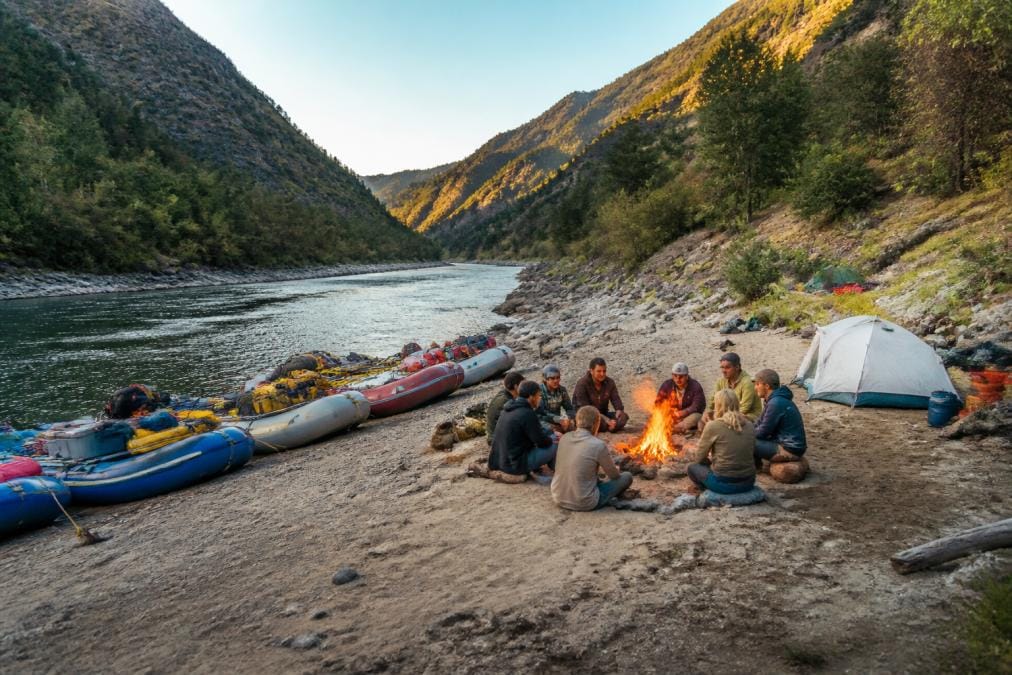
Table of Contents
- Why Multi-Day Rafting Expeditions Outperform Single-Day Trips
- Physical and Mental Health Benefits of Extended River Expeditions
- Physical Requirements for Class V Rafting: What to Know Before You Go
- Social Bonding, Wilderness Immersion, and the Off-Grid Reset
- What to Pack for a Multi-Day Rafting Trip
- Sustainable River Travel: Leave No Trace on Multi-Day Expeditions
- How to Choose a Multi-Day Rafting Outfitter You Can Trust
- Conclusion
Last Updated: August 26, 2026
Research from UC Berkeley’s study on nature and psychological health found that participants reported a 29% reduction in PTSD symptoms and a 21% decrease in general stress just one week after a river rafting trip. At Sierra Mac, we’ve guided guests through some of the most demanding and rewarding whitewater in the country since 1965, and the difference between a half-day trip and a multi-day expedition is fundamental. Below, we’ll break down exactly what makes extended river expeditions worth every mile, what to pack, what to expect physically, and how to choose an outfitter you can actually trust.
Why Multi-Day Rafting Expeditions Outperform Single-Day Trips
Multi-day rafting expeditions deliver a depth of experience that single-day trips cannot replicate. A single-day float gives you a taste of the river. A multi-day expedition gives you the river itself: its moods at dawn, its silence after dinner, its canyon walls at golden hour.
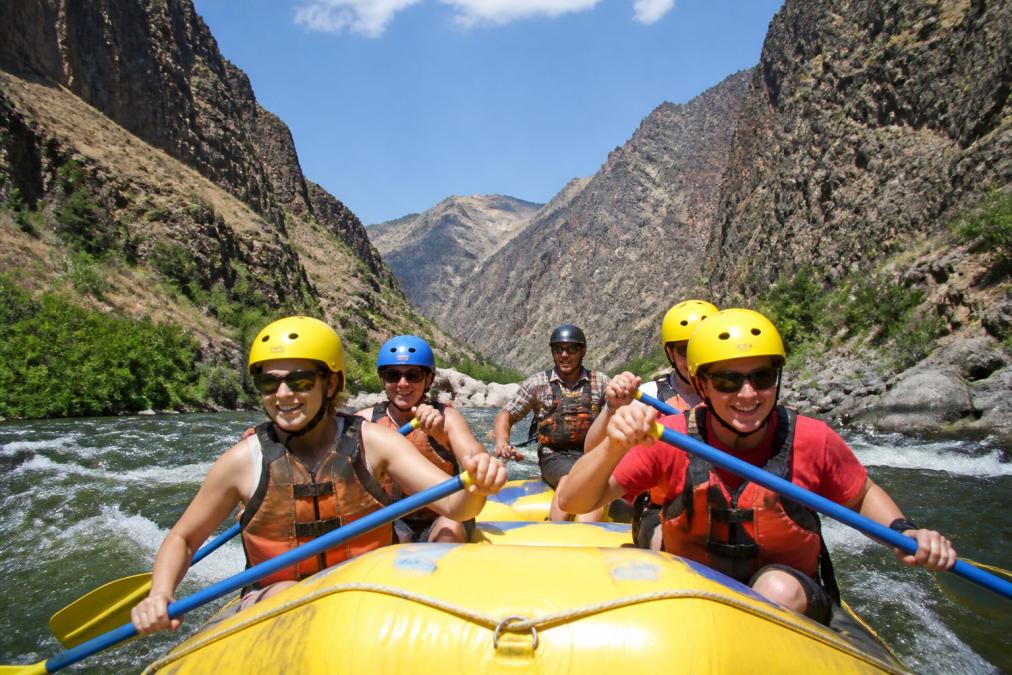
On a one-day trip, you spend the first hour getting comfortable and the last hour thinking about the drive home. On a multi-day expedition, you settle into the rhythm of the river corridor. The mental chatter fades. The scenery becomes your entire world.
According to Future Data Stats’ whitewater rafting market analysis, the global whitewater rafting market was valued at $2.0 billion in 2024 and is projected to reach $3.5 billion by 2032, growing at 7% annually. That growth is driven largely by demand for immersive, multi-day experiences.
Here’s what you gain by staying on the river:
- Wilderness immersion: No road access, no cell signal, no crowds. You’re genuinely off-grid.
- Rapid progression: Paddling improves dramatically over multiple days as you read water and build confidence.
- Unscheduled time: Evenings at camp, side hikes, swimming holes. The itinerary has breathing room.
- A complete arc: You start as strangers to the river and leave as people who know it.
Physical and Mental Health Benefits of Extended River Expeditions
Extended time on the water produces compounding physical and psychological benefits that a single session cannot generate. The body adapts. The mind quiets. The combination of physical exertion, natural scenery, and social connection creates conditions for genuine recovery.
What the Science Says About Stress, PTSD, and Awe on the Water
A UC Berkeley study published in the journal Emotion followed 72 military veterans and 52 teens from underserved communities on one- to four-day river trips. One week after the experience, participants reported a 29% reduction in PTSD symptoms, a 21% decrease in general stress, a 10% improvement in social relationships, a 9% improvement in life satisfaction, and an 8% increase in happiness.
The mechanism centers on awe. Being surrounded by towering canyon walls, fast-moving water, and open sky triggers a psychological state linked directly to stress reduction.
"The more awe people felt during the white-water rafting trips, the happier and less stressed they were a week later."
— Craig Anderson, Postdoctoral Researcher and Fellow at UC Berkeley and UCSF (UC Berkeley Research, 2018)
Nature therapy works partly because it quiets the prefrontal cortex, the part of the brain responsible for rumination and self-criticism. Journalist and author Florence Williams, who wrote The Nature Fix, described this effect:
"We seem to be giving our prefrontal cortex a break, so our thinking brain is quieting down and given a rest. So that can refresh our creativity and allow for mind-wandering. People’s self-concept seems to change too."
— Florence Williams, Author of The Nature Fix (OARS, 2018)
A separate study examining veterans with PTSD found statistically significant improvements in depression and meaning-in-life scores after a four-day river rafting experience. Benefits appeared to diminish by a three-month follow-up, suggesting that regular engagement in river-based recreation produces more sustained results than a single trip.
Calories Burned, Muscles Worked, and the Fitness Payoff
Whitewater rafting burns between 350 and 700 calories per hour, according to Outland Expeditions’ guide to rafting fitness benefits. On a multi-day expedition, that output compounds across six to eight hours of daily paddling and hiking. The muscle groups engaged include core (constant bracing and rotation), shoulders and arms (high-brace strokes and forward paddling), legs (bracing during technical rapids), and back (sustained posture over long paddling days).
Physical Requirements for Class V Rafting: What to Know Before You Go
Class V rapids are the upper limit of commercially guided whitewater. They involve powerful, violent water, mandatory scouting, and sequences of moves that leave no margin for error. Before committing to a Class V expedition, honest self-assessment is essential.
Minimum physical baseline for Class V:
- Comfortable swimming in moving water without panic
- Ability to hold a paddle and brace for 6+ hours per day
- No uncontrolled heart conditions or recent joint injuries
- Reasonable upper-body endurance
Fitness preparation makes a significant difference. Spend the six weeks before your trip building shoulder and core strength through paddling-specific resistance bands, planks, and rotational cable rows. Cardiovascular conditioning matters too: hiking, cycling, or swimming three to four times per week will prepare your body for sustained output.
The water flow classification system runs from Class I to Class VI. Class IV involves powerful, predictable rapids. Class V involves long, obstructed, or very violent rapids where a swim carries serious risk. Class VI is considered un-runnable commercially. Any reputable outfitter will tell you plainly where a specific river trip sits on that scale.
Guests with heart conditions, recent orthopedic surgery, or limited swimming ability should discuss their situation directly with the outfitter before booking a Class IV or V expedition. Withholding this information puts you and your guides at risk.
Age is less of a barrier than most people assume. Fitness level, swimming comfort, and willingness to follow guide instructions matter far more than the number on your driver’s license.
Social Bonding, Wilderness Immersion, and the Off-Grid Reset
There is something about shared risk and shared beauty that accelerates human connection in ways that a dinner out or a weekend at a resort simply cannot match.
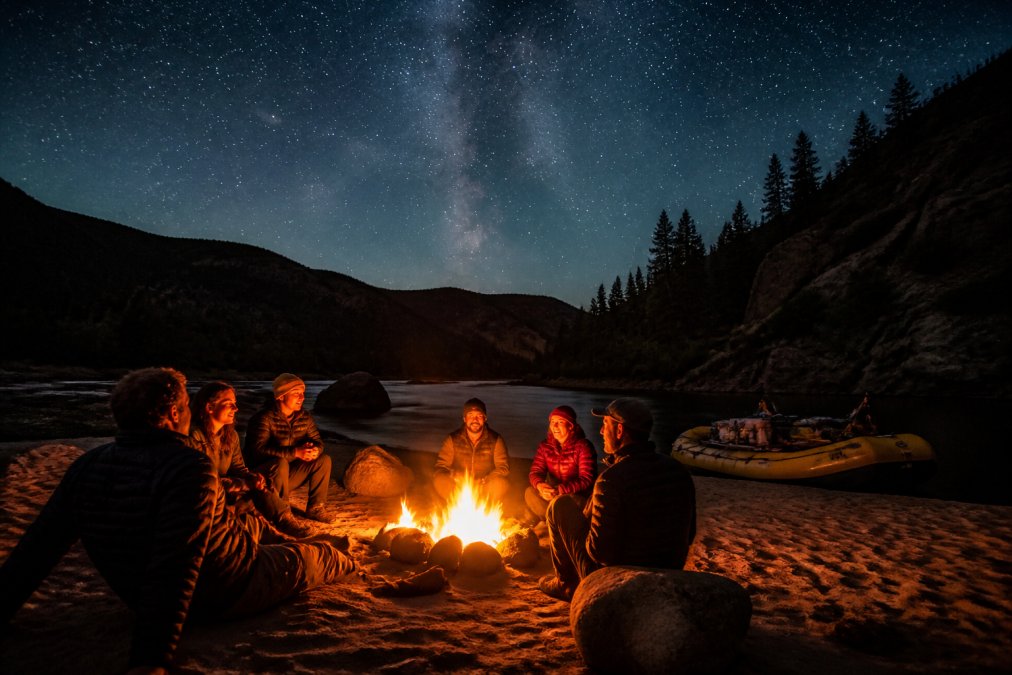
Multi-day rafting expeditions strip away the usual social scaffolding. No one is checking their phone. No one is distracted by an inbox. The group dynamic that emerges over three or four days on a remote river corridor is qualitatively different from anything that happens in a conference room or resort pool. You solve problems together. You cheer each other through rapids. You eat camp kitchen meals under stars that you can actually see.
The UC Berkeley research captured this effect quantitatively: participants reported a 10% improvement in social relationships one week after their river trip. That number is significant because it was measured after the trip ended, not during it. The connection built on the water carried forward into daily life.
Wilderness immersion also produces what researchers call "soft fascination," a state where the mind is gently engaged by natural stimuli without the cognitive demand of screens or structured tasks. This state is associated with improved attention, reduced mental fatigue, and increased creative thinking.
The social and psychological benefits of multi-day rafting are most pronounced when participants are genuinely off-grid for at least two consecutive nights.
What to Pack for a Multi-Day Rafting Trip
Knowing what to pack for a multi-day rafting trip separates a comfortable expedition from a miserable one. Experienced guides handle most of the heavy logistics. Your job is to show up with the right personal gear.
Gear Your Guides Provide vs. What You Bring Yourself
| Category | Provided by Guides | You Bring |
|---|---|---|
| Safety gear | Personal flotation device, helmet, throw bag | |
| Paddling equipment | Paddles, oars, raft | Paddling gloves (optional) |
| Camp kitchen | Stoves, cookware, food, water filtration | Personal snacks, dietary items |
| Shelter | Tents or tarps (varies by outfitter) | Sleeping bag, sleeping pad |
| Dry storage | Dry bags for group gear | Personal dry bag for clothes |
| First aid | Comprehensive river first aid kit | Personal medications |
What you bring:
- Quick-dry clothing (avoid cotton)
- Sun protection: hat with brim, sunscreen SPF 50+, UV-blocking lip balm
- Sturdy sandals or water shoes with ankle support
- Warm layer for evenings
- Personal dry bag for clothes and valuables
- Headlamp with extra batteries
- Sunglasses with a retention strap
Pack everything into your personal dry bag before the trip and seal it. Then try to lift it with one hand. If you can’t, it’s too heavy. River camping rewards ruthless packing.
Nutrition and Hydration Planning for Days on the River
Most full-service outfitters provide all meals on multi-day expeditions, and the quality is typically far better than guests expect. A skilled camp kitchen crew can produce grilled salmon, fresh salads, and Dutch oven desserts in conditions with no running water or electricity.
Aim for at least 3 liters of water per day on active paddling days. Electrolyte tablets or powder prevent cramping and fatigue from sweat loss. Communicate dietary restrictions to your outfitter at booking, not on launch day. High-calorie, compact snacks like nuts, jerky, and energy bars are worth packing for long paddling stretches. Confirm the outfitter’s alcohol policy in advance, and recognize that alcohol accelerates dehydration.
Sustainable River Travel: Leave No Trace on Multi-Day Expeditions
The river corridor is a fragile ecosystem. Multi-day expeditions pass through wilderness areas that see limited human traffic, and the cumulative impact of poor practices adds up fast. Responsible river travel is a condition of access.
The Leave No Trace Center for Outdoor Ethics principles provide the framework that professional river guides operate within. On a permitted river expedition, these principles translate into specific practices:
- Waste management: All human waste is packed out using groover systems. Nothing goes into the river or riparian zone.
- Fire management: Camp fires are permitted only in fire pans on sandy beaches, with ash packed out.
- Campsite selection: Camp on durable surfaces, typically established sandy beaches, never on fragile vegetation.
- Wildlife distance: Keep food stored and away from wildlife. Do not approach or feed animals.
- River permits: Many spectacular multi-day river corridors require advance permits through the National Park Service or Bureau of Land Management. Reputable outfitters secure these permits and manage compliance.
How to Choose a Multi-Day Rafting Outfitter You Can Trust
Choosing a multi-day rafting outfitter is one of the most consequential decisions in adventure travel. The wrong choice means mediocre guides and poor safety culture. The right choice means professional expertise, genuine wilderness access, and a trip you’ll reference for the rest of your life.
Here’s what to evaluate:
1. Years of operation and safety record. Look for outfitters with documented histories. A company that has been guiding the same rivers for decades has encountered conditions that newer operators haven’t.
2. Guide certification and experience. Ask specifically about guide training, certifications, and how long the guiding staff has worked the specific rivers on your itinerary. Local knowledge on technical whitewater is not interchangeable.
3. River permits and compliance. Legitimate outfitters hold the required permits for every river they run. Ask to see proof or confirm permit status directly with the managing agency.
4. Group size and trip structure. Smaller groups generally mean more personalized guidance and safer outcomes on technical water. Ask about maximum group sizes and guide-to-guest ratios.
5. Transparent communication about difficulty. Any outfitter that downplays the physical demands of a Class IV or V expedition is telling you something important about how they operate.
6. Verified reviews across multiple platforms. Check Google, TripAdvisor, and Facebook for patterns across dozens of reviews, not just a curated selection on the outfitter’s own site.
Sierra Mac has operated on the Tuolumne, Merced, and Cherry Creek rivers since 1965, making it one of the most established family-owned outfitters in the country. As the first outfitter to guide commercially on both the Merced and Tuolumne Rivers, and the pioneer of Class V commercial rafting on Cherry Creek, the company’s local expertise runs three generations deep. That’s the kind of institutional knowledge that matters when the water gets technical.
| Evaluation Criteria | What to Look For | Red Flag |
|---|---|---|
| Years in operation | 10+ years on specific rivers | No documented history |
| Guide credentials | Certified, locally experienced | Seasonal staff with no local knowledge |
| Permits | Verified NPS/BLM permits | Vague or evasive about permit status |
| Group size | Published guide-to-guest ratios | No information available |
| Reviews | Consistent patterns across platforms | Only curated testimonials on own site |
| Difficulty transparency | Clear, honest trip ratings | Downplayed or vague difficulty descriptions |
The adventure travel market is full of operators promising premium experiences. The ones who deliver have a track record that predates their Instagram account.
Planning a multi-day rafting expedition takes real preparation, from fitness and gear to choosing an outfitter with the credentials to keep you safe on serious water. Sierra Mac has been doing exactly that since 1965, running expert-led expeditions on the Tuolumne, Merced, and Cherry Creek rivers with guides whose local knowledge spans generations. Whether you’re after a scenic multi-day float or a full Class V challenge, the experience is built around professional guidance, genuine wilderness access, and the kind of river expertise that only comes from decades on the water. Book your expedition with Sierra Mac and leave the crowds behind.
Frequently Asked Questions
What are the primary benefits of choosing a multi-day rafting trip over a single-day excursion?
Multi-day rafting expeditions give you something a single day simply cannot: full wilderness immersion. You settle into the river corridor's rhythm, build real trust with your group, and experience multiple rapid classifications across changing terrain. UC Berkeley research found that whitewater rafting participants reported a 29% reduction in PTSD symptoms and a 21% decrease in general stress a week after their trip. A single-day outing starts before that deeper reset can take hold.
What are the health benefits of river rafting?
Rafting works your core, arms, and cardiovascular system simultaneously, burning 350 to 700 calories per hour depending on intensity. Beyond the physical workout, UC Berkeley's 2018 study found that participants reported a 9% improvement in life satisfaction and an 8% increase in happiness a week after their trip. The combination of physical exertion, awe-inspiring scenery, and social connection makes multi-day rafting one of the more complete outdoor wellness experiences available.
What should beginners expect from a multi-day whitewater rafting experience?
Expect more physical effort than most people anticipate. Loading dry bags, setting up river camp, and maintaining balance through rapids all add up. Professional guides handle camp kitchen logistics, river safety briefings, and rapid classification decisions, so your job is to paddle, follow instructions, and stay present. Most outfitters provide personal flotation devices and all technical gear. Beginners should choose a trip rated for their fitness level and ask outfitters directly about the physical requirements before booking.
How do I choose a multi-day rafting outfitter I can trust?
Check how long the outfitter has been operating and whether their guides hold current swift-water rescue certifications. Ask specifically who guides your trip, not just who owns the company. Read verified reviews on platforms like TripAdvisor or Google, and look for mentions of guide attentiveness and safety culture. Outfitters with deep local expertise on specific rivers, particularly those who pioneered routes rather than simply copied them, typically deliver a more authentic and better-managed expedition.
This article was written using GrandRanker