
Whitewater Rafting With Teenagers: A 2026 Guide
Table of Contents
- Is Whitewater Rafting Safe for Teenagers?
- Age and Weight Requirements for Teen Rafters
- Best Time of Year for Rafting Near Yosemite
- Merced River vs Tuolumne River Rafting for Families
- Safety Tips for Rafting With Teenagers
- Preparing Your Teenager for Their First Whitewater Experience
- Booking Your Whitewater Rafting Trip: Logistics and Next Steps
- Frequently Asked Questions
Last Updated: August 30, 2026
Is Whitewater Rafting Safe for Teenagers?
Commercially guided whitewater rafting with teenagers is statistically safer than many activities parents already allow. The fatality rate for whitewater rafting is roughly 0.55 deaths per 100,000 user-days, which is lower than recreational cycling (1.6), rock climbing (3.2), or swimming (2.6), according to American Whitewater’s multi-year risk analysis. Most fatalities occur on self-guided trips, not commercially guided ones. When your teenager paddles with an experienced guide who knows the river, manages group dynamics, and responds to emergencies, the risk drops dramatically. At Sierra Mac, our guides have decades of combined experience on the rivers near Yosemite, and they’ve guided thousands of guests safely through everything from gentle floats to challenging Class III rapids.
Commercially guided whitewater rafting is statistically safer than cycling, rock climbing, or swimming. The key is choosing a professional outfitter with experienced guides who specialize in working with teenagers.
Age and Weight Requirements for Teen Rafters
Your teenager’s age and weight determine which rivers and rapids they can safely navigate. For the Merced River, a family-friendly option near Yosemite, the recommended minimum age is typically 12-14 during high water, but can be as low as 9 later in the season during lower flows. The Tuolumne River, which offers more challenging Class III-IV rapids, has a minimum age of 14, potentially increasing to 16 during high water conditions in 2026. These age guidelines reflect the physical demands of paddling, the ability to follow safety instructions under pressure, and the likelihood of panicking if something unexpected happens.
Weight requirements exist because proper life jacket fit is critical. Most commercial outfitters require a minimum weight of 50-60 pounds for teenagers to be fitted with a properly secured life jacket. There’s typically no upper weight limit for recreational rafting trips.
| River | Minimum Age (High Water) | Minimum Age (Low Water) | Min. Weight | Rapids Class |
|---|---|---|---|---|
| Merced River | 12-14 | 9 | 50-60 lbs | Class I-III |
| Tuolumne River | 14-16 | 14 | 50-60 lbs | Class II-IV |
Before booking, confirm your teenager’s age and weight with the outfitter. If they’re at the borderline, ask about the specific water conditions for your trip date.
Best Time of Year for Rafting Near Yosemite
Timing determines water temperature, rapid intensity, crowds, and trip availability. Spring (April-June) brings the highest water flows and most challenging rapids, with water temperatures of 45-55°F (peer-reviewed research). Summer (July-September) offers warmer water (60-70°F) and lower flows, making rapids less intense and more accessible for younger paddlers. Fall (September-October) is less crowded with pleasant water temperatures.
According to Seth Davis, Director of Operations at OARS: “The 2026 rafting season is shaping up to be a low-water year across much of the West. Lower peak-flow periods will make trips accessible to more people earlier in the season, particularly families with younger kids.” This means 2026 will favor family trips and beginner-friendly experiences, though the Merced River season wrapped up by mid-May due to lower flows.
Book your teen rafting trip for late spring (May-June) or summer (July-August) if they’re paddling for the first time. Water temperatures are warmer, rapids are less intense, and guides can focus more on teaching technique.
Merced River vs Tuolumne River Rafting for Families
The Merced River is the gentler choice, flowing through scenic granite canyons with Class I-III rapids interspersed with calm sections. This river is ideal for teenagers aged 9-14 (depending on season), first-time paddlers, and families who want adventure without overwhelming intensity. Commercial trips typically run 4-6 hours and cover about 10 miles.
The Tuolumne River delivers a more intense experience with Class III-IV rapids that require more physical strength and mental focus. This river suits teenagers aged 14 and up who have some paddling experience or strong swimming ability. Multi-day Tuolumne trips are popular for groups seeking immersion and camaraderie.
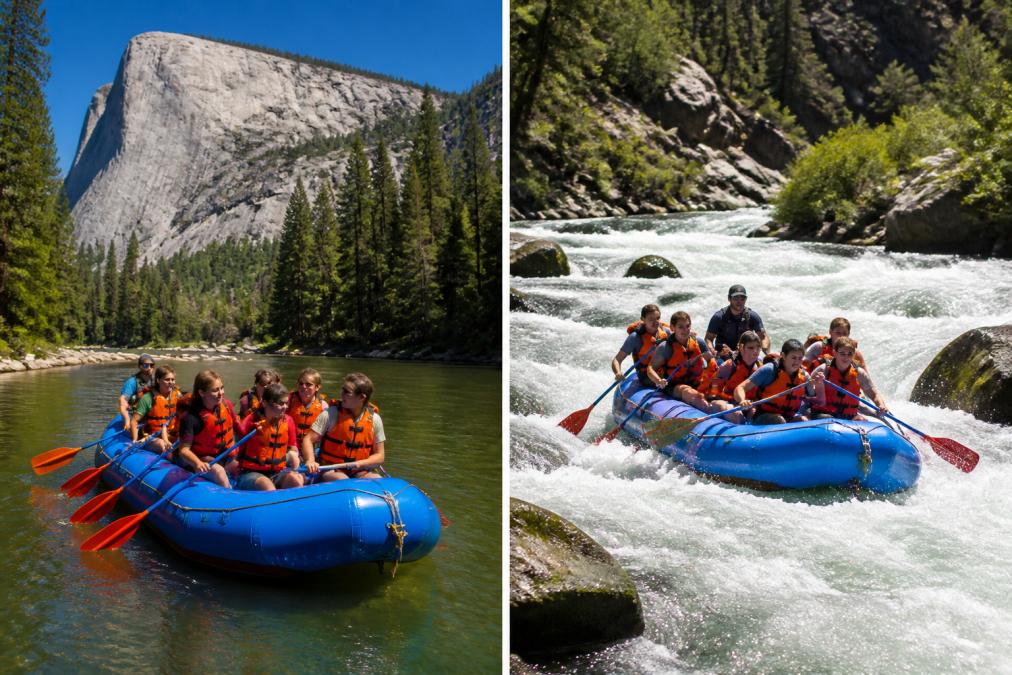
Sierra Mac operates on both rivers, and our guides can help match your teenager to the right one based on their swimming ability, paddling experience, and what kind of challenge they’re seeking. If your teenager is strong in water and craves intensity, the Tuolumne will deliver. If they want to build confidence and enjoy scenery, the Merced is the better starting point.
Safety Tips for Rafting With Teenagers
Professional guides manage most safety concerns, but understanding what to watch for helps you prepare your teenager mentally and physically.
Proper Life Jacket Fit and Wear
A life jacket only protects if it stays on and supports your teenager’s head above water. Before launching, have the guide adjust straps so the jacket is snug. Insist that your teenager keep the jacket fastened for the entire trip.
Helmet Use on Technical Rapids
On Class III and above rapids, helmets are non-negotiable. They protect against head strikes if your teenager falls and tumbles through rocks.
Swimming Ability and Panic Response
Your teenager doesn’t need to be an Olympic swimmer, but they should be comfortable in water and able to stay calm if they fall in. Before the trip, discuss what panic feels like and how to manage it: float on your back, keep your face out of the water, and signal for help.
Following Guide Instructions
When a guide says “paddle left” or “hold on,” they’re responding to specific water conditions you can’t see from your seat. Teenagers who ignore instructions put themselves and others at risk.
Reading Your Teenager’s Physical State
Watch for signs of fatigue, cold, or distress. Check in regularly; if they look exhausted or are shivering, tell the guide.
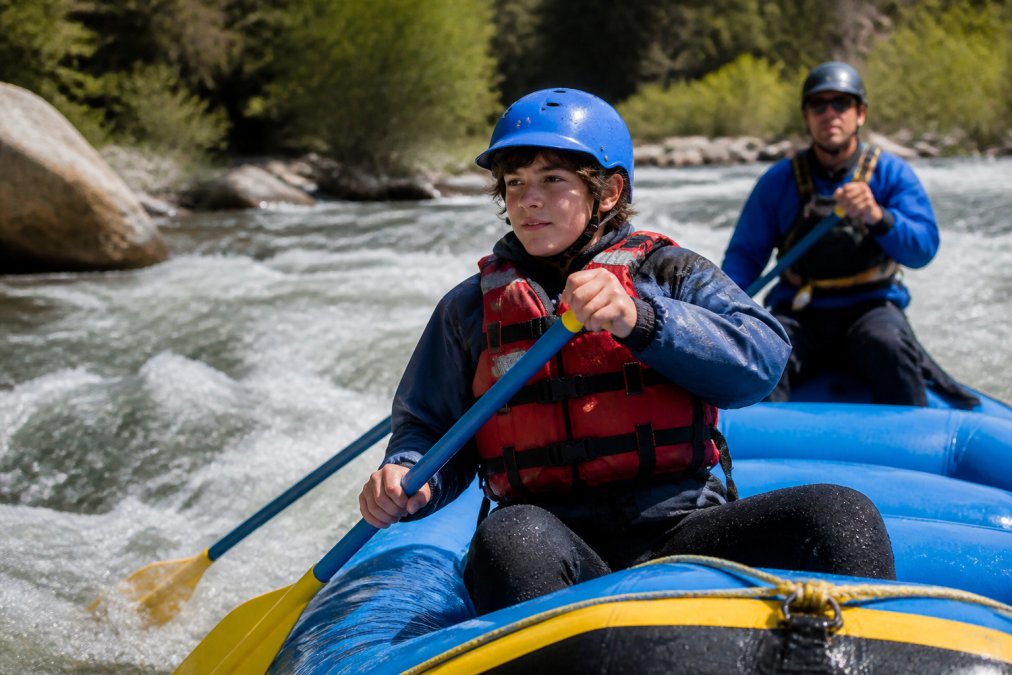
The single biggest safety risk is a teenager who panics in water. Before your trip, talk explicitly about what to do if they fall in: float on their back, keep their face clear, and signal for the guide. Panic causes exhaustion, which causes drowning. Preparation prevents panic.
Preparing Your Teenager for Their First Whitewater Experience
Mental preparation matters as much as physical fitness.
What to Wear and Bring
Dress in layers you don’t mind getting wet. A moisture-wicking base layer (synthetic or merino wool) keeps your teenager warm even when soaked. Avoid cotton. Over that, wear a short-sleeve or long-sleeve rash guard or athletic shirt. In spring and early summer, add a wetsuit or splash jacket for thermal protection.
Wear water shoes or old sneakers with good grip. Sandals slip off in rapids, and bare feet cut easily on rocks. Bring a change of clothes and a towel in a dry bag. Pack sunscreen (water-resistant), a hat that stays on in turbulent water, and any medications your teenager takes regularly. Leave jewelry, phones, and valuables behind.
Physical Fitness and Paddling Technique
Basic cardiovascular fitness helps. Paddling for 4-6 hours engages the shoulders, core, and arms continuously. If your teenager is sedentary, spend 2-3 weeks doing light cardio before the trip.
Proper paddling technique matters because it distributes effort across larger muscle groups. A good guide will teach this on the river, but your teenager will tire less if they understand the basics: grip the paddle with hands shoulder-width apart, rotate from the core rather than pulling with arms alone, and use the paddle’s power face to push water backward.
Practice in a pool or calm water if possible. Even 30 minutes of paddling in flat water builds confidence and teaches basic boat control.
Booking Your Whitewater Rafting Trip: Logistics and Next Steps
Choose Your River and Trip Type
Decide whether you want a half-day float, a full-day trip, or a multi-day expedition. Half-day trips on the Merced are ideal for teenagers trying rafting for the first time.
Confirm Age, Weight, and Ability Requirements
Contact the outfitter directly and provide your teenager’s age, weight, and swimming ability. Ask whether your teenager meets minimum requirements for your chosen river.
Understand Transportation and Logistics
Most outfitters provide shuttle service from a central meeting point to the put-in and from the take-out back to the parking area. Confirm whether this is included in your price. Sierra Mac handles shuttle logistics for guests, which eliminates one major source of stress.
Review Cancellation and Rain Policies
Rivers run based on snowmelt and rainfall. If flows are too low or too high, trips may be cancelled or rescheduled. Confirm the outfitter’s policy and understand that cancellations are safety decisions.
Ask About Guide Experience and Group Size
Request information about your guide’s background and how many people will be in your boat. Smaller groups (6-8 people) allow more personalized instruction.
Book Early for Peak Season
Summer and late spring fill up quickly. Book 4-6 weeks in advance for trips between May and August.
Once you’ve booked, your outfitter will send pre-trip information including what to bring, what to wear, parking details, and a liability waiver. Read the waiver carefully and discuss it with your teenager.
First-time teen rafters aged 12-14 with basic swimming ability. Half-day Merced River trips in summer (July-August) offer manageable rapids, warm water, and guides who specialize in building confidence.
Whitewater rafting with teenagers becomes a concrete plan when you understand the safety data, choose the right river for their experience level, and prepare physically and mentally. The Merced River near Yosemite offers family-friendly Class I-III rapids that challenge teenagers without overwhelming them. Spring and summer conditions make trips accessible and enjoyable, with water temperatures warm enough that younger paddlers stay comfortable.
At Sierra Mac, we’ve guided thousands of guests through these rivers since 1965. Our guides know how to read individual swimmers, adjust pace for mixed-ability groups, and turn first-time paddlers into confident adventurers. We handle the logistics, shuttle service, equipment, and safety protocols, so you can focus on the experience itself. OARS’ 2026 Yosemite rafting guide confirms that the Merced and Tuolumne rivers remain the premier destinations for family rafting in the region. Get started with Sierra Mac and give your teenager a river adventure they’ll remember for life. BOOK NOW to reserve your spot before peak season fills up.
=== FAQ ANSWERS (audit these too, same rules) ===
[1] Q: What is the minimum age for whitewater rafting with teenagers near Yosemite?
A: Age requirements vary by river and water conditions. For the Merced River, the minimum age is typically 12-14, dropping to as low as 9 during lower flows later in the season. The Tuolumne River requires a minimum age of 14, potentially increasing to 16 during high water. These guidelines ensure teenagers have the physical ability to hold a paddle and follow guide instructions safely on whitewater rafting excursions.
[2] Q: Is whitewater rafting safe for teenagers?
A: Yes. Commercially guided whitewater rafting trips are statistically safer than recreational cycling, swimming, or rock climbing. The fatality rate for whitewater rafting is roughly 0.55 deaths per 100,000 user-days, with injury rates around 0.26 per 1,000 user-days on guided trips. Professional guides, proper safety gear including life jackets and helmets, and liability waivers significantly reduce risk. Most incidents occur on self-guided trips, not professionally led excursions.
[3] Q: Should I choose the Merced River or Tuolumne River for my teenager’s first rafting trip?
A: The Merced River is ideal for first-timers and younger teens. It offers a mix of calm floats and Class II-III rapids, making it accessible for families and those new to whitewater rafting. The Tuolumne River is more challenging with stronger Class III-IV rapids, better suited for teenagers with paddling experience or those seeking more intensity. Consider your teen’s comfort level, swimming ability, and adventure appetite when choosing between these two rivers.
[4] Q: What should my teenager wear and bring on a whitewater rafting trip?
A: Wear a properly fitted life jacket (provided by outfitters), helmet, and water shoes with good grip. Bring a wetsuit or quick-dry clothing depending on water temperature, which varies seasonally. Pack sunscreen, a towel, and a dry change of clothes for after the trip. Most outfitters provide essential safety gear, but confirm what’s included when booking. Avoid cotton clothing, as it retains water and causes discomfort in cool river conditions.
Frequently Asked Questions
What is the minimum age for whitewater rafting with teenagers near Yosemite?
Age requirements vary by river and water conditions. For the Merced River, the minimum age is typically 12-14, dropping to as low as 9 during lower flows later in the season. The Tuolumne River requires a minimum age of 14, potentially increasing to 16 during high water. These guidelines ensure teenagers have the physical ability to hold a paddle and follow guide instructions safely on whitewater rafting excursions.
Is whitewater rafting safe for teenagers?
Yes. Commercially guided whitewater rafting trips are statistically safer than recreational cycling, swimming, or rock climbing. The fatality rate for whitewater rafting is roughly 0.55 deaths per 100,000 user-days, with injury rates around 0.26 per 1,000 user-days on guided trips. Professional guides, proper safety gear including life jackets and helmets, and liability waivers significantly reduce risk. Most incidents occur on self-guided trips, not professionally led excursions.
Should I choose the Merced River or Tuolumne River for my teenager’s first rafting trip?
The Merced River is ideal for first-timers and younger teens. It offers a mix of calm floats and Class II-III rapids, making it accessible for families and those new to whitewater rafting. The Tuolumne River is more challenging with stronger Class III-IV rapids, better suited for teenagers with paddling experience or those seeking more intensity. Consider your teen’s comfort level, swimming ability, and adventure appetite when choosing between these two rivers.
What should my teenager wear and bring on a whitewater rafting trip?
Wear a properly fitted life jacket (provided by outfitters), helmet, and water shoes with good grip. Bring a wetsuit or quick-dry clothing depending on water temperature, which varies seasonally. Pack sunscreen, a towel, and a dry change of clothes for after the trip. Most outfitters provide essential safety gear, but confirm what’s included when booking. Avoid cotton clothing, as it retains water and causes discomfort in cool river conditions.
This article was written using GrandRanker