
How to Prepare for Class V Whitewater Rafting
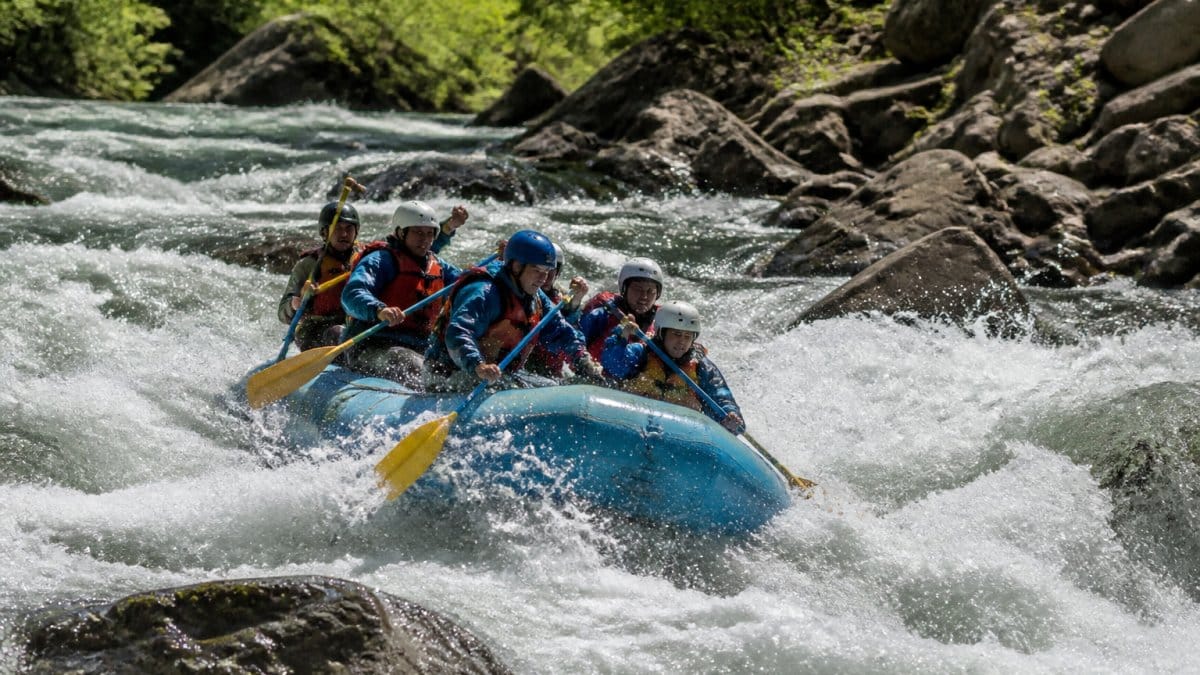
Table of Contents
- Understand Class V Rapids and What to Expect
- Assess Your Readiness and Eligibility
- Build Whitewater Rafting Fitness Requirements
- Master Whitewater Rafting Safety Tips Before You Go
- Gather Your Class V Rafting Gear Checklist
- Prepare a Multi-Day Rafting Packing List
- Plan Your Trip Logistics and Final Steps
- Frequently Asked Questions
Last Updated: October 16, 2026
Understand Class V Rapids and What to Expect
Class V rapids are the most challenging commercially-guided whitewater experiences available: extremely turbulent water, complex obstacles, and powerful currents that demand constant attention and precise paddle work.
Rapids are classified from Class I to Class VI based on difficulty, intensity, and risk, and Class V sits near the extreme end: violent water, multiple obstacles in quick succession, and drops that create significant hydraulics.
You’ll paddle hard for extended stretches while your guide calls commands constantly, and you need to execute them immediately. There’s no time to think, only to react and paddle where directed.
Assess Your Readiness and Eligibility
Not everyone should attempt Class V whitewater rafting. Assess honestly whether you’re ready, and verify that the outfitter agrees.
The Class V Readiness Checklist
Use this checklist as a self-assessment. Be honest; the answers determine whether you belong on Class V now or on Class III-IV first.
Swimming and water confidence
- Can you swim at least 50 yards in moving water without a flotation device?
- Can you stay calm if you’re submerged or pushed underwater for a few seconds?
- Are you comfortable floating on your back with your feet downstream?
Physical fitness
- Can you paddle consistently for 30-45 minutes with short breaks?
- Can you do 10-15 push-ups and hold a plank for 30-60 seconds?
- Can you climb back into a raft from the water without assistance?
Mental readiness
- Can you follow instructions instantly without hesitation?
- Are you comfortable being uncomfortable for hours at a time?
- Can you accept that you may swim in Class V water and that rescue is limited?
Experience
- Have you rafted Class III or IV before?
- Do you understand basic paddle commands and rafting terminology?
- Have you practiced a self-rescue swim in a pool or calm water?
If you answer “no” to more than one or two of these, Class V is likely not the right next step. Build experience on Class III-IV first, then reassess.
Swimming Ability and Self-Rescue Confidence
Swimming ability matters most. If cold water panics you or you struggle to stay afloat, Class V isn’t appropriate; your guide can’t rescue you if you panic. Build confidence in a pool or calm lake: lie on your back, feet downstream, and practice rolling to your stomach and swimming a few strokes to a target. Do this before your trip, not on the river.
Fitness: What Class V Actually Demands
Physical fitness is secondary to mental toughness, but it still matters. You don’t need to be an athlete, but you do need to paddle consistently for hours as your shoulders, arms, and core fatigue. If you can’t commit to that, consider a lower-difficulty trip.
Age, Medical Conditions, and Accessibility
Age isn’t a barrier if fitness and mental readiness are there. Children under 12 rarely have the strength or judgment required, but fit, prepared older adults can absolutely do Class V.
Disclose to the outfitter anything that affects your ability to paddle, your safety in water, or your risk during intense exertion, including:
- Heart conditions, uncontrolled high blood pressure, or a history of fainting
- Seizure disorders
- Recent surgeries, back or neck injuries, or joint problems
Outfitters set their own participation requirements and may require a doctor’s note, so don’t self-clear; ask what they require. If you have accessibility concerns, ask what accommodations are possible on the put-in, the raft, and the take-out.
Questions to Ask the Outfitter Before Booking
A qualified outfitter will welcome these questions.
- Guide qualifications: What training and certifications do your guides hold? How many seasons have they guided Class V? Are they trained in swiftwater rescue?
- Trip suitability: What are your minimum requirements for this trip (age, swimming ability, prior experience)? Do you require a swim test or a prior Class IV trip?
- Safety procedures: What is your guide-to-paddler ratio? Do you run safety kayakers or a second raft? What is your rescue plan for a swimmer?
Lying about your fitness level or swimming ability puts you and your group at serious risk. Guides depend on honest answers to keep everyone safe. If you’re uncertain, start with Class III or IV and build your skills first.
Ask the outfitter for a copy of their pre-trip questionnaire and safety briefing before you book. Reading them in advance tells you a lot about how the company operates and helps you prepare honest answers.
Build Whitewater Rafting Fitness Requirements
Class V demands conditioning beyond casual fitness: you’ll paddle hard, hold core tension, and recover quickly between rapids.
Focus on these three areas:
Upper body and core strength, Your paddle drives the raft. Weak shoulders and arms mean you can’t respond when your guide calls for power strokes. Do push-ups, rows, and overhead presses 3 times per week, plus planks and side planks for the core stability that keeps you balanced when the raft rocks.
Cardiovascular endurance, Class V sections involve sustained paddling with short rest periods.
Grip and forearm endurance, Your hands grip the paddle for hours.
Practice paddling motions in the gym. Use a cable machine or resistance band to simulate paddle strokes. This trains your body for the exact movement pattern you’ll use on the river, making your training more specific and effective.
::: Building this physical foundation ensures you remain stable when managing your gear, a process that begins with choosing dry bags appropriate for the specific demands of your whitewater excursion.
Don’t just do cardio. Strength training prevents injury and lets you paddle harder with better form. Three strength sessions and three cardio sessions per week leaves one recovery day.
Master Whitewater Rafting Safety Tips Before You Go
Safety on Class V starts with understanding that rescue is limited. Your guide can help, but ultimately you’re responsible for staying in the raft and staying calm.
The Pre-Launch Safety Briefing: What to Listen For
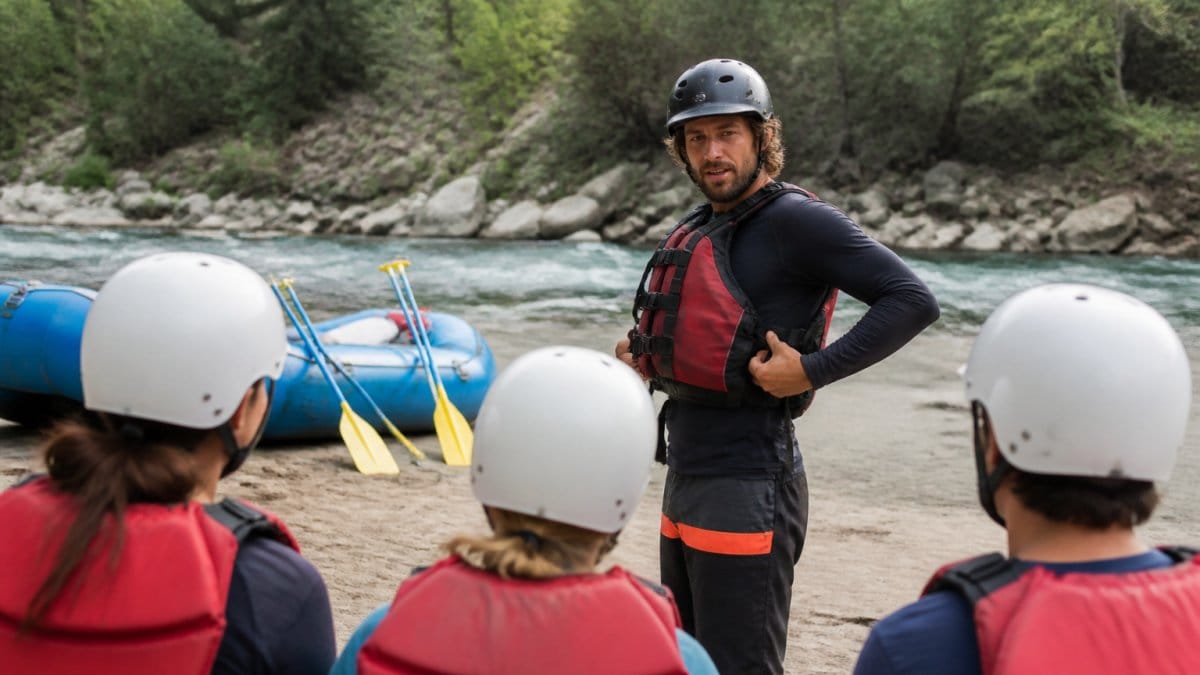
Every reputable outfitter runs a safety briefing before the raft pushes off, and on Class V it’s longer and more specific. Pay attention to these elements, and if any are missing, ask before you launch:
- Swim signal and count. Your guide should establish a head count and a signal for “all clear” after a swim. Know how many paddlers are in your raft and who is responsible for counting.
- Command vocabulary. Learn the standard commands before you’re in the rapid: “Forward” (paddle forward together), “Back” (back-paddle), “Left turn” / “Right turn,” “Stop” or “Hold” (stop paddling and brace), “High side” (lean to the indicated side to prevent a flip), and “Get down” (crouch low in the raft). Ask your guide to demonstrate each one.
- Swim position. “Feet up, nose and toes” is the common instruction: lie on your back, feet pointed downstream, head upstream, so you can see the raft and protect your head from rocks.
Guide Commands and Paddling Discipline
On Class V, the gap between a good line and a bad one is often a single stroke. Your guide reads the water and calls the command; your job is to execute immediately and together. A few rules:
- Paddle when instructed, stop when instructed. When your guide says “forward,” paddle hard and in sync; when they say “stop,” stop immediately and brace. Paddling when you shouldn’t, or not paddling when you should, puts everyone at risk.
- Match the stroke of the person in front of you. Synchronized strokes keep the raft tracking straight and give the guide predictable power.
- Keep your outside hand on the T-grip and your inside hand on the shaft. Choking up or down changes your leverage; ask your guide for the correct grip.
If You Fall Out: Swim and Self-Rescue Procedure
Falling out is a real possibility on Class V. The procedure is simple but must be automatic:
- Don’t panic. The current will carry you; fighting it wastes energy.
- Get on your back with your feet up and pointed downstream. This protects your head and lets you see the raft and your guide.
- Never try to stand in fast water. Your foot can wedge under a rock and the current can pin you. Stay on your back and float.
- Swim toward the raft, not toward shore. Your guide will maneuver the raft to you and pull you in; swimming toward shore in a Class V canyon can put you in worse water.
- If the raft flips, grab the safety line. Hold the perimeter line and let your guide right the raft and pull you back in. Don’t let go to try to swim.
Class V sections sometimes require portaging, carrying the raft around a rapid that’s too dangerous even for expert guides. This isn’t failure. It’s smart risk management. If your guide says to portage, portage without complaint. Some rapids are genuinely unraftable depending on water levels and conditions.
Equipment Checks Before Launch
Your guide will check your gear, but know what “correct” looks like so you can self-check:
- Helmet: sits low on your forehead, not tilted back; chin strap snug enough that it doesn’t shift when you shake your head.
- PFD/life jacket: snug at the shoulders and chest with no gap; a loose jacket can slip up during a flip. Ask your guide to check the fit.
- Footwear: secure, closed-toe, and draining; loose sandals can come off in a swim.
Rescue Preparation: What You Should Understand Before Launching
You won’t perform rescues on a commercial Class V trip, but understanding the plan makes you a better partner:
- Know the throw bag. Your guide carries one and may throw a line to a swimmer within reach. Stay out of the way and follow commands.
- Know the downstream plan. Ask what happens if someone swims past the raft: where the next eddy or pickup point is, and whether a safety kayaker or second raft is positioned downstream.
- Know your own limits. If you’re not confident you can execute a self-rescue swim, say so before launch. A good outfitter will adjust the plan or recommend a lower-difficulty trip.
Ask your guide to walk the group through the swim position and the command vocabulary on dry land before you launch.
Gather Your Class V Rafting Gear Checklist
Proper gear isn’t optional on Class V; it keeps you safe, warm, and functional when things get intense. Your essential checklist:
- Helmet, A proper whitewater helmet, not a bike helmet. It protects your head from rocks and other paddlers’ paddles.
- Personal flotation device (PFD/life jacket), Coast Guard-approved, snug fit, proper size for your weight.
- Paddle, Your outfitter provides this. Don’t bring your own unless they approve it.
Don’t wear cotton. It holds water and makes you cold. Wear synthetic or wool layers that dry quickly. Avoid loose jewelry, watches, or anything that can snag or fall off.
Prepare a Multi-Day Rafting Packing List
Multi-day Class V trips require careful packing.
Pack smart:
Clothing, Bring two full sets of paddling clothes (wetsuit or paddling jacket, shorts, water shoes) plus one set of warm camp clothes for evenings, including a fleece or insulating layer, since nights get cold even in summer. Bring a hat and sunglasses with a retention cord.
Toiletries, High-SPF sunscreen (reflected sun on the water), lip balm, basic first aid supplies, personal medications, biodegradable soap, toothbrush, toothpaste.
Sleep system, Verify what your outfitter provides before packing.
Food and water, Most outfitters provide meals; confirm this.
Documents and cash, Bring your ID and any required permits. Bring cash for tips and emergencies.
Don’t pack:
- Heavy books or electronics (except a camera in a waterproof case)
- Excessive clothing (you won’t wear it all)
- Perfume, cologne, or scented products (they attract insects)
Weight matters. Every extra pound you pack is weight someone else has to carry. Pack light.
Plan Your Trip Logistics and Final Steps
Booking a Class V trip requires coordination. Here’s what to handle before launch day.
Confirm dates and pickup, Verify the exact date, start time, and pickup location.
Complete required forms, Your outfitter will send liability waivers and medical questionnaires.
Arrange accommodation, On a multi-day trip, your outfitter may provide camping or arrange lodging.
Get final confirmation, One week out, call or email to confirm everything is on track.
Class V rafting isn’t something you show up for unprepared. Every detail matters. Your guide handles the river. You handle preparation. Do your part and you’ll have an experience you remember for decades.
Frequently Asked Questions
What should I wear for Class V whitewater rafting?
Wear a wetsuit or paddling jacket designed for whitewater, quick-dry pants, water shoes with grip, and a helmet secured under your chin. Avoid cotton, denim, and loose clothing that catches water or restricts movement. Your outfitter will provide a life jacket and helmet; ensure both fit snugly before launching. Bring a change of clothes for after the trip.
How fit do you need to be for Class V rafting?
Class V rafting demands strong upper body and core strength, cardiovascular endurance, and the ability to paddle continuously for 2-4 hours. You should be able to hold a paddle steady, recover quickly from exertion, and maintain focus in turbulent conditions. Discuss fitness concerns with your outfitter before booking.
Can beginners go on a Class V rafting trip?
Class V rapids are not suitable for everyone, and beginners with no whitewater experience should not attempt them. If you’re new to rafting, start with Class II or III trips to build skills and confidence. Talk to an experienced outfitter about your background and whether you’re genuinely ready for Class V intensity.
What should I pack for a Class V rafting trip?
Pack a waterproof bag with sunscreen, lip balm, snacks, and a headlamp for multi-day trips. Bring extra socks, a warm layer for evenings, toiletries, and any personal medications. Leave behind jewelry, phones, and valuables unless they’re in a waterproof case. Avoid overpacking; your outfitter typically provides meals and most equipment. Check your outfitter’s packing list before departing.