
How to Plan Logistics for a Private Whitewater Rafting Trip
Last Updated: November 6, 2026
Quick Summary
Logistics for private whitewater rafting start with securing the river permit, since lotteries and quotas set your dates, group size, and route before anything else. Then book your shuttle as soon as the permit date is confirmed, and organize group gear, food, and water by assigning an owner to each bag.
- Enter more than one river lottery and watch for cancellations that free up spots.
- Most permits require launch dates, group size, vehicle info, and a named trip leader.
- Book the shuttle as soon as your permit date is confirmed because popular weekends fill fast.
- Assign one person to own the kitchen, another safety, and another the raft and repair kit.
- Carry enough water for drinking and cooking plus a backup filter or purification tablets.
Table of Contents
- Start With the Permits and River Rules That Govern Private Whitewater Rafting
- Locking In Shuttle, Put-In, and Take-Out Logistics
- Building Your Multi-Day River Trip Packing List
- Essential Gear for Multi-Day River Camping
- The Overnight Rafting Trip Checklist That Keeps Group Gear Organized
- Multi-Day Rafting Trip Food Planning and Water Strategy
- Book Your River Logistics With an Outfitter Who Runs Them Weekly
- Frequently Asked Questions
Start With the Permits and River Rules That Govern Private Whitewater Rafting
Logistics for planning private whitewater rafting trips begin with one question: who controls the water you want to run? Most popular rivers in the U.S. sit inside federal, state, or local jurisdictions that limit how many private boats launch each day. The permit is not paperwork you handle at the end. It sets your dates, group size, and route before anything else moves.
Lotteries, Quotas, and Booking Windows
Many rivers release private permits through a lottery months ahead of the season. Others use a rolling online reservation system that opens on a fixed date and closes when the quota fills. A common approach is to:
- List every river you would accept, ranked by preference
- Note each river’s lottery or reservation window
- Enter early, and enter more than one option
- Watch for cancellations, which often free up spots
The U.S. Forest Service recreation permit guidance notes that guided rafting on public rivers carries documented economic weight, which is one reason agencies manage access closely. Private trips follow the same rules.
What a River Permit Usually Requires
Most permits ask for the same core details: launch and take-out dates, group size, vehicle info, and a trip leader. Some require proof of a self-rescue kit, a first-aid card, or a minimum age. Check the managing agency’s site for the exact list. A missing item can void your launch.
Most permits ask for the same core details, so check the managing agency’s list before you launch.
| Permit detail | What to provide |
|---|---|
| Launch and take-out dates | Your planned river dates |
| Group size | Number of paddlers |
| Vehicle info | Details for shuttle vehicles |
| Trip leader | One named leader |
| Self-rescue kit | Proof, on some rivers |
| First-aid card | Proof, on some rivers |
| Minimum age | Required on some rivers |
Locking In Shuttle, Put-In, and Take-Out Logistics
Shuttle planning is where private trips stall. You launch at one point and finish at another, so someone must move vehicles between them. Options include a paid shuttle service, a second vehicle and driver, or a commercial tow-out on harder stretches. Because every vehicle move depends on timing and a clear handoff, the same coordination matters when planning corporate events around a boat’s departure and return.
Book the shuttle as soon as your permit date is confirmed. Popular weekends fill fast. Confirm the vehicle count, the meeting time, and the exact take-out location. A common mistake is assuming the put-in and take-out share a road. They rarely do.
For rivers where a tow boat handles the final miles, arrange it in advance. At EXTERNAL_LINK: private shuttle information, you can reach out to arrange shuttle or tow-out needs and confirm raft tow pricing before you commit.
Building Your Multi-Day River Trip Packing List
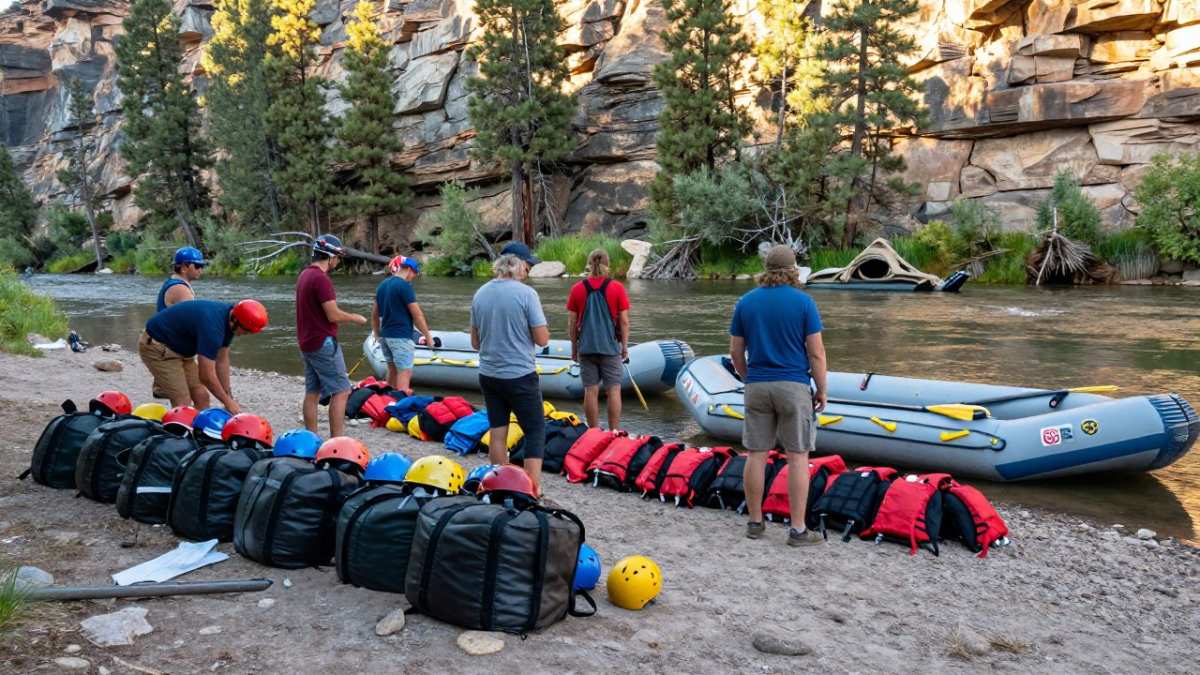
A multi-day river trip packing list splits into two piles: what you wear on the water and what stays in camp. Pack the first pile in one bag per person. Pack the second pile in shared group dry bags.
What Goes in the Dry Bags
Keep it simple and label everything:
- Personal dry bag: layers, sunscreen, medications, headlamp, water bottle
- Camp bag: tent, sleeping bag, pad, camp clothes
- Kitchen bag: stove, fuel, cookware, utensils, dish soap
- Repair bag: patch kit, extra straps, duct tape, pump
- Safety bag: first-aid kit, throw rope, spare paddle
Double-bag anything that must stay dry. River water finds every gap.
Essential Gear for Multi-Day River Camping
Essential gear for multi-day river camping comes down to shelter, sleep, and safety. Bring a tent rated for wind, a sleeping pad with real insulation, and a warm layer for cool evenings. Rivers run cold even in summer.
Your safety gear is not optional:
- Type III or V life jackets for every paddler
- Helmets on any Class III water and above
- A throw rope and a spare paddle per raft
- A waterproof first-aid kit
- A repair kit for the raft itself
Check every item before you leave the house. Gear that fails on day two has no replacement nearby.
The Overnight Rafting Trip Checklist That Keeps Group Gear Organized
An overnight rafting trip checklist works best when it assigns owners. One person owns the kitchen. Another owns safety. A third owns the raft and repair kit. Shared gear with no owner gets left on the beach.
Try this checklist before launch:
- Every group bag labeled with its owner
- Kitchen bag packed and weighed
- Safety bag checked item by item
- Repair kit confirmed complete
- Water containers filled and counted
- Camp gear divided by raft
- Vehicle keys and shuttle plan confirmed
A well-organized expedition pays off in camp, when everyone is tired and nobody wants to search for the stove. If you want to see what that payoff looks like, read about the EXTERNAL_LINK: benefits of multi-day rafting expeditions before you commit to the checklist work.
Multi-Day Rafting Trip Food Planning and Water Strategy
Multi-day rafting trip food planning starts with weight and heat. You carry everything you eat, so pack calorie-dense food that survives a hot day in a dry bag. Plan one pot meal per night and simple no-cook breakfasts.
A workable plan:
- Breakfast: oatmeal, coffee, energy bars
- Lunch: wraps, cheese, nut butter, dried fruit
- Dinner: one-pot pasta, rice bowls, chili
- Snacks: trail mix, jerky, crackers
Water is the bigger constraint. Carry enough for drinking and cooking, plus a backup filter or purification tablets. Many groups cache water at the take-out or arrange a resupply. Confirm your plan before launch.
Some outfitters handle river meals entirely. If you would rather not plan every plate, see how EXTERNAL_LINK: fresh meals served on the river work on a catered trip.
Book Your River Logistics With an Outfitter Who Runs Them Weekly
Handing off logistics is a real option, and for many groups it is the smarter one. Sierra Mac has run trips on the Tuolumne, Merced, and Cherry Creek rivers. Our team focuses on guiding your group on the water.
Our trips range from mild half-day floats to intense multi-day Class V expeditions, led by professional local guides.
EXTERNAL_LINK: Multi-day Yosemite rafting trips are where we do our best work. See the trip options and pick the run that fits your group.
Frequently Asked Questions
What should I pack for a multi-day whitewater rafting trip?
Pack in layers and assume everything gets wet. Bring quick-dry shorts and shirts, a warm synthetic layer for camp, a rain shell, river sandals plus camp shoes, a wide-brim hat, sunscreen, and a headlamp. Sleeping gear, a tent, and a camp chair go in separate dry bags. Keep a small day bag with water, snacks, and a waterproof phone pouch clipped to the raft. Outfitters usually publish a detailed list, and following theirs beats guessing, since they know the specific river and season.
How do you plan a private rafting trip if you have never run a river before?
Start by checking whether the river you want requires a permit lottery, then read the managing agency’s rules on group size, fire pans, and waste. Line up a shuttle driver before you apply, because permits are worthless without a way back to the take-out. Practice loading a raft on a calm stretch, run a short overnight trip first, and consider hiring a guide for your first private whitewater rafting run. Many groups do one guided trip before going fully self-supported.
How much food and water should you bring on a multi-day river trip?
Plan roughly 2,500 to 3,000 calories per person per day, since paddling and camp chores burn more than a desk job does. Pack food in sealed, labeled bins grouped by meal so you are not digging through everything at camp. For water, carry at least one gallon per person per day for drinking and cooking, plus extra for a hot day. Confirm with the managing agency whether river water needs filtering, and bring a backup filter regardless.
How do you keep gear dry on a rafting trip?
Use roll-top dry bags, not zippered duffels, and double-bag anything that must stay bone dry, like sleeping bags and electronics. Clip every bag to the raft frame with a separate strap so a flip does not send it downstream. Line the bottom of the raft with a tarp to protect bags from abrasion, and pack the heaviest items low and centered. Test your dry bags in a bathtub before the trip; a pinhole leak ruins a sleeping bag by night two.
Private trip planning rewards the groups who start early and assign every job to a name. If the permit windows and shuttle calls feel like more work than the river is worth, let us take them off your plate. Sierra Mac brings decades of local river knowledge, expert guides on Class V water, and fully organized multi-day departures. Get started with Sierra Mac and spend your planning time on the fun parts instead.