
How to Choose the Right Rafting Trip for Beginners
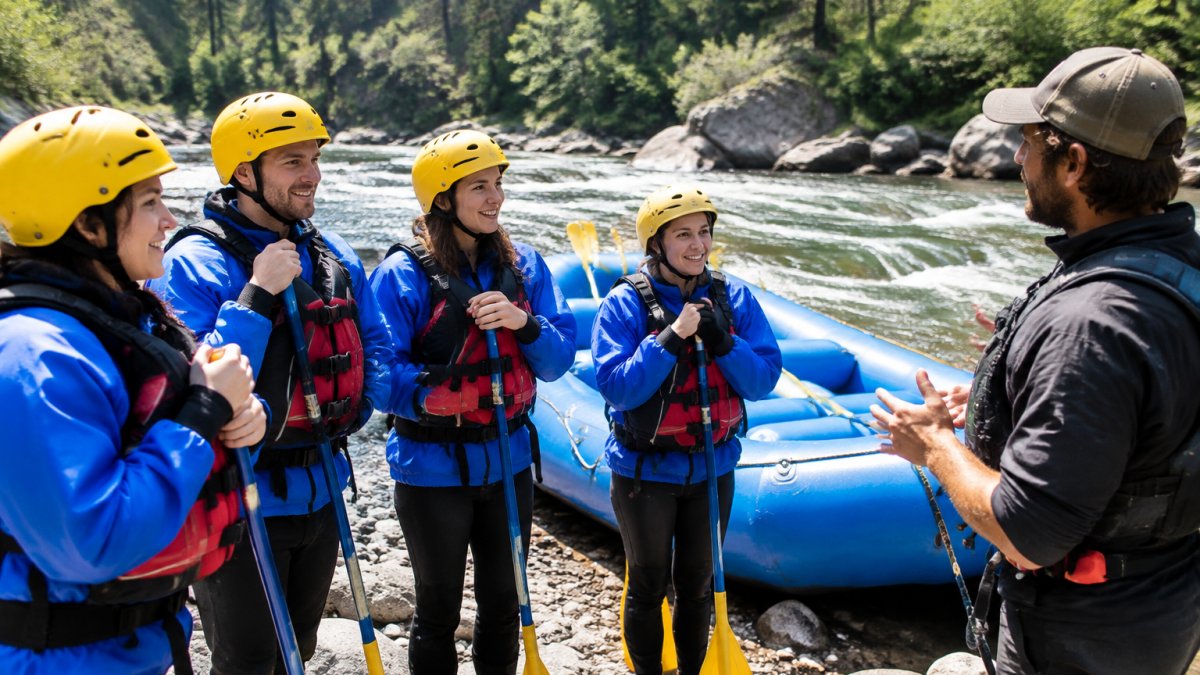
Last Updated: November 4, 2026
Quick Summary
To choose the right rafting trip for beginners, match the whitewater class to your group’s fitness, ages, and swimming ability, since Class I-II suits families and Class III fits confident first-timers with a guide. Then pick a half-day or multi-day format and confirm the outfitter’s permits, guide credentials, and what your quote includes.
- Class I-II water is calm and forgiving, best for young kids and nervous first-timers.
- Class III gives beginners real whitewater with splashes and active paddling under a guide.
- Class IV and V runs demand prior experience and are not a first trip.
- Half-day trips suit tight schedules, kids, and testing whether everyone enjoys whitewater.
- Ask the outfitter for an itemized quote, because the trip fee is the floor, not the total.
Table of Contents
- Start With Your Group: Fitness, Age, and Swimming Ability
- Whitewater Rafting Difficulty Levels Explained
- Choosing Between Half-Day and Multi-Day Rafting Trips
- How to Prepare for a Rafting Trip: Gear, Clothing, and Comfort
- The Best Time of Year for Whitewater Rafting
- How to Select a Reputable Outfitter and Understand What You’re Paying For
- What to Expect on Your First River Trip: Safety Protocols and River Etiquette
- Book Your Beginner-Friendly Rafting Trip With Sierra Mac
- Frequently Asked Questions
Start With Your Group: Fitness, Age, and Swimming Ability
The right rafting trip starts with an honest look at who is paddling. Before you compare rivers or outfitters, match the trip to your group’s fitness, age range, and comfort in water. Sierra Mac has guided rafting trips on the Tuolumne and Merced rivers, and the groups that have the best day are the ones who picked a river that fits them.
Ask three questions first:
- Can everyone swim? Basic swimming ability helps, but it is not always required. Guided trips vary in their swimming requirements, so ask the outfitter directly.
- What is the fitness level? Paddle rafts ask you to row in rhythm. Paddle rafts ask you to row in rhythm, while oar rafts are rowed by the guide. That difference matters for older guests or mixed-ability groups.
- What ages are joining? Minimum ages vary by river and rapid class. Ask the outfitter directly for the age limits on the specific run you want.
A common mistake is booking the most exciting trip the group can afford. A better approach is booking the trip everyone can enjoy together.
Whitewater Rafting Difficulty Levels Explained
Whitewater rafting difficulty levels are a I-to-V scale that rates rapids by size, speed, and risk. Class I is flat, moving water. Class V is expert-only. Knowing the scale is the fastest way to choose a trip that matches your group.
Here is how the classes compare for beginners:
| Class | What It Feels Like | Best For | Beginner Friendly? |
|---|---|---|---|
| I-II | Small waves, easy moves | Young kids, nervous first-timers | Yes |
| III | Real waves, active paddling | Confident beginners, teens | Yes, with a guide |
| IV | Big drops, precise moves | Prior rafters only | No |
| V | Steep, powerful, expert runs | Experienced paddlers | No |
Class I-II: Scenic Floats and Family-Friendly Water
Class I-II water is calm, forgiving, and built for sightseeing. You will float past pine banks and granite walls with time to look around. This is the right pick for families with younger children or anyone who wants a gentle first day on the river.
Class III: The Beginner’s Sweet Spot for Real Whitewater
Class III is where a first-timer gets a real taste of whitewater without stepping into expert terrain. Expect splashes, active paddling, and a guide calling commands. For a deeper look at how rapids are rated on the rivers we run, see our Tuolumne River rapid classes guide.
Class IV-V: When Beginners Should Wait
Class IV and V runs demand prior experience, quick reactions, and comfort in churning water. They are thrilling, and they are not a first trip. Build a season or two of Class II-III trips first.
Choosing Between Half-Day and Multi-Day Rafting Trips
Half-day trips suit first-timers who want a taste of the river without a big time or budget commitment. Multi-day trips suit groups ready to unplug, camp, and settle into the rhythm of the canyon. Neither is better.
Pick a half-day trip if:
- You have kids or older guests in the group
- You want to test whether everyone enjoys whitewater
- Your schedule is tight
Pick a multi-day trip if:
- Your group wants to escape crowds and screens
- You are comfortable camping
- You want the river to be the whole point of the trip
If you are still weighing options, our guide to choosing a Yosemite rafting trip walks through how to match a run to your group.
How to Prepare for a Rafting Trip: Gear, Clothing, and Comfort
Preparation is simple once you know the outfitter’s list. Most guided trips supply the raft, PFD, helmet, and paddle. You bring the right layers and a good attitude. Our full guided rafting preparation guide covers the details, but here is the short version.
Pack these:
- Quick-dry layers. Avoid cotton. It holds water and chills you.
- Sturdy footwear that can get wet and stay on.
- Sunscreen and a hat that fits under a helmet.
Watch out: showing up in flip-flops or jeans is the most common first-timer mistake. Both fail once you are wet.
The Best Time of Year for Whitewater Rafting
Late spring and early summer usually deliver the strongest flows, fed by mountain snowmelt. Mid to late summer brings warmer water and calmer runs. Fall offers quieter rivers and cooler air.
River flow is measured in cubic feet per second, or CFS. Higher CFS means faster, pushier water. For a month-by-month view, read our season guide to white water rafting.
How to Select a Reputable Outfitter and Understand What You’re Paying For
A reputable outfitter puts safety, guide experience, and clear communication ahead of a fast sale. The difference between a good and a bad booking is usually visible before you pay, if you know what to ask. Use the checklist below, then use the cost breakdown to see what your quote actually includes.
Vetting Checklist: Permits, Licensing, Insurance, and Guide Credentials
- Permits. Guided trips on many Western rivers run under permits issued by federal land agencies, and some states add their own outfitter licensing. Ask which agency permits the run and whether the outfitter’s permit is current.
- Insurance and business standing. Ask whether the company carries commercial liability insurance and whether it operates under a registered business name.
- Guide credentials. Ask how long the guides have worked this specific river, not just how long they have guided. River knowledge is local. Ask which first-aid or rescue certifications the guides hold.
Watch out: an outfitter that dodges the permit question or cannot name its guide certifications is the single biggest red flag in this process, walk away regardless of price.
Safety Records, Guide Experience, and Paddling Commands
Paddling commands are the short, clear words a guide uses to steer the raft: “forward,” “back,” “left,” “right,” and “stop.” A calm guide who explains commands before you launch is a good sign.
Sierra Mac’s guides are local to the area. Sierra Mac was the first outfitter to guide on the Merced and Tuolumne, and it pioneered commercial Class V runs on Cherry Creek.
Budgeting and Hidden Costs: What Your Quote Should and Should Not Include
Trip pricing depends on the river, trip length, group size, and season, so ask for an itemized quote rather than a single number. What sits outside that fee is where beginners get surprised. Budget for:
- Transportation to the meeting point, plus any shuttle the outfitter runs (some include it, some charge separately).
- Lodging if you are traveling in the night before, a common pattern is to stay near the put-in so you are not driving at dawn.
- Guide tips, which are customary in the guided-trip industry; ask the outfitter what range is typical for your trip length.
A useful rule of thumb: the trip fee is the floor, not the total. Ask the outfitter for a written list of what is included and what is not, and compare quotes on that basis rather than on the headline price alone. For current rates and trip dates, see our rates and dates page.
What to Expect on Your First River Trip: Safety Protocols and River Etiquette
Your first river trip follows a predictable rhythm: check in, gear up, hear the safety talk, practice paddle strokes, then launch. The value of the day is set in the first thirty minutes, so pay attention to the briefing even if the water looks calm. That briefing also helps you recognize how essential outdoor gear supports safety and comfort, whether you are preparing for the river or a night at camp.
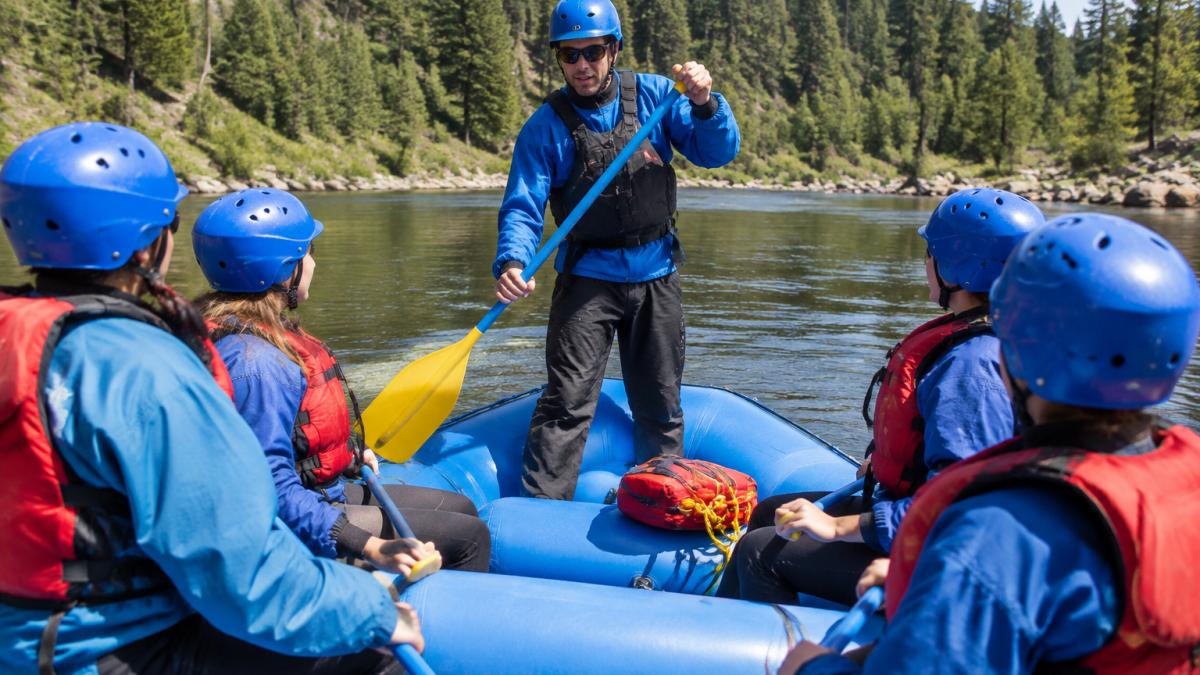
The Safety Talk: What a Good Briefing Covers
A thorough safety talk covers more than where to sit. Listen for these items, and ask if any are skipped:
- PFD fit and buckle check. The vest should be snug and cannot ride up over your head when pulled from the shoulders.
- Helmet fit and when it stays on (usually the whole run, not just the rapids).
- Swim position. If you fall in, float on your back with feet pointed downstream and toes up, so you can push off rocks rather than catch a foot.
River Etiquette and Leave No Trace on the Water
River etiquette matters too. Follow your guide’s commands, keep your paddle in the boat when asked, and pack out what you bring in. Most guided runs on or near public lands follow Leave No Trace principles: pack out all trash (including food scraps), leave rocks and plants where you find them, and keep noise down so wildlife and other boaters are not disturbed.
Accessibility and Adaptive Rafting: Ask Before You Assume
Most beginner guides ignore rafters with disabilities or mobility limitations, but the right trip is often available with a phone call. Before booking, ask the outfitter directly about:
- Adaptive equipment and seating, some operators can accommodate guests who need extra back support or a assisted transfer into the raft.
- Put-in and take-out access, how far the walk is from vehicle to raft, and whether the terrain is firm and graded.
- Oar-raft options, which let a guest ride without paddling and are often the better fit for limited upper-body mobility.
Ask specific questions rather than a general “is this accessible?” A good outfitter will tell you honestly what it can and cannot support on a given run, and that answer is more useful than a brochure promise.
Book Your Beginner-Friendly Rafting Trip With Sierra Mac
The best beginner rafting trip is the one that fits your group, not the one with the biggest rapids.
Sierra Mac has run guided trips on the Tuolumne, Merced, and Cherry Creek since 1965 as a family-owned, third-generation outfitter. Sierra Mac offers trips from mild half-day floats to bigger water.
Get started with Sierra Mac and book a beginner-friendly trip that fits your group.
Frequently Asked Questions
Can a beginner do Class 3 rapids?
Yes, Class III is often the sweet spot for first-timers who want real whitewater without extreme risk. These rapids feature moderate, irregular waves and small drops that require active paddling but rarely demand advanced technique. Most outfitters pair beginners with a professional river guide who calls paddling commands and chooses the line. If your group includes kids 12 and up or older adults with moderate fitness, a guided Class III section is a solid choice. Confirm the outfitter’s minimum age and swimming requirements before booking.
How do I know if a rafting trip is beginner-friendly?
Check three things: the rapid classification (Class I-II is mild, Class III is moderate), the outfitter’s stated minimum age and swimming ability, and whether the trip is guide-led in a paddle or oar raft. Beginner-friendly trips usually run shorter sections, include a safety briefing and paddling commands practice, and use personal flotation devices sized for each guest. Ask the outfitter directly what happens if someone panics or falls out, and confirm they carry a throw bag and have scouting protocols for any larger rapids.
What is the best month to go whitewater rafting?
Late spring through early summer typically delivers the most dependable flows in mountain-fed rivers, when snowmelt keeps cubic feet per second (CFS) levels high. For beginners, early-to-mid summer often balances exciting water with warmer temperatures and more predictable conditions. Late summer and early fall bring lower, gentler flows that suit families and first-timers who prefer calmer water. River flow varies year to year, so ask your outfitter about current CFS and hydrology before you book, and match the season to the difficulty you want.
What should I wear for my first rafting trip?
Wear quick-drying synthetic layers, secure footwear that stays on in water, and a hat or helmet liner for sun protection. Avoid cotton, which holds water and chills you. Most outfitters provide a personal flotation device (PFD) and helmet, and many offer wetsuits or splash jackets for colder flows. Bring a dry bag for a change of clothes, sunscreen, and a strap for glasses. Leave valuables behind. Ask your outfitter what they supply versus what you bring so you do not overpack or arrive underprepared.