
The Beginner’s Guide to Whitewater Rafting in the Sierra Nevada
Quick Summary
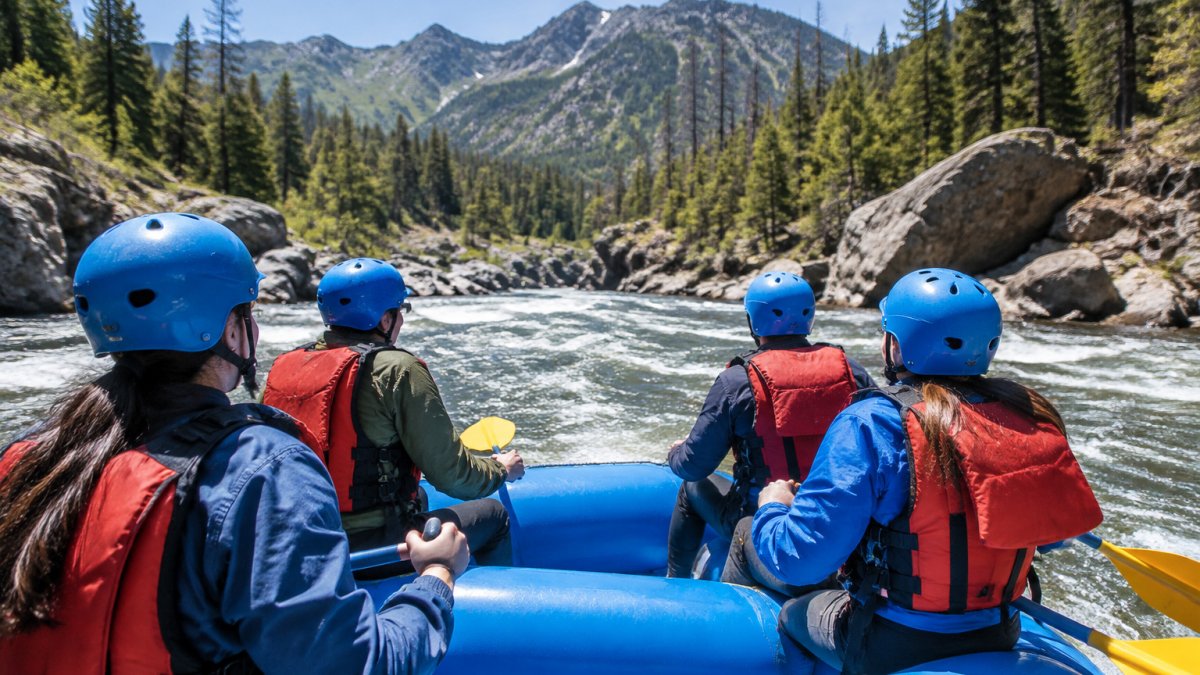
A beginner guide to whitewater rafting in the Sierra in Nevada recommends starting with a guided trip on a mild Class II to Class III section during early summer, roughly June through July, when snowmelt fills the rivers. Choose the mildest section you can reach that still gives the length of day you want, and confirm current flows before booking.
- Early summer, roughly June through July, is the sweet spot for most first-timers.
- Beginner trips typically stay in the Class II to Class III range.
- Class IV and V rapids are best left to experienced paddlers on guided expeditions.
- Ask the outfitter the rapid class on your date, swim distance, and guest-to-guide ratio.
- Wear a wetsuit or splash top, quick-dry clothing, and water shoes with heel straps; avoid cotton.
Table of Contents
- Why the Sierra Nevada Is a Strong Place to Start Rafting
- Best Time for Whitewater Rafting in the Sierra Nevada
- Whitewater Rafting Class Ratings Explained
- Choosing a River Section for Your Skill Level
- Getting to the Put-In Near Yosemite
- What to Wear Whitewater Rafting
- Booking Your First Guided Trip With Sierra Mac
- Frequently Asked Questions
Why the Sierra Nevada Is a Strong Place to Start Rafting
Sierra Mac has been running rafts on the Tuolumne, Merced, and Cherry Creek rivers since 1965, and the Sierra Nevada remains one of the best places in the United States to learn whitewater rafting. This beginner guide to whitewater rafting in the Sierra Nevada covers when to go, how river difficulty is rated, how to choose a section that fits your skill level, and what to expect on a guided trip. Here’s the short version: start with a guided trip on a mild section, and the canyon scenery alone is worth the early start.
The region’s appeal for newcomers comes down to three things. The rivers flow through granite canyons near Yosemite National Park, guides handle the technical decisions, and the most accessible sections are short enough that a first-timer can finish feeling capable instead of overwhelmed. For many families and friend groups, that combination makes a whitewater trip realistic on a single vacation day.
Whitewater rafting is the sport of navigating a river’s rapids in an inflatable raft, usually with a licensed guide at the oars and passengers paddling on command. Commercial trips are built around this structure: the guide reads the water, and everyone else follows clear instructions.
Best Time for Whitewater Rafting in the Sierra Nevada
The Sierra season is driven by snowmelt, not by a calendar date. Snowpack accumulated at elevation melts through late spring and early summer, and that meltwater is what fills the rivers. The practical result: flows peak in late spring and early summer, then taper as the snowpack is used up. A heavy snow year pushes the prime window later and keeps flows higher into midsummer; a light year can shorten the season and drop rivers to gentler levels earlier.
What each part of the season feels like for a beginner:
- Late spring (roughly May-early June): highest flows, coldest water, biggest waves. Rapids feel pushier, and a wetsuit layer matters. Good for confident beginners who want excitement; less ideal for young kids or anyone anxious about swimming.
- Early summer (roughly June-July): the sweet spot for most first-timers, enough water for real rapids, warmer air, and a full day on the river. This is when most guided beginner trips run at their intended difficulty.
- Late summer (roughly August-September): lower, clearer water and gentler waves. Excellent for families and nervous paddlers, but some sections may be too low to run and outfitters may shift to different stretches.
Reservoir releases change the equation. Some Sierra rivers are influenced by upstream storage and dam releases, which can hold flows steadier than natural snowmelt alone. That means a river can be runnable on a date when a nearby free-flowing creek is not, another reason to ask the outfitter about the specific section rather than the region as a whole.
How to read conditions before you book. Ask the outfitter for the current flow level and how it compares with the range they consider beginner-appropriate for that section. The same rapid can feel like a different class at high versus low flow, so the rating on a brochure is a starting point, not a guarantee. Check the forecast for the put-in elevation, not the nearest town, mountain weather and afternoon thunderstorms can change a trip plan.
Booking timing. Weekend departures in the June-July window fill first, so reserve several weeks ahead if your group has a fixed date. Early- and late-season trips are easier to book on short notice but carry more weather and flow variability. Confirm the outfitter’s cancellation and reschedule policy for weather or flow changes before you pay.
Watch out: a warm spring can melt the snowpack fast and shorten the prime window, while a cool spring can push high water into what travelers assume is a calm month, always confirm current flows for your date rather than relying on last year’s season.
The right month depends on snowmelt, so this table lays out what each part of the season feels like for a beginner.
| Season window | Conditions | Best for |
|---|---|---|
| Late spring (roughly May-early June) | Highest flows, coldest water, biggest waves | Confident beginners wanting excitement |
| Early summer (roughly June-July) | Enough water for real rapids, warmer air | Most first-timers |
| Late summer (roughly August-September) | Lower, clearer water, gentler waves | Families and nervous paddlers |
Whitewater Rafting Class Ratings Explained
Rapids are rated on the International Scale of River Difficulty, from Class I (easy, with a few small waves) to Class VI (extreme and typically unrun). Most commercial beginner trips stay in the Class II to Class III range, where you’ll find moving water, some waves, and occasional maneuvering around obstacles. Within that range, knowing how to use essential river gear can help you stay comfortable and prepared as the current picks up.
Class IV and Class V rapids are powerful, technical, and demanding. They’re best left to experienced paddlers on guided expeditions. A useful rule for first-timers: pick a trip where the guide describes the rapids as manageable and the day’s difficulty matches what you’re comfortable with.
Choosing a River Section for Your Skill Level
Matching a river section to your group is the single decision that most affects whether a first trip feels fun or frightening. Rather than picking by river name, work backward from three questions: How comfortable is everyone in moving water? How long do you want to be on the river? And how far are you willing to drive from your base?
Start with the difficulty-to-skill map. Class II water has clear channels and small waves; a beginner can usually paddle it with a guide’s commands and minimal prior experience. Class III adds stronger currents, bigger drops, and tighter maneuvering, most first-timers handle it fine on a guided raft but should expect to paddle hard and listen closely. Class IV and V require prior whitewater experience, reliable swimming ability, and comfort with the possibility of a swim; those are not first-trip sections.
Compare the two Sierra regions before you compare rivers. The northern Sierra (Tuolumne, Merced, Cherry Creek drainages) offers the widest spread of difficulty in one place, from gentle Class II floats to expert-only Class V, and sits closest to Yosemite’s northwest entrance, which makes it practical for Bay Area and Sacramento travelers. For a first trip, the practical rule is: pick the region you can reach without a pre-dawn drive, then pick the mildest section in that region that still gives you the length of day you want.
Match section to group, not to ego.
- Families with young kids or nervous adults: a calm float with flat water and scenic canyon views is the right call. It builds confidence and lets everyone practice paddle commands before real rapids.
- Beginner adults and teens ready for whitewater: a one-day Class II-III trip on a main stem river introduces real rapids without committing to an overnight. Two- and three-day versions add river miles and skill repetition, which is where most beginners actually improve.
- Confident beginners with a guide: combined trips that link a harder upper section to a milder main section give varied water in one outing, but only when the outfitter confirms the group’s swimming and fitness level first.
Ask the outfitter four specific questions before booking: What class are the rapids on this date (not just on average)? What is the swim distance to the next eddy if someone falls out? How many guests per guide? And what is the minimum age and swimming requirement? The answers tell you more than any rating chart.
Watch out: some river segments are managed as advanced-only and are not intended for beginners, confirm with your outfitter that the section you are booking is rated for first-timers on your specific date, because flows can change the effective difficulty of the same rapid from week to week.
Getting to the Put-In Near Yosemite
Sierra Mac is located about 15 miles from Yosemite’s northwest entrance. Plan to arrive before your scheduled launch time so you have room for check-in and gear fitting.
Ask your outfitter in advance about transportation to and from the put-in and take-out, especially if you’re traveling without a car.
What to Wear Whitewater Rafting
Plan for cold water even in summer. Snowmelt keeps rivers cold, and wet passengers lose body heat quickly.
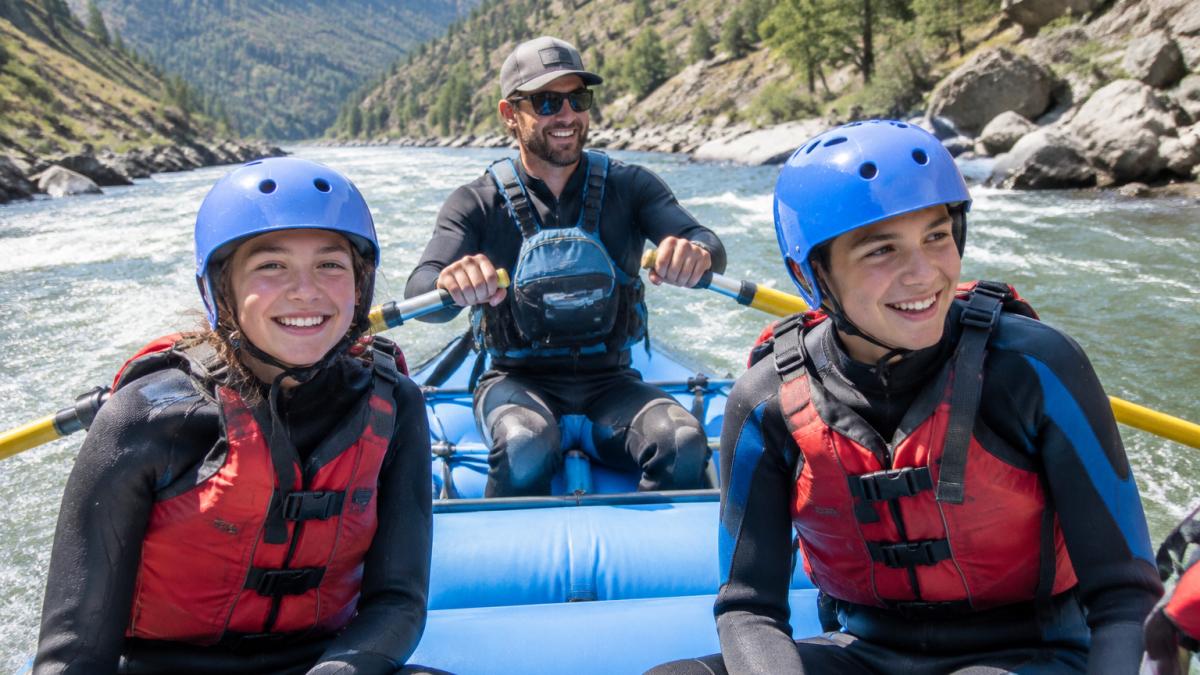
- Wetsuit or splash top with a wetsuit layer, depending on the season
- Quick-dry shorts or pants with no cotton
- Synthetic or wool layers for the drive and the changing area
- Water shoes or sandals with heel straps, never flip-flops
- Sunscreen, a hat with a strap, and sunglasses with retention cords
- A dry bag for valuables and a change of clothes for afterward
Ask in advance what gear is included and what you should bring.
Watch out: cotton holds water and chills you fast on cold river water, so leave cotton at home.
Booking Your First Guided Trip With Sierra Mac
Sierra Mac offers guided rafting on the Tuolumne, Merced, and Cherry Creek rivers, from easy floats to multi-day trips. Trip pricing depends on the river section, trip length, and date, so check current rates and departure dates on the Rates & Dates page before booking.
Your guide is the most important factor in your safety and enjoyment. Sierra Mac’s guides are professional and local, and the company has been operating since 1965. Give your guide accurate information about your group’s experience and fitness so they can help match your trip to your ability.
Ready to plan your first trip? Choose a river section, check the dates, and book your guided adventure with Sierra Mac.
Frequently Asked Questions
Can a beginner do Class 4 rapids?
Class IV rapids are powerful, with large waves and sustained turbulence, and they demand strong paddling and swimming skills. Most first-time rafters do better starting on Class II to III water, where the guide handles the hardest line choices while you learn paddling commands and how to hold on. Working up to Class IV usually takes several trips.
Is Class III whitewater hard for a beginner?
Class III rapids are a common first step for beginners. They have irregular waves, rocks and strong currents, but are generally manageable with a safety briefing and an experienced guide. Expect to get wet and to paddle hard on the bigger drops.
What is the best time of year for rafting in the Sierra Nevada?
The prime window for whitewater rafting in the Sierra Nevada is generally May through July, when snowmelt keeps river flows strong. Flows drop later in the summer, which can make some sections calmer and better for newcomers. Seasonal conditions vary by year, so check current river conditions with your outfitter before you travel.
What should I expect on my first whitewater rafting trip?
Most entry-level commercial trips run about three hours on the water and begin with a safety briefing covering paddling commands, how to sit in the raft, and what to do if you fall in. Your guide steers from the back and directs the crew. Expect rest stops, some scenic floats between rapids, and plenty of time to ask questions before you launch.
What gear do I need for a guided rafting excursion?
Bring quick-drying clothing, a wetsuit or layers in cooler months, closed-toe water shoes with a heel strap, sunscreen, and a dry bag for personal items. Leave valuables at home or in the car. Confirm what your specific trip includes when you book.
Are there age or fitness requirements for rafting?
Age and fitness requirements depend on the river section and the outfitter. Tell your outfitter about any health concerns or limited mobility so they can recommend a suitable run.
Is rafting near Yosemite a good choice for a family trip?
Rafting near Yosemite pairs river time with the park’s scenery, and Sierra Mac is located about 15 miles from the northwest entrance. Choose a mild or intermediate section for mixed-experience groups, and consider booking a guided trip. Ask about logistics, including whether transportation to the put-in is included.