
9 Essential Gear Items for Class V Rafting Expeditions
Last Updated: November 2, 2026
Quick Summary
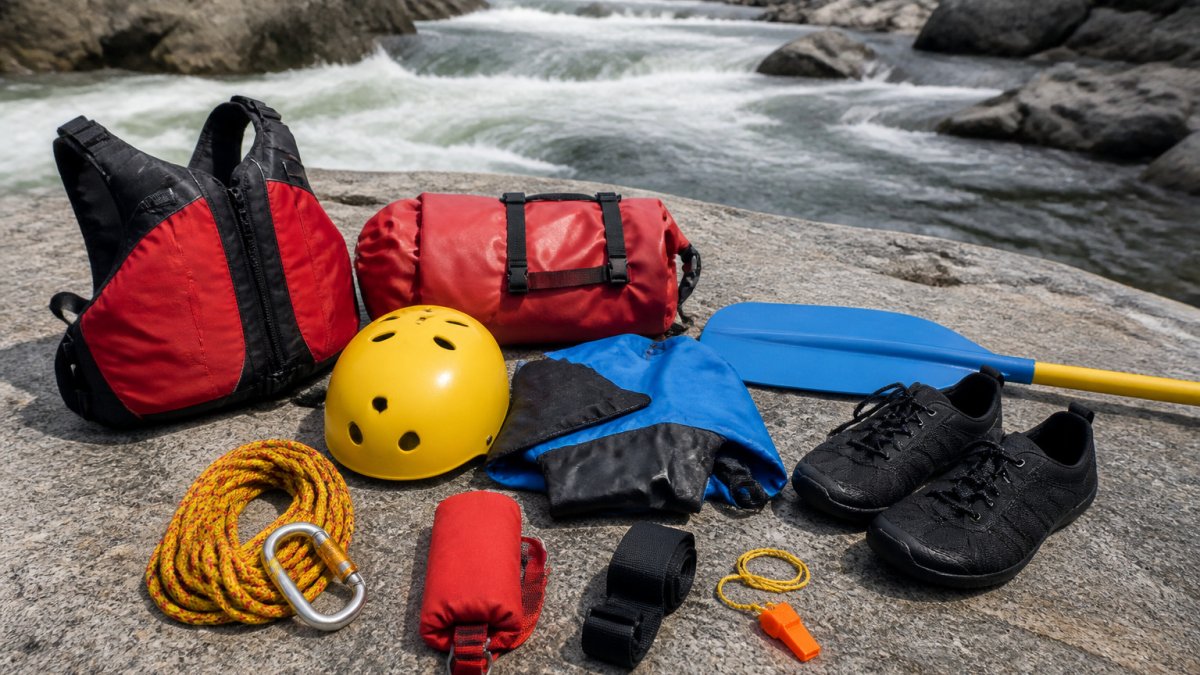
The essential gear for class V rafting expeditions starts with a rescue-rated personal flotation device with a quick-release rescue belt and a certified whitewater helmet, plus a throw bag and river knife every raft should carry. You bring your own wetsuit or dry suit, river shoes, sun protection, and dry bags, while Sierra Mac supplies the raft, paddles, PFD, helmet, throw bag, and river knife.
- A PFD should feel snug over a wetsuit with no ride-up when you raise both arms.
- Replace a helmet after any solid impact and inspect foam and straps before every season.
- A 3mm farmer john wetsuit is the workhorse for cold-water days, layered with a paddling jacket.
- Choose water shoes with a snug heel and rubber outsole, and avoid bare feet entirely.
- Pack a dry set of clothes in a dry bag for the takeout on day trips.
Table of Contents
- 1. A Rescue-Rated Personal Flotation Device (PFD)
- 2. A Certified Whitewater Helmet
- 3. Whitewater Rafting Safety Equipment: Throw Bags and River Knives
- 4. What to Wear Whitewater Rafting: Wetsuits, Dry Suits, and Layers
- 5. Footwear That Stays On: River Shoes and Water Shoes
- 6. Your Whitewater Rafting Packing List for Day Trips
- 7. The Multi-Day Rafting Trip Packing List: Dry Bags and Camp Gear
- 8. What Sierra Mac Supplies and What You Bring
- Frequently Asked Questions
1. A Rescue-Rated Personal Flotation Device (PFD)
The single most important piece of essential gear for class V rafting expeditions is a rescue-rated personal flotation device. A standard recreational life jacket keeps you afloat. A rescue PFD is built to pull you out of a hydraulic, and it carries the hardware a trained guide needs to reach you.
The difference matters in big water. Look for a secure internal harness, a quick-release rescue belt, and enough flotation to keep your head clear of churning whitewater.
Fit is where most rafters go wrong. A PFD should feel snug over a wetsuit, with no ride-up when you raise both arms. Check the straps every launch, and replace any PFD with frayed webbing or flattened foam. For the safety techniques and fitness expectations behind these choices, see our Class V whitewater safety techniques and fitness guidelines.
2. A Certified Whitewater Helmet
A certified whitewater helmet protects your head from rock, paddle, and boat impact, and it is not optional on Class V rapids. A bike or climbing helmet does not meet the same standard. River helmets are tested for repeated immersion and hard lateral strikes.
Fit decides how well any helmet works. The shell should sit level, just above the eyebrows, with the retention dial tightened so the helmet stays put when you shake your head. Replace a helmet after any solid impact, and inspect the foam and straps before every season. A loose helmet is almost as risky as no helmet at all.
3. Whitewater Rafting Safety Equipment: Throw Bags and River Knives
Whitewater rafting safety equipment covers the rescue tools that turn a bad swim into a quick recovery. A throw bag and a river knife are the two items every raft should carry, and guides train on both.
A throw bag is a pouch holding floating rope that you can hurl to a swimmer. Repack it carefully so the rope feeds out clean instead of tangling. A river knife, worn on the PFD, cuts entrapment lines and rope in an emergency. Choose a blunt-tip, corrosion-resistant blade with a high-visibility handle.
Watch out: a throw bag you have never practiced with is dead weight. Learn to throw and repack before you launch.
4. What to Wear Whitewater Rafting: Wetsuits, Dry Suits, and Layers
What to wear whitewater rafting depends on water temperature, air temperature, and how long you will be wet. Cold water pulls heat from your body fast, so layering is the core strategy on any Class V river. Because cold, wet conditions can make even a minor injury harder to manage, pack medical supplies for kits alongside your layers and keep them protected from the water.
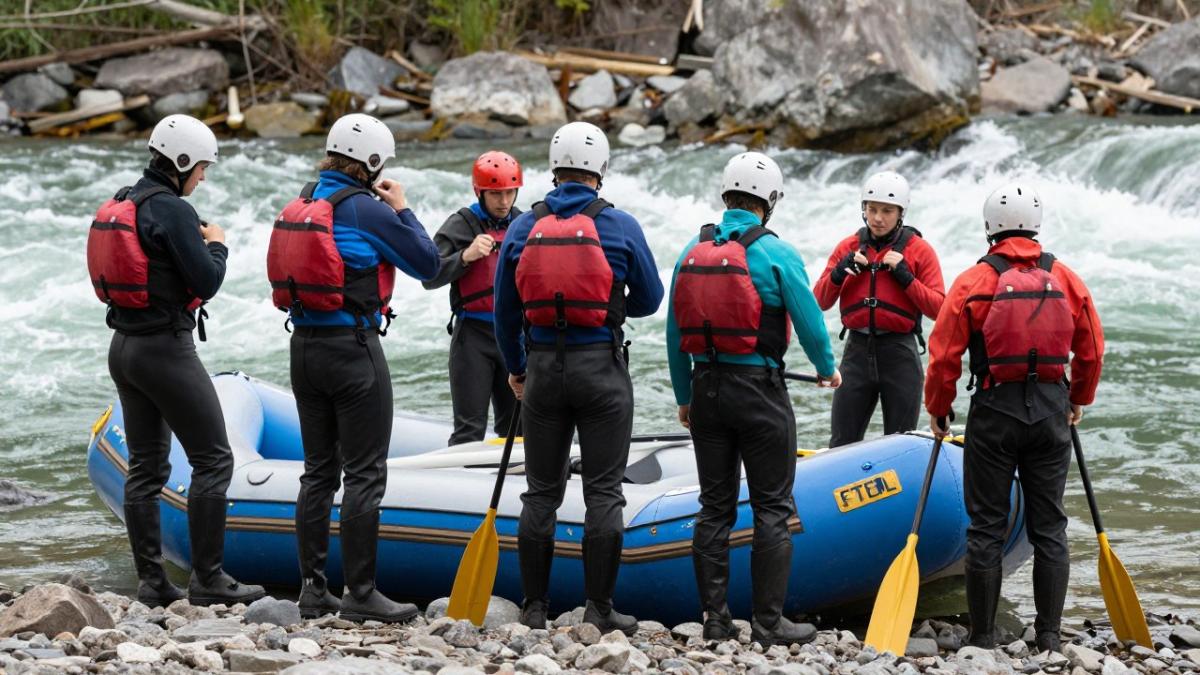
A 3mm farmer john wetsuit is the workhorse for cold-water days. Add a paddling jacket over it to block wind and spray. In genuinely frigid conditions, a dry suit keeps you fully dry underneath. Underneath either, wear a synthetic base layer, never cotton, which soaks up water and holds the cold against your skin.
Bring board shorts or a swimsuit for warm days and a warm layer for the takeout. For a deeper look at cold-water layering, read our guide to essential whitewater rafting gear for cold water.
5. Footwear That Stays On: River Shoes and Water Shoes
River footwear must stay on your feet and grip wet rock, because a lost shoe on Class V is a real hazard. Flip-flops and loose sandals wash off in the first rapid. Choose water shoes with a snug heel and a rubber outsole built for slick surfaces.
Technical river shoes use high-friction rubber and drainage ports so water empties fast. Avoid bare feet entirely. Riverbanks are sharp, and scouting a rapid means walking on uneven, wet stone. Test the fit by wading in: if the shoe shifts when you push off, size down or tighten the closure.
6. Your Whitewater Rafting Packing List for Day Trips
A whitewater rafting packing list for a day trip stays lean, because everything you bring rides in the raft. Pack for the water you will be in, not the weather at the put-in.
- Paddling clothes: wetsuit or dry suit, paddling jacket, synthetic base layer
- Footwear: river shoes with drainage
- Sun protection: sunscreen, wide-brimmed hat, hooded sun shirt
- Dry clothes: one full set in a dry bag for the takeout
- Personal items: medications, motion sickness tablets, personal toiletries
- Extras: waterproof camera, a small cooler for food and drinks
Keep the dry set genuinely dry. A wet ride home is the fastest way to end a great day badly.
7. The Multi-Day Rafting Trip Packing List: Dry Bags and Camp Gear
A multi-day rafting trip packing list adds overnight gear on top of the day-trip kit, and dry bags do the heavy lifting. On an overnight trip, your sleeping bag, camp clothes, and electronics all depend on staying dry.
Pack in layers of bags: a large dry pack for the sleeping bag and camp gear, a medium bag for clothes, and a small dry bag for electronics and medications. Add riverside camping essentials and a headlamp. Our multi-day Yosemite rafting trip packing guide covers the full overnight list.
8. What Sierra Mac Supplies and What You Bring
Knowing the split before you pack saves you from hauling gear you will not use.
Expert local guides who know the Tuolumne and Cherry Creek are part of the Sierra Mac experience. For the trips themselves, see our Cherry Creek and Upper Tuolumne Class V rafting trips, and for physical and logistical prep, read how to prepare for Class V whitewater rafting.
| Item | Sierra Mac Supplies | You Bring |
|---|---|---|
| Raft and paddles | Yes | No |
| PFD and helmet | Yes | No |
| Throw bag and river knife | Yes | No |
| Wetsuit or dry suit | No | Yes |
| River shoes | No | Yes |
| Sun protection | No | Yes |
| Dry bag and personal items | No | Yes |
Frequently Asked Questions
What are the must-haves for a river rafting trip?
The core four are a well-fitted PFD, a certified helmet, a paddle, and footwear that will not come off in moving water. Add a throw bag and river knife for safety, plus a dry bag for anything that must stay dry. On cold water, a wetsuit or dry suit and a paddling jacket matter as much as the hardware. Most guided Class V outfitters supply the raft, paddles, PFDs, and helmets, so confirm the split before you shop.
Can you raft Class V rapids?
Yes, but only with a guided commercial outfitter on a permitted river, and usually only if you meet age and swimming requirements. Class V is the highest runnable commercial difficulty rating: long, violent rapids with big drops and serious consequences for a swim. Sierra Mac runs Class V expeditions on Cherry Creek. Expect a safety briefing, a swim test on some rivers, and a guide who decides the line.
Are Crocs ok for rafting?
No. Crocs and similar slip-on clogs come off in moving water and offer no grip on wet rock. Class V rafting demands footwear with a secure closure, a rubber outsole with real tread, and drainage so your feet are not sloshing. Look for purpose-built river shoes with high-friction rubber and a heel that stays locked in. Old sneakers are a better fallback than clogs, but they get heavy and stay wet for days.
What safety gear is typically provided on a guided rafting expedition?
Guided outfitters generally supply the raft, paddles, PFDs, helmets, and a first-aid kit, plus throw bags and rescue equipment carried by guides. Ask specifically about wetsuits and paddling jackets, since some outfitters include them and others rent them. Personal medications, sun protection, and your own base layers are always your responsibility.
How should you protect your phone and other valuables while rafting?
Leave valuables in the vehicle or at base camp. If a phone must come along, put it in a waterproof hard case or a small roll-top dry bag clipped inside a larger dry bag, never loose in a pocket. Waterproof cameras with a wrist lanyard work well for Class V. Anything you carry should be tethered or stowed, because a dropped item in a big rapid is gone for good.
Class V water rewards preparation, and the right gear is where that preparation starts. Sierra Mac has guided rafters on the Tuolumne, Merced, and Cherry Creek since 1965, with professional local guides, expert Class V guidance, and trips that range from mild floats to intense multi-day expeditions. Get started with Sierra Mac and arrive ready for the river instead of worried about your kit.