
Tuolumne Rafting Water Temperature by Month Explained
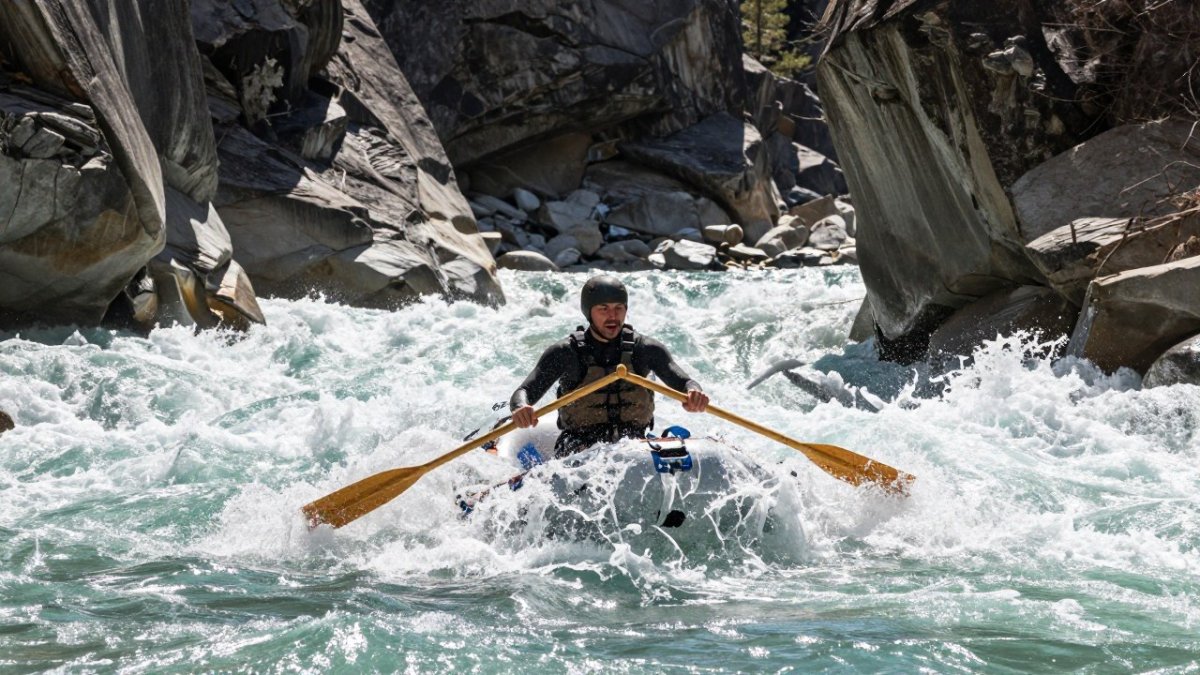
Last Updated: November 6, 2026
Quick Summary
Tuolumne rafting water temperature runs cold all season, from the upper 40s°F in spring to the low 60s°F by August. April and May sit well below 50°F, mid-to-late summer climbs into the 60s°F, and October falls back to the low 50s°F.
- Spring snowmelt drives the early season, with April through June bringing fast flows and cold water.
- A heavy Sierra snowpack can hold river temperatures lower into July, while a dry winter warms the river earlier.
- A 5-8°F swing for the same calendar week is common across two different years.
- A wetsuit or wetsuit top is the base layer when water sits below 60°F.
- Check where and when a reading was measured before trusting it for the rafting reach.
Table of Contents
- How Cold Is the Tuolumne River During Rafting Season?
- Tuolumne Rafting Season: When the River Runs and When It Warms
- Water Temperature by Month on the Tuolumne
- Tuolumne River Conditions: Flow, Snowmelt and Air Temperature
- What to Wear White Water Rafting on a Cold River
- Cold-Water Safety and Reading the Data Honestly
- Picking Your Month and Booking Your Tuolumne Trip
- Frequently Asked Questions
How Cold Is the Tuolumne River During Rafting Season?
The Tuolumne River runs cold, even in summer. Published readings put it in the low 50s°F on some fall days and in the 60s°F by mid-to-late summer. That gap matters for any Tuolumne rafting water temperature question, because cold water changes how a trip feels. Sierra Mac has been a family-owned rafting outfitter since 1965, and we encourage every guest to check the water, not just the weather.
What the Published Readings Actually Show
Here is what the data says, and what it does not say.
A Tuolumne River temperature page reported a current reading of 52.3°F and a site-listed average of 54.3°F. That page does not state the averaging period. So treat it as a snapshot, not a climate record.
NOAA’s California-Nevada River Forecast Center publishes hourly water-temperature summaries. Its Tuolumne readings include 50.9°F, 46.5°F, 46.4°F and 46.2°F. These are real measurements, but they are not a month-by-month series.
Tuolumne rafting water temperature is best read as a range that shifts with season, snowmelt and flow. No single number tells the whole story.
Tuolumne Rafting Season: When the River Runs and When It Warms
The season follows a simple arc: cold and fast in spring, warmer and lower by late summer.
Spring snowmelt drives the early season. The American Rafting Association’s Tuolumne guide describes April through June as the snowmelt window. Flows run fast, rapids run bigger, and the water is cold enough that wetsuits are standard gear. Because cold snowmelt makes insulation essential on the river, the same layering mindset can help when choosing sailing clothing guide options for a breezy evening on the water.
Summer flips the script. Flows drop, the sun stays out, and the water warms. Published guidance generally places April and May water well below 50°F, climbing into the 60s°F by mid-to-late summer.
Want the fuller picture of how the season unfolds? Read our season guide to the best month for white water rafting.
Water Temperature by Month on the Tuolumne
No complete, verified month-by-month water-temperature record exists for the rafting reach itself. What follows is a transparent framework: estimated ranges for the Main Tuolumne rafting section, labeled as estimates, with the mechanisms that shift them and the caveats that matter. Treat every number as a planning range, not a forecast.
Month-by-Month Estimates for the Rafting Reach
The table below reflects typical conditions on the Main Tuolumne rafting section. Values are estimated ranges drawn from seasonal patterns, snowmelt timing, and published guidance, not from a single gauge at a single location. The “Confidence” column tells you how much year-to-year spread to expect.
| Month | Estimated Water Temp (Rafting Reach) | Basis | Confidence | What It Means for You |
|---|---|---|---|---|
| April | Upper 40s°F to low 50s°F | Snowmelt onset, high flows | Low, heavy snowpack can hold temps near 45°F | Full cold-water gear; wetsuit and splash jacket standard |
| May | Upper 40s°F to mid 50s°F | Peak snowmelt, variable runoff | Low, widest spread of any month | Wetsuit required; brief immersion is punishing |
| June | Low 50s°F to upper 50s°F | Snowmelt tapering, flows still high | Medium | Cold but warming; wetsuit still smart |
| July | Mid 50s°F to low 60s°F | Lower flows, longer sun exposure | Medium | More comfortable; short swims tolerable for many |
| August | Low 60s°F, occasionally mid 60s°F | Warmest water of the season | Medium | Best swim comfort; still cool by pool standards |
| September | Upper 50s°F to low 60s°F | Cooling nights, falling flows | Medium | Still comfortable early; cools late month |
| October | Low 50s°F and falling | Cold nights, low flows | Low, early storms can drop temps fast | Cold again; wetsuit back in play |
Why These Are Ranges, Not Fixed Values
Three mechanisms drive the spread:
- Snowpack and runoff timing. A heavy Sierra snowpack keeps meltwater entering the river longer, holding temperatures lower into July. A dry winter warms the river earlier and faster.
- Reservoir operations. Regulated releases from upstream storage can change flow volume and timing, which in turn shifts water temperature independent of weather.
- Weather patterns. Sustained hot spells warm shallow reaches quickly; cold snaps and afternoon thunderstorms cool them.
A common pattern is a 5-8°F swing for the same calendar week across two different years. That is why a single reading, or a single warm day, should never be read as a monthly average.
Observed vs. Estimated: Read the Label
Published readings you find online fall into three buckets, and they are not interchangeable:
- Snapshots, a current reading at one location on one day. Useful for today’s trip, useless as a monthly average.
- Hourly gauge summaries, real measurements from a specific station, but not a climatology. The station may sit above or below the rafting reach.
- Estimates and seasonal guidance, ranges like the table above, built from patterns rather than a continuous record.
Watch out: a reading from a reservoir intake, a town gauge, or a station above the rafting put-in may not represent the water you will actually float. Check the measurement location before you trust the number.
For the fuller picture of how the season unfolds, read our season guide to the best month for white water rafting.
Tuolumne River Conditions: Flow, Snowmelt and Air Temperature
Flow and temperature move together. Spring snowmelt pushes volume up and temperature down. Summer runoff fades, flows drop, and the river warms.
The NOAA river forecast summaries track these shifts in near real time. Check them before you pack.
High water is its own story. When rivers hit their annual peak, usually in spring and sometimes into early summer, the character of the trip changes. Our guide to high-water rafting on the Merced and Main Tuolumne explains what that means.
Water Temperature vs. Air Temperature
Air temperature fools people. A 75°F day in May feels warm on the bank. The river is still in the 40s or low 50s°F.
That gap is the single most common planning mistake we see. Dress for the water, not the sunshine.
What to Wear White Water Rafting on a Cold River
Dress for the water, not the air. A wetsuit or wetsuit top is the base layer when water sits below 60°F. Add a splash jacket to block wind and spray. Wool or synthetic layers beat cotton every time, because cotton holds water and pulls heat from your body.
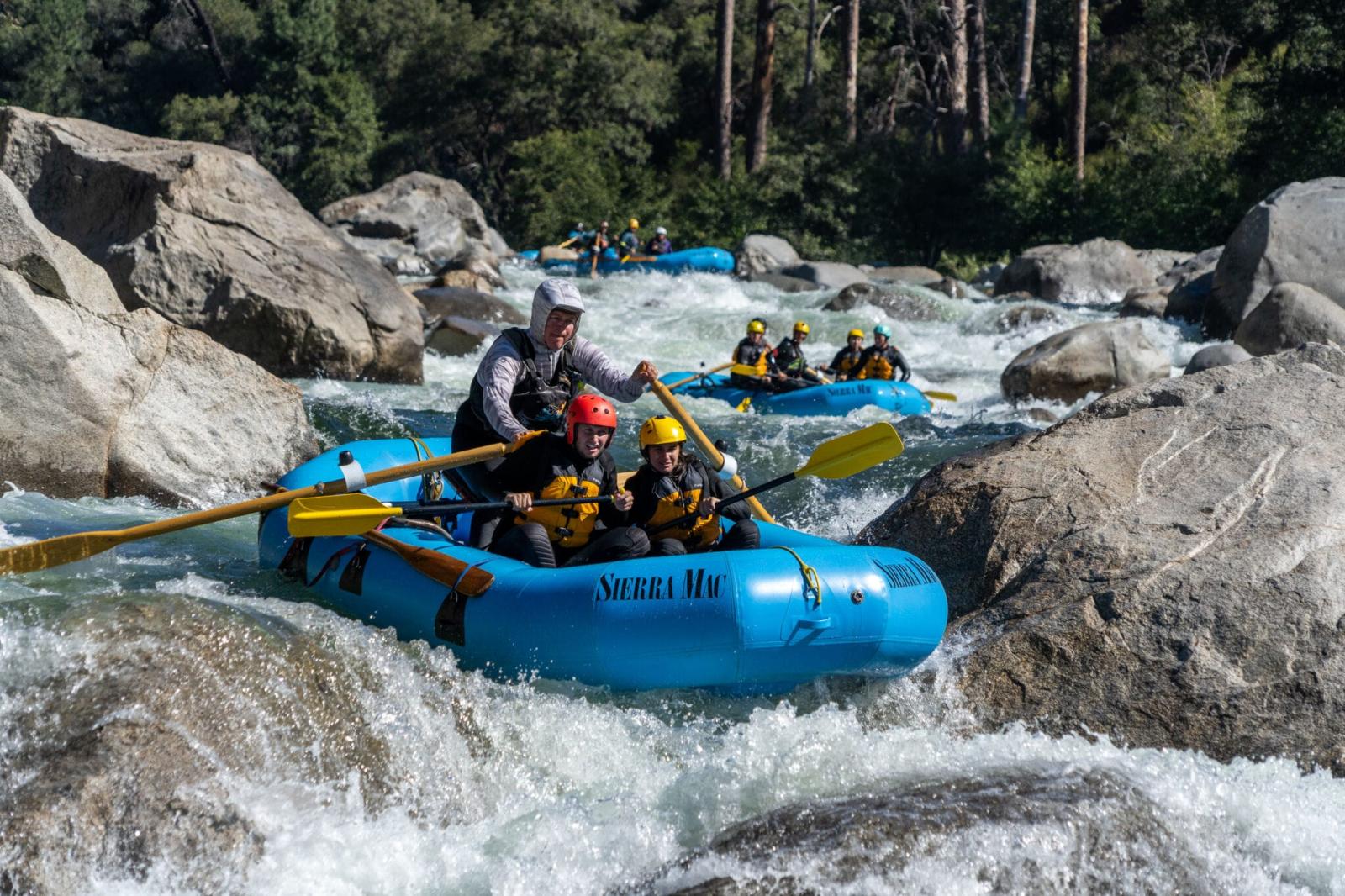
Bring these:
- Wetsuit or neoprene top
- Splash jacket
- Wool or fleece mid-layer
- Secure footwear
- Dry clothes for the takeout
For a deeper gear list, see our guide to essential whitewater rafting gear for cold water.
Cold-Water Safety and Reading the Data Honestly
Cold water is a real hazard, not a footnote. Sudden immersion can steal your breath and sap your strength fast. That is why we brief every guest on cold-water exposure before launch, and why the practical details below matter more than any single temperature number.
What Cold Water Actually Does to You
The first response to cold-water immersion is an involuntary gasp and rapid breathing, the cold-shock response. It peaks in the first minute and can make it hard to control your breathing or follow instructions. That is the moment most incidents begin. After the initial shock, hand and grip strength decline, which affects your ability to hold a paddle or grab a throw bag. Prolonged exposure leads to hypothermia, but the cold-shock phase is the immediate risk.
A wetsuit or neoprene top helps reduce the shock response by keeping a thin layer of warmed water against the skin.
If You Go In: A Simple Protocol
- Control your breathing first. Focus on slow exhales. The gasp reflex passes within about a minute for most people.
- Get back to the boat or shore. Do not try to swim a long distance; conserve energy and use the current to assist you.
- Get out of the wind. Wind chill accelerates heat loss far faster than water alone.
- Change out of wet clothing. Wool or synthetic layers retain warmth; cotton holds water and pulls heat from your body.
- Warm gradually. Add dry layers, sip a warm drink, and watch for confusion, slurred speech, or uncontrollable shivering, signs to seek help.
Watch out: treating one warm day as proof the river is warm. Air temperature and water temperature are different numbers. A 75°F afternoon in May can sit over water in the 40s or low 50s°F. Check the flow report and the temperature reading together before you commit.
Reading the Data Honestly
Here is the honest part about the data. The published readings we have are snapshots and hourly summaries, not a verified monthly climatology. A single current reading should never be sold as a monthly average. Measurement location matters too: a gauge at a reservoir intake or a town upstream of the rafting reach may not reflect the water you will float. When you check a reading, ask three questions: Where was it measured? When? Is it observed or estimated?
For a deeper gear list, see our guide to essential whitewater rafting gear for cold water.
Picking Your Month and Booking Your Tuolumne Trip
Pick your month by comfort level and appetite for challenge. Want big water and cold thrills? Aim for late spring. Want warmer water and manageable flows? Look at July and August.
Then book. Our Tuolumne River rafting trips run one to three days on the Main Tuolumne. Check rates and dates for the current schedule.
The river will always be colder than the air. The question is whether you plan for it. Sierra Mac has guided these canyons since 1965, as a family-owned, third-generation outfitter and the first to guide the Merced and Tuolumne. Our local guides read conditions daily and match trips from mild floats to Class V expeditions. Get started with Sierra Mac and pick the month that fits your crew.
Frequently Asked Questions
What is the best month to go white water rafting on the Tuolumne River?
It depends on what you want. April through June delivers snowmelt-driven flows, bigger rapids and water cold enough that wetsuits are standard gear, according to the American Rafting Association. Mid-to-late summer brings warmer water, with published guidance noting temperatures climbing into the 60s°F. Families with younger teens often prefer the warmer, more manageable summer flows, while thrill-seekers chase the high water of early season.
Does Tuolumne River water temperature really change by month?
Yes, but the published record is broader than a neat monthly table. Published guidance puts April and May water below 50°F, warming into the 60s°F by mid-to-late summer. A water-temperature site reported a 52.3°F current reading and a 54.3°F average for the Tuolumne, though it does not specify the averaging period. Treat any single reading as a snapshot, not a monthly climatology.
Do I need a wetsuit for Tuolumne River rafting?
In spring and early summer, yes. The American Rafting Association describes April through June water as cold enough that wetsuits are standard gear. Published guidance notes April and May water can sit below 50°F. By mid-to-late summer, when temperatures reach the 60s°F, layers may be enough for some rafters. Ask your outfitter what they provide before you pack.
How do I check Tuolumne River conditions before my trip?
Use more than one source. NOAA’s California-Nevada River Forecast Center publishes an hourly water-temperature summary, and flow data is reported in cubic feet per second with gage height readings. Pair those with current flow and conditions information from your outfitter. A single number from a website can mislead, so confirm the measurement location and date before you plan layers or pick a date.