7 Advanced Whitewater Navigation Tips for Experienced Paddlers
Quick Summary
Advanced whitewater navigation is the skill of reading the river, scouting rapids, choosing a line and controlling the boat before you commit. Experienced paddlers rely on a repeatable method: identify features like downstream Vs and eddy lines, plan a primary and backup line, and set no-go criteria in advance.
- Core skills include reading the water, scouting, line choice, boat control and group awareness.
- Scout in a sequence: stop above the rapid, identify the entry, find features, pick a line and plan the exit.
- Downstream Vs usually mark the deepest, clearest route through a rapid.
- Choose a primary and a backup line before launching any run.
- Set your no-go criteria in advance so you can portage or line down when needed.
Table of Contents
What Advanced Whitewater Navigation Requires
Advanced whitewater navigation is less about raw strength and more about judgment, timing and reading water before you ever touch the paddle. Experienced paddlers know that a clean line through a Class IV rapid starts long before the first stroke. It starts with the scout.
Most paddlers who struggle on big water aren’t short on effort. They’re short on a system. Good whitewater navigation rests on a few core skills working together: reading the river, choosing a line, positioning the boat, timing strokes and keeping lateral momentum under control. Mastering these variables requires a nuanced understanding of how reading river currents dictates the path of least resistance through complex hydraulic features.
The core skills at a glance:
- Reading the water: spotting features, current speed and hazards
- Scouting: deciding whether and how to run a rapid
- Line choice: picking the path that keeps you out of trouble
- Boat control: angle, position and stroke timing
- Group awareness: knowing where your crew is at every moment
A common mistake is treating each rapid as a fresh guessing game. Experienced crews build a repeatable approach, so the same questions get asked every time. That consistency is what keeps a run predictable when conditions change.
Advanced paddling also demands honest preparation. Check your PFD fit, secure gear with straps and carabiners, and confirm that everyone in the boat knows the plan. Safety gear is not an afterthought on Class IV-V water. It is part of navigation.
Sierra Mac has guided rafts on the Tuolumne, Merced and Cherry Creek rivers since 1965.
Watch out: relying on memory alone. Water changes with flow and season, so what worked last month may not work today.
Reading River Currents and Features Before You Commit
Reading water is the single most valuable skill you can build. Currents tell you where the energy is, and features tell you where it wants to push you.
Look for these features first:
- Downstream V: a V-shaped tongue of smooth water pointing toward the safest channel
- Eddies: calm pockets of reverse flow behind rocks or along banks
- Eddy lines: the boundary where fast current meets slow, often a hard, turbulent seam
- Holes and hydraulics: recirculating water that can trap a boat
- Strainers: rocks or branches that let water through but hold people and gear
A downstream V almost always marks the deepest, clearest route. Pick a line that follows it when you can. Eddy lines are different. They can flip a boat or spin it sideways, so plan how you’ll cross them before you reach them.
Current speed matters as much as features. Fast water gives you less time to correct mistakes. Slower, deeper water gives you more room but can hide hazards beneath the surface.
Here’s where it gets interesting: the same rapid can look completely different at different flows. Higher water hides rocks and creates bigger holes. Lower water exposes obstacles that were invisible before. Read the river as it is that day, not as you remember it.
A Repeatable Method for Whitewater Rapid Scouting Techniques
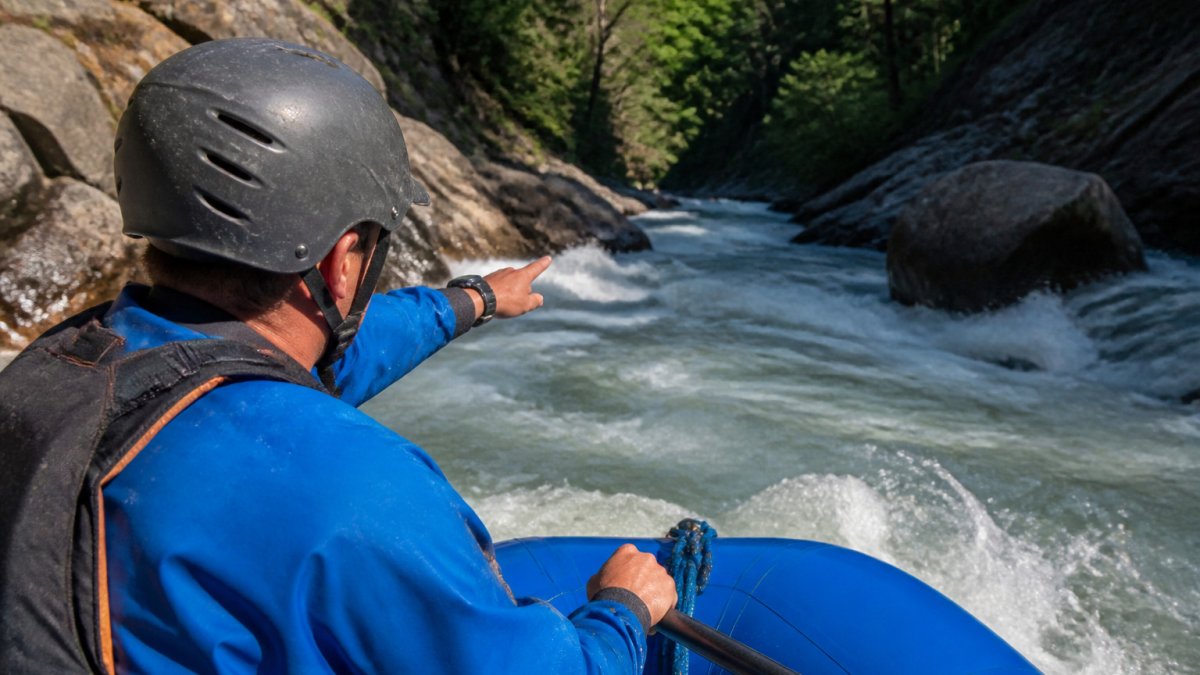
Scouting is where advanced paddlers separate themselves from the rest. Most guides cover scouting in vague terms. Here is a practical sequence you can use on any rapid.
Step 1: Stop above the rapid. Pull over with time to look. Rushing the scout is the most common cause of bad decisions.
Step 2: Identify the entry. Note where the current pulls you and what the first obstacle is.
Step 3: Find the main features. Mark downstream Vs, eddies, holes and strainers in order from top to bottom.
Step 4: Pick the line. Choose the path that avoids the worst feature and keeps your options open.
Step 5: Plan your exit. Decide where you want to be at the bottom, not just how to get through the top.
Step 6: Set your go or no-go criteria. Decide in advance what would make you portage or line down instead.
This method works because it forces you to think in sequence. You’re not trying to remember a whole rapid at once. You’re solving one decision at a time.
Watch out: skipping step six. Paddlers who never set a no-go threshold often talk themselves into runs they should skip.
Reading Downstream V’s, Eddies and Eddy Lines
Downstream Vs are your roadmap. Eddies give you places to stop and regroup. Eddy lines are where most navigation mistakes happen.
When you cross an eddy line, lean into the faster water and keep your boat angle deliberate. Hit it too flat and the current can pin you. Hit it too steeply and you may spin out. Practice these transitions on easier water before you need them in a Class IV rapid.
Choosing a Line Through Rapids Under Uncertainty
Even a careful scout leaves some uncertainty. Water moves, and not every hazard is visible from the bank. Good paddlers plan for that.
Choose a primary line and a backup line before you launch. If the primary line disappears under a surge or a missed stroke, your backup gives you somewhere to go. Keep your exit options open, and prefer lines that let you adjust mid-rapid.
Ask yourself three questions before committing:
- Can I see the bottom of this rapid from where I stand?
- Do I know what the worst feature looks like at this flow?
- Would I be comfortable swimming this section if the boat flipped?
If you answer no to any of these, reconsider. A portage or a conservative line is always a valid choice. Experienced crews treat the no-go decision as a skill, not a failure.
Positioning, Strokes and Lateral Momentum
Once you’ve chosen a line, your job is to hold it. That comes down to boat position, angle, and stroke timing.
Boat position: Sit or stand in a way that keeps your weight centered and your center of gravity low. Lean forward slightly when you want to drive into a feature.
Boat angle: Angle the bow toward your target line. A steep angle gives you quick turns. A shallow angle gives you stability but less control.
Strokes: Use forward strokes to build speed and draw strokes to pull the boat sideways. Time each stroke to the current, not to your own rhythm.
Lateral momentum: Sideways movement is what gets you across a rapid. Build it early with sweep strokes and maintain it with steady draws. If you lose lateral momentum, the current will push you wherever it wants.
Paddling harder is not always the answer. Often a single well-timed stroke does more than five rushed ones. Work on timing before power.
High-Volume River Paddling Techniques for Big Water
High-volume water changes everything. Waves are bigger, holes are stronger and mistakes carry higher consequences. The fundamentals still apply, but the margins shrink.
On big water, commit earlier. Hesitation at the wrong moment can put you in the worst part of a feature. Keep your boat moving, maintain strong forward momentum through the main drops, and use larger, more deliberate strokes.
Expect the unexpected. Standing waves can grab a boat and hold it. Know the rescue plan for your group and make sure everyone can swim in moving water.
Coordinating Your Group and Planning Your Next Run with Sierra Mac
Advanced whitewater is a team sport. Clear calls, agreed signals and a shared debrief after each rapid keep everyone safe and improving.
Before each run, agree on signals for stop, go and danger. After each rapid, take a few minutes to talk through what worked and what didn’t. Track your progress across trips so you can see measurable improvement in line choice, boat control and scouting speed.
Whatever run you choose next, scout first, agree on your plan and keep the group talking. That is how experienced paddlers keep getting better.
Last Updated: October 29, 2026
Frequently Asked Questions
How do experienced paddlers read a whitewater river?
Experienced paddlers read a river by looking for features before the current carries them into trouble. They identify downstream V’s that mark the deepest channel, eddies and eddy lines where flow reverses, and holes or pour-overs that can trap a boat. Scouting from shore, pausing above each rapid, and naming the features out loud to the group builds a mental map. Repeating this on every rapid, including ones you have run before, trains your eye to notice how water changes as flow rises or falls.
How do you choose a safe line through a rapid?
Choose the line that keeps your boat in the deepest, cleanest water and sends you away from hazards like sieves, strainers and undercut rocks. Start by picking your entry point, then pick the exit you want and trace the path between them. Pick a line you can execute under pressure rather than the most dramatic one. If you cannot see the exit clearly or the consequences of a missed stroke are severe, it is reasonable to portage or line the boat instead.
How should paddlers adjust their technique on high-volume rivers?
High-volume water moves faster, holds bigger waves and creates stronger eddy lines, so paddlers need earlier decisions and more committed strokes. Start your moves further upstream, take a wider line to avoid large hydraulics, and expect the boat to be pushed harder by the current. Keep your weight forward and your body低 in the boat when crossing eddy lines, and be ready to brace on big waves. Reduce the number of risky moves you attempt and focus on clean, controlled lines.
What is the best way to scout a difficult rapid?
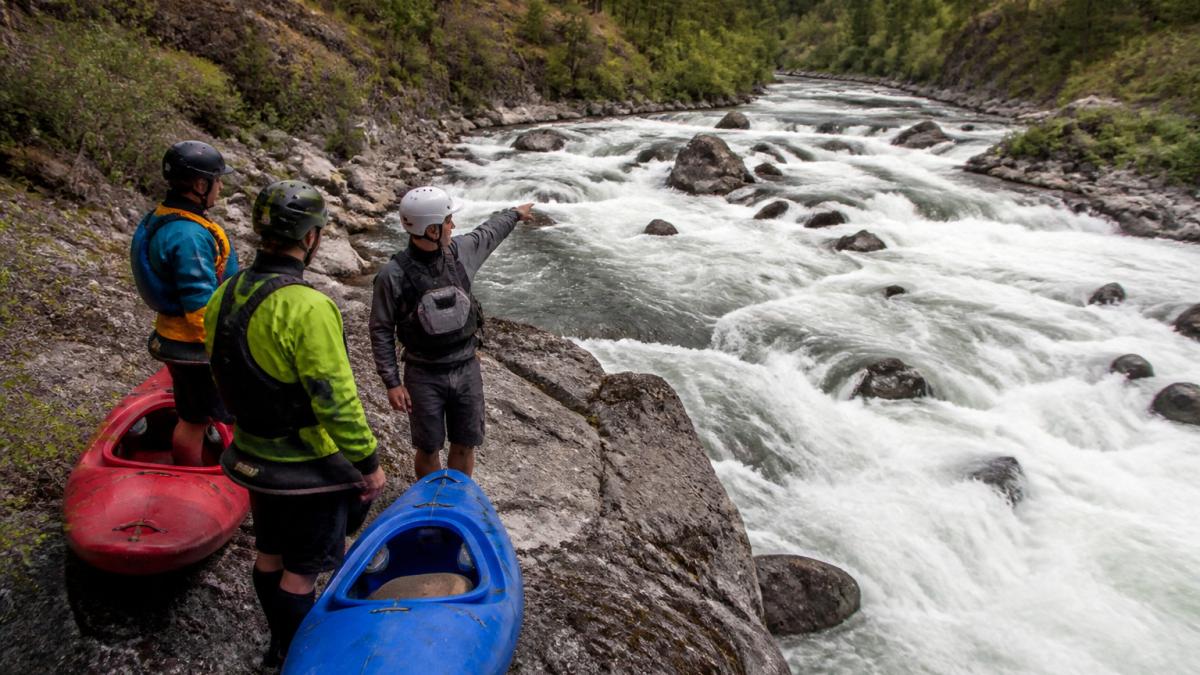
Scout from the shore or an elevated vantage point whenever the rapid is unfamiliar or the consequences of a mistake are high. Identify the entry, the main current and the exit, then mark the hazards you need to avoid. Discuss with your group who will run first and where each boat should end up, and agree on a signal to stop if conditions look different than expected. If the flow, weather or a hazard is outside your comfort zone, choose a safer route or walk around.