
What Safety Gear Do You Need for River Rafting?
Last Updated: November 12, 2026
Quick Summary
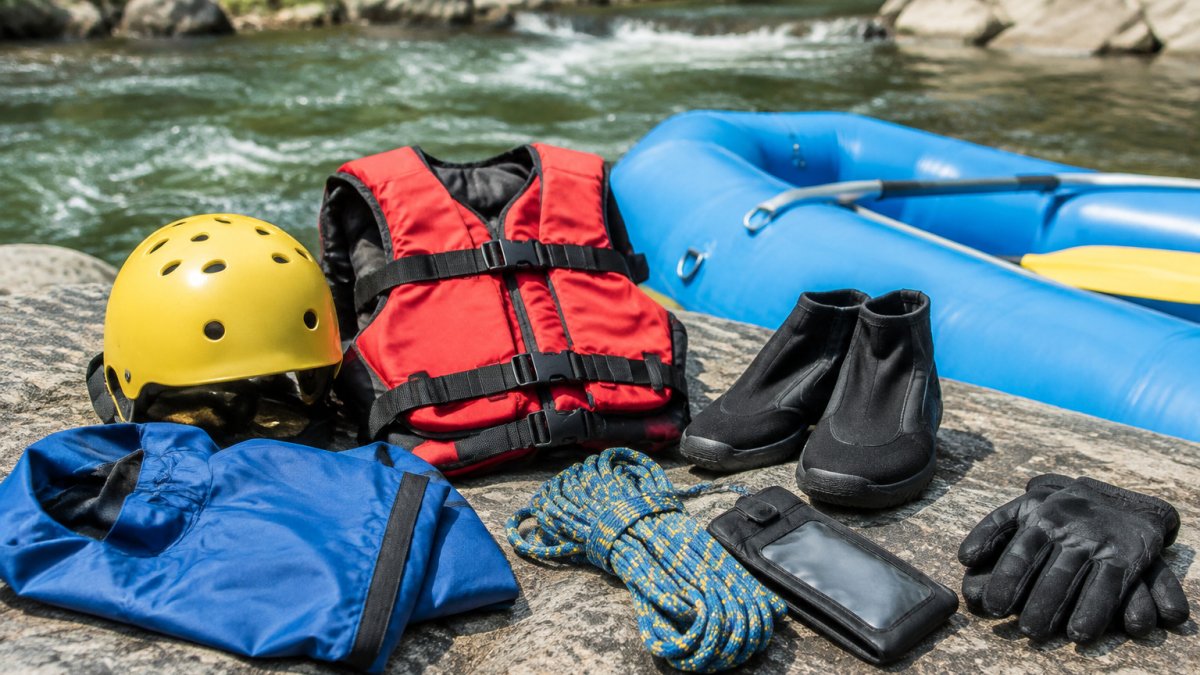
River rafting safety gear is the equipment you wear and carry to stay afloat and respond when something goes wrong on moving water. Essentials include a Coast Guard-approved PFD, a whitewater helmet, paddles with at least one spare per raft, a throw bag, a river knife on your PFD, and a first-aid kit. On guided trips the outfitter supplies the technical gear, while you bring layers, footwear, and sun protection.
- Fit your PFD and helmet on land in the layers you will actually wear on the water.
- Carry one spare paddle per raft at minimum, lashed where a guide can reach it fast.
- Dress for water temperature, not air temperature, using synthetic or wool layers over cotton.
- A basic pin kit includes slings, locking carabiners, a rescue pulley, an auto-block cord, and prusik loops.
- Inspect PFD webbing, helmet shells, and throw bag ropes before the season opens, not trip morning.
Table of Contents
- The Essential Safety Gear for River Rafting
- How to Fit a PFD and Helmet Before You Push Off
- What Should I Wear for River Rafting?
- Building a White Water Rescue Kit for Your Raft
- What Goes in a Raft Pin Kit
- Rafting Z-Drag Kit: What It Is and What It Cannot Do
- Personal Gear vs. Group Gear on a Guided Trip
- Inspect, Maintain, and Replace Before the Season Starts
- Frequently Asked Questions
The Essential Safety Gear for River Rafting
River rafting safety gear is the set of equipment you carry and wear to stay afloat, protected, and able to respond when something goes wrong on moving water. At Sierra Mac, we have guided trips on the Tuolumne, Merced, and Cherry Creek since 1965. What changes is how much of it you carry, and how well it fits.
Below, we break down the essential safety gear for river rafting item by item, show you how to fit the pieces that matter most, and explain which gear belongs to you versus the outfitter on a guided trip.
Personal Flotation Devices and Life Jackets
A personal flotation device, or PFD, is the one piece of river rafting safety gear you never leave the bank without. Look for a Coast Guard-approved label inside the vest. A properly fitted PFD sits high on the torso, cinches snug at the shoulders and sides, and stays put when someone pulls up on the shoulder straps. If you can lift the vest toward your ears, it is too loose. Type III vests suit most rafting; guided outfitters often supply commercial versions with a rescue handle and a whistle attached.
Helmets, Paddles, and Spare Paddles
Helmets protect against the rock you did not see and the paddle blade someone else is swinging. A whitewater helmet should sit level, cover the top of the forehead, and stay put when you shake your head. Buckle the chin strap snug, then try to roll the helmet forward; if it slides over your eyes, tighten it.
Paddles are your steering and your brakes. Carry one spare paddle per raft at minimum, lashed where a guide can reach it fast. We rig spares along the frame so a lost paddle never turns into a lost line. If you want to build real paddle skill before your trip, our Class IV rowing school teaches stroke timing and boat control on the Tuolumne.
Throw Bags, River Knives, and First-Aid Kits
A throw bag is a rescue rope packed in a bag you can throw accurately to a swimmer. Buy one with a floating rope, practice deploying it on land, and keep it clipped inside the raft, not buried under dry bags. A river knife belongs on your PFD, not in a gear bag: a blunt-tipped rescue knife cuts rope and webbing without puncturing a tube.
How to Fit a PFD and Helmet Before You Push Off
Fit both pieces on land, in the gear you will actually wear on the water, before the raft moves. A PFD that fits over a t-shirt can ride up once you add a splash top. Tighten the side straps first, then the shoulders, then check that the vest does not lift past your chin. For the helmet, set it level, buckle the chin strap, and have someone press down on the shell while you try to look up.
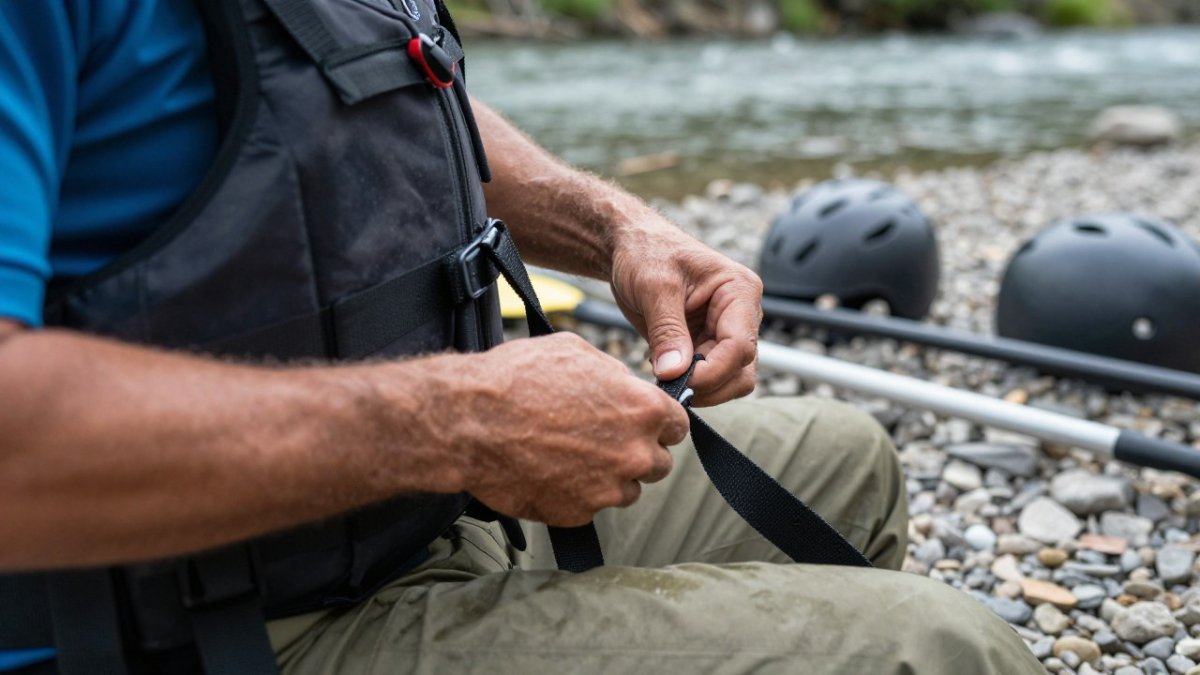
Run this quick check before every launch:
- PFD label is Coast Guard-approved and readable
- Side and shoulder straps snug; vest cannot lift past the chin
- Helmet level, chin strap snug, shell does not tip back
- Whistle and knife accessible on the PFD
- Spare paddle lashed and reachable
- Throw bag clipped inside the raft
What Should I Wear for River Rafting?
Dress for the water temperature, not the air temperature. That single rule drives every clothing decision on a raft, because immersion and spray chill a body far faster than cool air alone.
Use water temperature to set the kit:
- Above 70°F water: swimsuit or quick-dry shorts and a synthetic shirt, plus a splash top for wind and spray. Sun protection matters more than insulation here.
- 60-70°F water: add a thin neoprene top or a 2mm wetsuit vest under your splash gear, and carry a warm hat for shaded sections.
- 50-60°F water: a 3mm full wetsuit or a dry top with neoprene shorts is the common choice; add neoprene booties and gloves.
- Below 50°F water: a dry suit with insulating layers underneath is the standard for cold-water trips, paired with a warm hat and gloves. A dry suit keeps you dry, not warm, so the layers under it do the insulating work.
Footwear deserves its own decision. Closed-toe river shoes with grippy rubber soles and drainage protect toes from rocks and give traction on slick put-ins. Avoid sandals that slip off in a swim and avoid heavy hiking boots that stay waterlogged.
Sun protection is safety gear, not comfort gear.
For a deeper look at layering, read our guide to essential whitewater rafting gear for cold water.
Building a White Water Rescue Kit for Your Raft
A white water rescue kit is the group of tools a raft carries to reach, secure, and recover a swimmer or a pinned boat. Build it around a throw bag, a rescue pulley, an auto-block cord, and a few carabiners and slings. Keep the kit in one bag that every paddler knows how to open. Our own guides train on these systems continuously, and our Class V whitewater safety techniques and fitness guidelines explain the fitness and rescue foundations behind them. The honest limitation: a kit is only as good as the training behind it. Buy the gear, then learn to use it.
What Goes in a Raft Pin Kit
A raft pin kit is the hardware you need to free a boat wrapped on a rock. A basic kit includes several slings of different lengths, locking carabiners, a rescue pulley, an auto-block cord, and prusik loops, all packed in one bag. Two pulleys named in whitewater safety-kit recommendations are the Rock Exotica machined rescue pulley and its compact mini version, paired with a Sterling 6mm auto-block cord at 13.5 inches. Check load ratings on every piece and retire hardware after any shock load.
Rafting Z-Drag Kit: What It Is and What It Cannot Do
A rafting Z-Drag kit is a rope-and-pulley system that multiplies your pulling force to move a stuck raft. The rope runs through a pulley, back to an anchor, and forward again in a Z shape, letting a small crew move a heavy load. What it cannot do is substitute for judgment. A Z-drag takes practice to rig, needs solid anchors, and fails badly if the anchor is wrong. Learn it on a course, not on a real pin.
Personal Gear vs. Group Gear on a Guided Trip
On a guided trip, the outfitter supplies the raft, the PFDs, the helmets, the paddles, the throw bags, the first-aid kit, and the rescue hardware. You bring the layers, the footwear, the sun protection, and a dry bag.
Use this responsibility checklist before you pack:
Outfitter-supplied (confirm in writing):
- Raft, paddles, and at least one spare paddle per raft
- Coast Guard-approved PFDs and helmets sized for each paddler
- Throw bags, first-aid kit, and repair kit
- Group rescue hardware, including pulleys, carabiners, slings, and pin kit
- Emergency communication and trip plan
Paddler-supplied:
- Base layers, insulating midlayer, and splash or dry gear matched to water temperature
- Closed-toe river shoes with grippy soles
- Hat, sunglasses with retention strap, and sunscreen
- Personal medications and a small personal first-aid item if needed
- Dry bag for a change of clothes and valuables
Technical rescue gear is group gear for a reason. Throw bags, knives, pin kits, and pulley systems require training to use safely, and a misrigged Z-drag or a poorly anchored pulley can turn a stuck boat into a dangerous situation.
Ask ahead exactly what is provided so you do not duplicate weight or leave a gap. Our guide to how to prepare for a guided rafting adventure covers what to bring versus what we hand you at the put-in.
Inspect, Maintain, and Replace Before the Season Starts
Inspect every piece of river rafting safety gear before the season opens, not the morning of your trip. Check PFD webbing for fraying, buckles for cracks, and flotation for soft spots. Look for helmet shell cracks and worn chin straps. For serious whitewater prep, our guide to preparing for Class V whitewater rafting walks through the full pre-season routine.
| Gear Item | Check Before Each Trip | Replace When |
|---|---|---|
| PFD | Webbing, buckles, flotation | Webbing frays or buckles crack |
| Helmet | Shell cracks, chin strap | Any shell crack or worn strap |
| Throw bag | Rope abrasion, clean pack | Rope shows wear or shock load |
| Spare paddle | Shaft, blade, lash point | Cracked shaft or chipped blade |
| River knife | Blade, sheath, clip | Blade dulls or clip fails |
| First-aid kit | Seals, expired supplies | Any seal breaks |
The gear list is the easy part. The hard part is trusting the people around you when the water gets loud. Sierra Mac has been a family-owned rafting outfitter since 1965, offering professional local guides, trips ranging from mild half-day floats to intense Class V expeditions, and a location just 15 miles from Yosemite’s northwest entrance. Book now to plan your trip.
Frequently Asked Questions
What gear do I need for river rafting?
The core river rafting safety gear is a properly fitted personal flotation device, a helmet, a paddle plus a spare, a throw bag, river footwear, a first-aid kit, and a river knife. Ask your outfitter what is provided before you pack so you do not buy duplicates. Ask what is provided before you pack so you do not buy duplicates or arrive without footwear that stays on in fast water.
What should I wear for river rafting?
Wear fast-drying layers, not cotton. A synthetic base layer, shorts or quick-dry pants, and lace-up river shoes with closed toes cover most warm-weather trips. Add a splash top or rain jacket for cold mornings and a dry suit when water temperature drops. Bring sunglasses with a retention strap, a hat, and sunscreen. Avoid loose jewelry, flip-flops, and anything you would hate to lose in the river.
Do you need a helmet for whitewater rafting?
Yes on any commercially guided whitewater trip, and on Class III and above regardless of who is rowing. A helmet protects against rock impacts during a swim and against paddle strikes from the person in front of you. Fit matters: the helmet should sit level, cover the top of the forehead, and stay put when you shake your head with the chin strap snug. A loose helmet slides back and leaves the front of the skull exposed.
What is a raft pin kit used for?
A raft pin kit is the hardware used to free a raft pinned against a rock or wrapped around an obstacle. It typically holds carabiners, slings, pulleys, and prusik cord that combine into a Z-Drag or similar mechanical advantage system. Pin kits belong to the group or guide, not the individual paddler. If you are building your own, buy components rated for rescue loads and learn the systems from a qualified instructor before you need them.
What is included in a whitewater rescue kit?
A white water rescue kit usually includes a throw bag with 50 to 70 feet of rescue rope, carabiners, a rescue pulley such as a machined pulley, slings, prusik or auto-block cord, and a river knife. Some paddlers add a small pin kit for boat extraction. The kit only helps if someone in the group has practiced with it. Rescue gear use, training, and limitations matter more than the contents list.