
Class IV Rafting Age and Weight Limits: What to Know
Last Updated: November 8, 2026
Quick Summary
Class IV rafting has no single age or weight limit that applies everywhere. Minimums are set by each outfitter and vary by river, season and trip, so confirm the exact figure for your date before booking. Some operators also apply a weight minimum, maximum or fit guideline, and the guide can turn away an unready guest.
- Minimum age is set by each outfitter, and one operator reports a 12 to 14 year range.
- Another operator sets a 13-year minimum, so compare figures for your specific river.
- Weight limits may be a minimum, a maximum or a fit guideline; ask which applies.
- Guides can refuse a guest who seems unready even if age and weight are within range.
- Get the age, weight and refund terms in writing before paying.
Table of Contents
- How Class IV Rafting Age and Weight Limits Are Set
- Class IV Rafting Minimum Age: What Outfitters Require
- Whitewater Rafting Weight Limits: Minimums, Maximums, and Fit
- Class III vs. Class IV Rapids: What Changes on the Water
- Class IV Rafting for Beginners: Is a First Trip Realistic?
- Swimming Ability, Fitness, and Safety Requirements
- Questions to Ask and Confirm Before Booking Your Class IV Trip
- Frequently Asked Questions
Class IV rafting is not a single-age, single-weight activity. Whether a child, teen or adult can join a Class IV run depends on the river, the outfitter and the trip, and the minimums vary from one operator to the next. Current prices and departure dates for the Tuolumne and Cherry Creek trips are listed on the Sierra Mac rates page. Sierra Mac runs guided trips on the Tuolumne, Merced and Cherry Creek rivers near Yosemite National Park, and the rules below explain what to check before you book.
Most families want a clear number, and there isn’t one that applies everywhere. The minimum age for Class IV rafting is set by each outfitter rather than by a single universal standard. One operator reports a 12 to 14 year range, while another sets a 13-year minimum. The Boy Scouts of America guidance on whitewater rafting also limits unit trips on Class IV river sections to specified conditions, without giving one fixed age. That means the answer for your trip comes from the operator’s policy for that specific river and date. Boy Scouts of America whitewater rafting guidance
How Class IV Rafting Age and Weight Limits Are Set
Age and weight limits come from a mix of safety reasoning and operator policy. Operators look at the river’s difficulty, the strength of the currents and the size of the drops. They then set the minimums their guides can safely handle.
Limits are not one-size-fits-all:
- River difficulty: A Class IV run has bigger waves and harder drops than a Class III float.
- Operator policy: Each outfitter sets its own minimums and may add conditions.
- Guide discretion: A guide can turn away a guest who seems unready, even if the age or weight is within range.
Treat any published limit as the starting point. The final call on your trip is made by the operator and its guide on the day.
Class IV Rafting Minimum Age: What Outfitters Require
The minimum age is the question most families ask first. Operator minimums for Class IV runs vary. Policies differ, so confirm the exact figure for your river and date rather than assuming a number from another company.
A common mistake is assuming that a child who is a strong swimmer or has done milder rafting is automatically ready for Class IV. Age is only one factor. The river, the water level and the child’s composure on the water matter just as much.
Age Requirements by River and Outfitter
Requirements change with the river and the operator, so compare the trip you plan to book. Use this checklist:
- Ask for the Class IV minimum age for the exact river section you want.
- Ask whether the minimum changes with water level or season.
- Ask whether a younger guest can join with a parent on the same trip.
- Get the answer in writing before you pay.
Minimum ages differ by operator and river, so compare the figures for the trip you plan to book.
| Source of requirement | What it sets | Action |
|---|---|---|
| Outfitter policy | Minimum age for the Class IV section | Confirm the exact figure for your river and date |
| Operator A (reported) | 12 to 14 year range | Check whether it applies to your trip |
| Operator B (reported) | 13-year minimum | Compare against other operators |
| Water level or season | May change the minimum | Ask whether the rule shifts |
| Parent on same trip | Can allow a younger guest | Ask before booking |
| Guide discretion | Can turn away an unready guest | Treat published limits as a starting point |
Whitewater Rafting Weight Limits: Minimums, Maximums, and Fit
Weight limits are often confused with age limits, and operators handle them differently. Some set a minimum weight, some set a maximum, and some focus on fit in the provided gear instead of a fixed number. The confusion is understandable, because a weight policy can serve several purposes at once.
A minimum weight is usually about flotation and fit. A life vest has to stay snug when a paddler is in the water, and a very light guest can ride up inside a vest that is sized for a larger adult. Some operators therefore set a floor for youth participants so that the smallest available vest and helmet will fit properly. A maximum weight is usually about the raft, the seat and the guide’s ability to help a guest back into the boat after a swim.
Fit is the third category, and it is the one most often left off a website. Instead of a hard number, the operator asks whether the vest and helmet can be adjusted to stay in place and whether the guest can sit in the raft and paddle without the boat listing. That is a judgment call, and it is usually made by the outfitter before the trip and confirmed by the guide at the put-in.
Watch out: a weight limit can be a hard cutoff or a guideline, and the two are not interchangeable. Ask the operator directly which one applies, and ask how a guest who is near the edge is assessed. A guest near a published limit may be assessed on a case-by-case basis, so ask the operator how that assessment is made.
Weight also interacts with the other readiness factors. A paddler who is within the weight range but cannot hold a paddle stroke or follow a command is still a poor fit for Class IV water. Treat the weight number as one input, not the whole decision.
Class III vs. Class IV Rapids: What Changes on the Water
The rapid class tells you how hard the water will be. Class III rapids have irregular waves and some obstacles that require steering. Class IV rapids have powerful currents, large waves and significant drops, and they demand precise paddling.
On Class IV water, a missed stroke has bigger consequences. Guides expect paddlers to follow commands quickly and hold their position in the raft. That is why many operators set higher age and readiness standards for Class IV than for Class III.
If you are weighing a Class IV trip against an easier run, compare the rapid classes on the specific river. The [Tuolumne River Rapid Classes guide | sierramac.com] breaks down how the classes differ on that water.
Class IV Rafting for Beginners: Is a First Trip Realistic?
Many first-time rafters can handle a Class IV run, but it helps to be honest about readiness. A first trip works best when the group has some comfort in moving water, follows instructions well and is willing to listen to the guide.
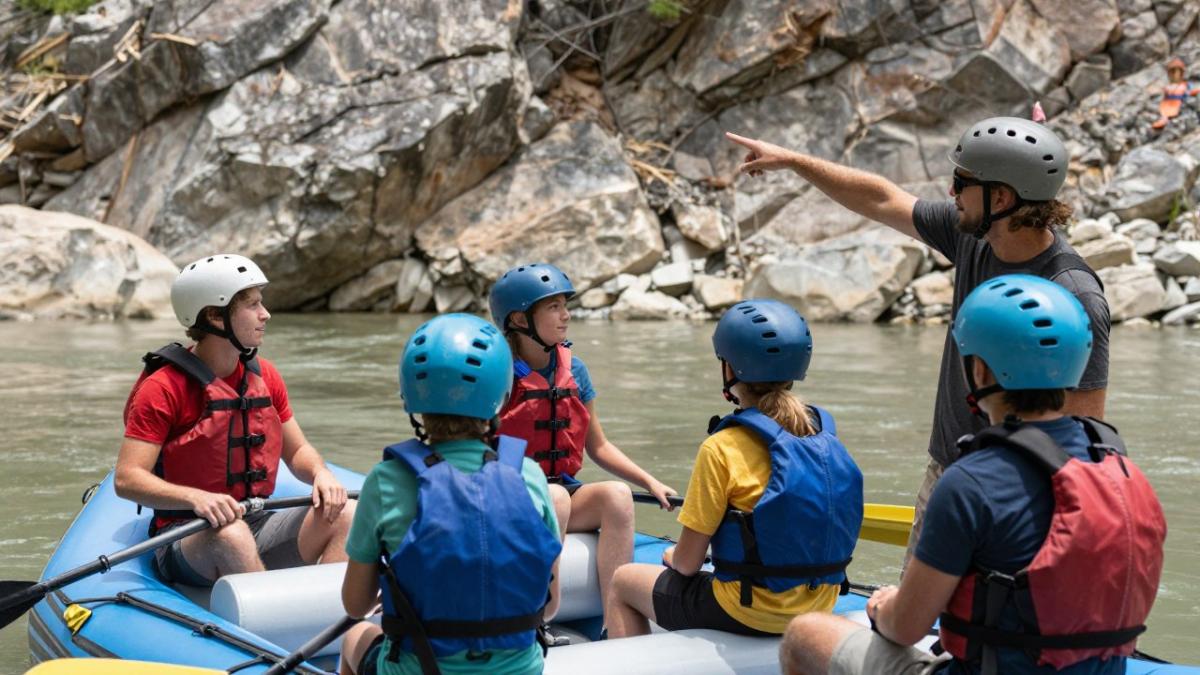
Plenty of beginners take a milder trip first to learn the basics. A common approach is to book a Class III trip, see how the group handles the water, and then decide on Class IV. Whether that step is needed depends on the group’s comfort level and the operator’s advice.
Swimming Ability, Fitness, and Safety Requirements
Operators typically ask about swimming ability and physical readiness, though the exact requirements differ. Being able to swim and tread water is useful, and a guest should be able to paddle, hold on and follow instructions. The Boy Scouts guidance on rafting also stresses safety planning and clear conditions for higher-difficulty runs. Boy Scouts of America whitewater rafting safety guidance
Safety also depends on equipment. Every guest needs a properly fitted life vest and helmet, and the guide should brief the group before the trip starts. Ask how the operator handles a guest who is injured, seasick or frightened once on the water.
Questions to Ask and Confirm Before Booking Your Class IV Trip
Before you book, confirm these points in writing. The list below is built around the questions that most often cause a problem on the day of the trip, not just the ones that appear on a booking page.
- The minimum age for the specific Class IV section you want, and whether it changes with water level or season
- Whether a weight limit applies, and whether it is a minimum, a maximum or a fit guideline
- How the operator assesses a guest who is near a limit
- Whether younger guests can join with a parent on the same raft
- What happens if a guest does not meet a requirement on the day, including refund and rebooking terms
- The total cost, the departure times and any transport options
A useful distinction is the difference between a legal rule, an outfitter policy and a recommendation. Minimum age and weight requirements for Class IV rafting come from a mix of regulations and operator policy, and the operator’s own policy is the one that governs your booking. Ask the operator to confirm its current requirements for your trip.
If a participant does not meet a requirement, the outcome depends on the operator. Ask the operator what alternatives it offers if a participant does not meet a requirement. Refund and credit terms vary, so ask what happens if a guest does not meet a requirement on the day. That is why the refund terms matter as much as the age number. Ask specifically what happens if the guide makes the call at the put-in rather than at booking.
Watch out: a phone answer is not a written policy. Ask for the requirement and the refund term in an email or a booking confirmation, so there is a record if the trip date arrives and the rule has changed.
For current prices and departure dates on the Tuolumne and Cherry Creek trips, see the [Sierra Mac rates and dates | sierramac.com] page. Lodging and dining options near the Highway 120 entrance to Yosemite are listed on the [Sierra Mac rafting links page | sierramac.com]. If you need help getting to the put-in or arranging a tow-out, the [private shuttle information | sierramac.com] page explains the options.
Confirm the details for your own trip, and ask the team at Sierra Mac directly if you are unsure whether your group is ready for Class IV water.
Ready to plan a Class IV trip near Yosemite? Book your river adventure with Sierra Mac and get expert guides on the Tuolumne, Merced and Cherry Creek rivers.
Frequently Asked Questions
Is there a minimum age for Class IV rafting?
There is no single federal or industry-wide minimum age for Class IV rafting. Minimums are set by each outfitter and vary by river, season, and trip type. Class IV minimums are set by each outfitter. Because the rule belongs to the operator, confirm the exact age requirement for your specific trip before you book, and ask whether the guide makes exceptions based on maturity and size.
Are Class IV rapids safe for kids?
Class IV rapids involve powerful currents, large waves, and significant drops, so they are not appropriate for every child. Children who are strong swimmers, follow instructions well, and meet the operator’s minimum age can often handle them with proper equipment and a trained guide. Ask the outfitter how the trip is staffed, what the safety briefing covers, and whether they will move a child to a calmer section if needed.
Can a beginner do Class IV rafting?
Many outfitters allow beginners on Class IV trips, but the experience works best when the participant has basic paddling ability, comfort in moving water, and good swimming skills. A first-timer should expect to be a paddle-following participant rather than a skilled paddler. Choose a trip with an experienced guide and a clear safety briefing, and tell the outfitter about any previous water experience so they can match you to the right boat and section.
Is there a weight limit for whitewater rafting?
Some outfitters set weight-related guidelines, usually tied to raft capacity, personal flotation device fit, and boat balance rather than a strict maximum. Weight guidelines depend on the operator and its equipment. Contact the outfitter before booking to confirm any weight guidelines, and ask how they fit life jackets for larger or smaller participants.