
7 Essential Tips for Whitewater Rafting Beginners
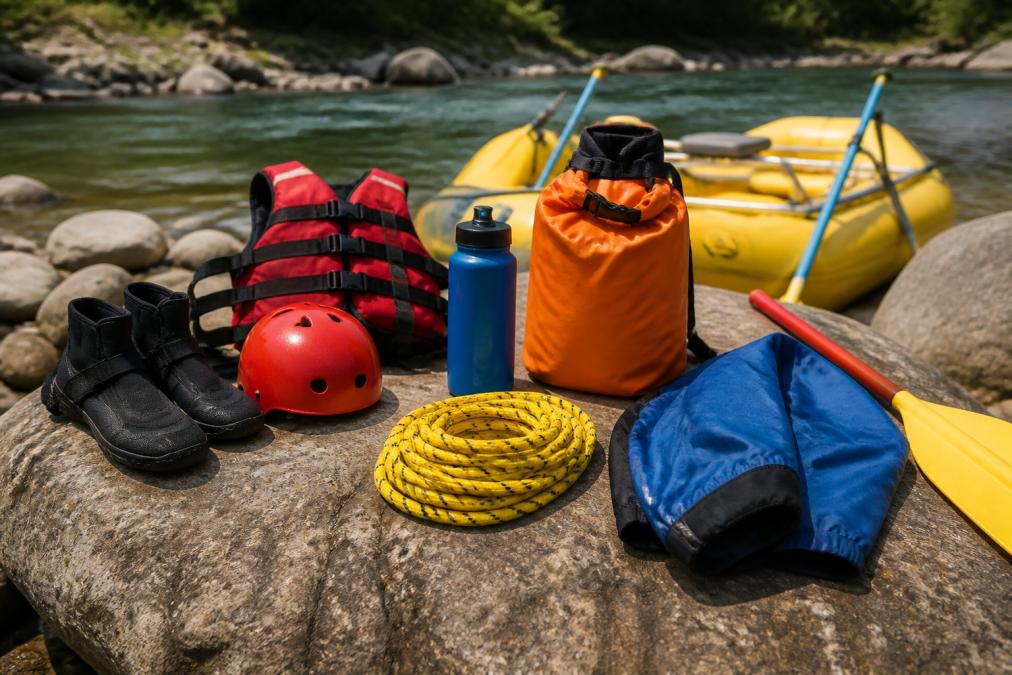
Table of Contents
- 1. Wear the Right Gear: What to Wear Whitewater Rafting
- 2. Understand Whitewater Rafting Rapid Classes Explained
- 3. How to Prepare for a Rafting Trip
- 4. Master Essential Paddling Techniques
- 5. Listen to Your River Guide and Follow Commands
- 6. Protect Yourself: Sun Protection, Hydration, and Post-Rafting Recovery
- 7. Practice River Etiquette and Environmental Responsibility
- Why Whitewater Rafting Beginners Should Start with Guided Trips
Last Updated: August 28, 2026
1. Wear the Right Gear: What to Wear Whitewater Rafting
What you wear determines whether you stay comfortable, protected, and safe. The difference between cotton and synthetic layers isn’t just comfort, it’s the difference between hypothermia risk and staying functional in cold water.
Personal Flotation Device and Helmet
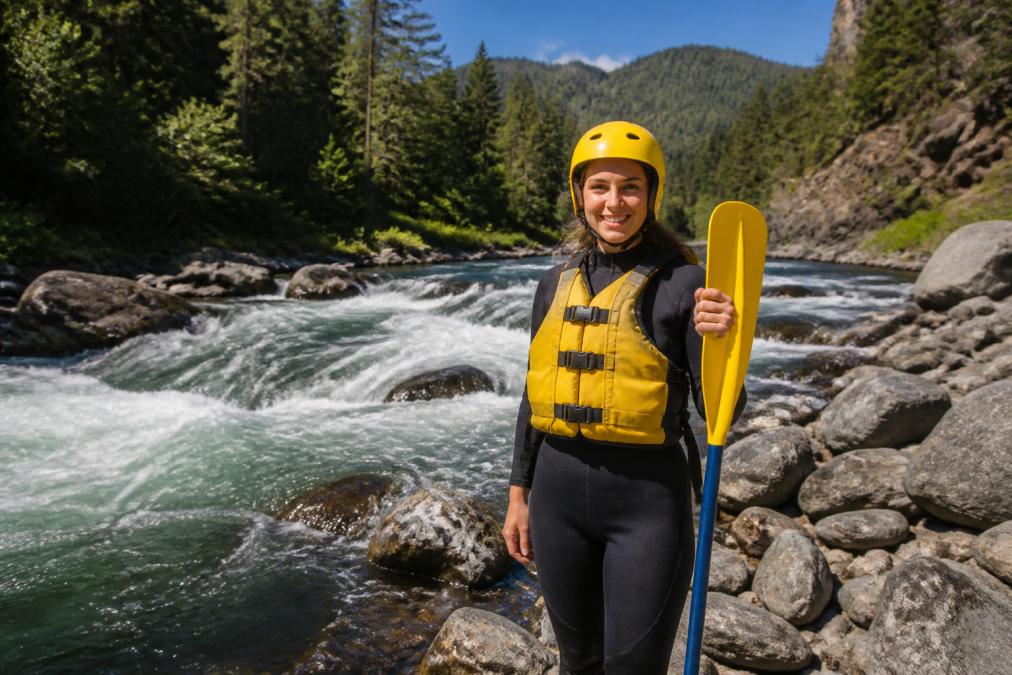
A Personal Flotation Device (PFD) is your most critical piece of equipment. Not wearing one accounts for 15% of all whitewater fatalities American Whitewater Accident Database.
The NRS Vapor PFD is the industry standard for beginners. It’s U.S. Coast Guard-approved Type III, providing solid buoyancy without restricting movement. The low-profile design lets you move your arms freely, and multiple adjustment points ensure a snug fit.
A helmet protects your head if you hit a rock or the raft flips. The NRS Chaos Full Cut Helmet at $74.95 covers critical areas with decent ventilation. For serious enthusiasts, the Sweet Protection Wanderer II Helmet at $179.95 offers better impact protection.
Most commercial outfitters provide both PFD and helmet as part of the trip, so you don’t need to buy them upfront. Rent first, then invest if you’re going to make this a regular habit.
Clothing and Footwear
Cotton absorbs water and loses all insulating properties when wet. Wear synthetic base layers, nylon, polyester, or merino wool. For cooler water, a neoprene wetsuit adds critical insulation. On warm days, shorts and a rash guard are enough.
Water shoes are essential. The Astral Loyak Water Shoes ($110-$120) deliver excellent grip on wet surfaces, drain quickly, and won’t leave you barefoot if you go overboard. Avoid flip-flops, sandals, or regular sneakers, they either come off in the current, offer no protection, or stay waterlogged for hours.
2. Understand Whitewater Rafting Rapid Classes Explained
Whitewater is classified on a scale from Class I to Class VI. Understanding where you fit matters before you book a trip.
Class I rapids are moving water with small waves and no obstacles. Class II adds slightly larger waves and small obstacles, still beginner territory. Class III has larger waves, faster current, and requires active paddling. You might get splashed heavily but won’t be in serious danger with a PFD.
Class IV has large, irregular waves and powerful currents. Paddling skill matters, flips are possible, and swimming is genuinely risky. Most beginners shouldn’t attempt Class IV without prior experience. Class V is for experts only. Class VI is not commercially run in the United States.
Commercially guided trips on Class I-III rivers have a fatality rate of 0.45 per 100,000 user days American Whitewater, lower than recreational swimming (2.6 per 100,000) or bicycling (1.6 per 100,000). Start with a professional outfitter on Class II-III water.
Class I-II water is for learning basics. Class III is where most beginner trips operate. Don’t jump to Class IV until you’ve done [multiple Class III trips](/benefits-of-multi-day-rafting-expeditions/) and have guide approval.
3. How to Prepare for a Rafting Trip
Physical Fitness and Swimming Ability
You don’t need to be an athlete, but you need functional fitness. Paddling uses your shoulders, back, and core for 2-4 hours.
If you can walk for 30 minutes without stopping, you can handle a Class II-III trip. If you’re out of shape, do light cardio in the weeks before, 20-30 minutes of walking or cycling a few times a week builds the endurance you’ll need.
Swimming ability matters more than fitness. You need to be comfortable in water and able to float on your back and stay calm. If you’re a weak swimmer, mention it to the guide before launch. They’ll position you where you’re less likely to end up in the water.
If you can’t swim at all or have severe water anxiety, tell your guide before the trip starts. Don’t hide this, guides need to know so they can keep you safe.
Mental Preparation and Safety Briefing
The safety briefing isn’t optional theater. Pay attention to how to hold the paddle, what "high-side" means, paddle commands ("forward," "backward," "hold water"), and what to do if you go overboard (swim toward the raft, grab the rope, don’t panic).
Accept that whitewater is inherently risky. You’re not 100% safe on a river, but the risks are manageable with proper technique, equipment, and decision-making.
4. Master Essential Paddling Techniques
Paddling isn’t intuitive. Proper technique transforms the experience from exhausting to exhilarating.
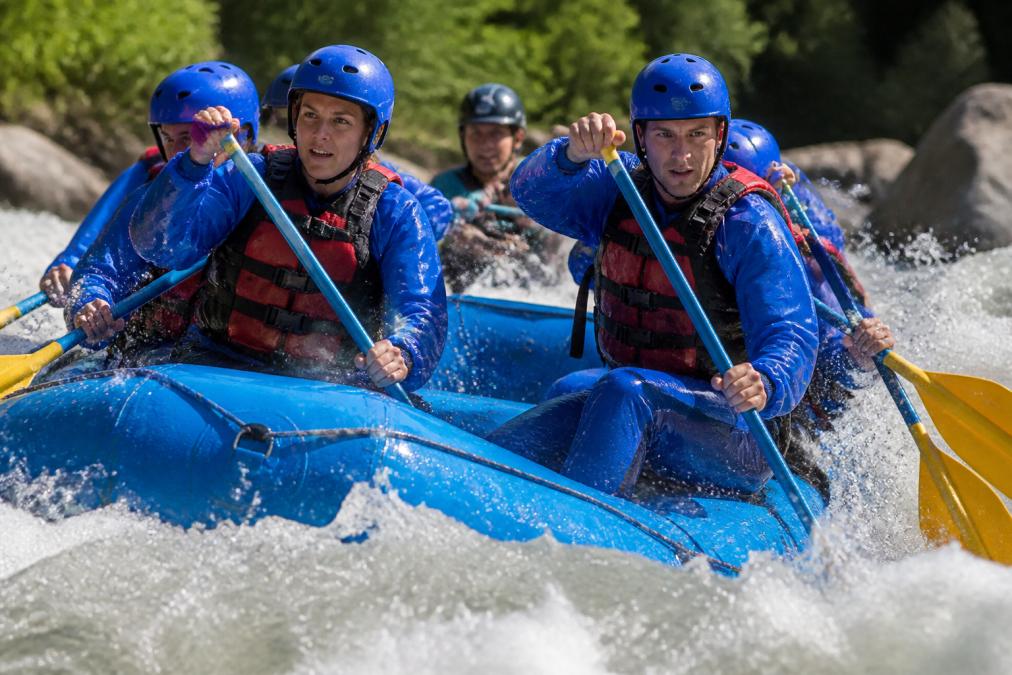
Hold the paddle with your hands roughly shoulder-width apart. One hand grips the top (the T-grip), the other holds the shaft. Your top hand controls power and direction.
The power stroke: plant the blade in the water ahead of you, pull it back toward the raft using your core and shoulders, then exit the water cleanly. Your legs brace against the raft’s edge to transfer power from your core to the paddle. Beginners often use only their arms, which is why they tire quickly. Use your whole body.
Listen for the guide’s commands. "Forward" means everyone paddles on the same side. "Backward" means the opposite. "High-side" means move to the high side of the raft if it’s tilting to counterbalance and prevent a flip. "Hold water" means plant your paddle and don’t move it, acting as a brake.
5. Listen to Your River Guide and Follow Commands
Your guide has read this river hundreds or thousands of times. They know where the holes are, where the current pushes hardest, and what the water is doing.
Follow commands immediately. When a guide says "forward," paddle forward. When they say "hold water," stop paddling and plant your blade. When they say "high-side," move to the high side. These aren’t suggestions, they’re instructions based on real-time conditions.
A common mistake is paddling when you’re supposed to hold water, or hesitating when you should commit to a forward stroke. This breaks momentum and can cause a flip. Trust the guide’s timing.
The guide also watches for swimmers. If someone goes overboard, they’ll position the raft to pick you up, throw a rope, and talk you through it. Your job is to stay calm, grab the rope or raft, and let them pull you back in.
Ask your guide questions before the trip starts, not during it. A good guide welcomes questions.
6. Protect Yourself: Sun Protection, Hydration, and Post-Rafting Recovery
A day on the river means hours of sun exposure. You’re also on water, which reflects UV rays and amplifies exposure.
Sun Protection and Hydration
Apply sunscreen (SPF 30+) before you launch and reapply every two hours. Wear a hat or visor if you can keep it secure. Light-colored, long-sleeved synthetic shirts offer UV protection.
Hydration is critical. You’re sweating, in the sun, and exerting yourself. Dehydration impairs judgment. Bring water and drink regularly, aim for 8-16 ounces every 30 minutes. Avoid alcohol before and during the trip.
Post-Rafting Muscle Care and Recovery
Paddling uses muscles you don’t normally stress. Your shoulders, back, and core will be sore the next day, this is normal muscle soreness, not injury.
Stretch immediately after the trip, focusing on shoulders, back, and chest. Hold each stretch for 20-30 seconds. Keep moving gently in the hours after; light walking or easy movement keeps blood flowing and prevents stiffness. A warm shower helps loosen tight muscles. The next day, light activity accelerates recovery better than rest.
If you have joint pain (not muscle soreness), ice it for 15 minutes. If pain persists beyond a few days, see a doctor.
7. Practice River Etiquette and Environmental Responsibility
The rivers near Yosemite are shared resources. Treating them with respect keeps them healthy and accessible.
Leave No Trace principles apply on the river. Pack out everything you pack in, no trash, no food scraps. Don’t throw anything overboard. Use designated bathroom areas. Respect other rafters and wildlife. Don’t feed animals or approach nests.
The whitewater rafting market is projected to reach $3.5 billion by 2032 Future Data Stats, driven partly by increased focus on environmental conservation. When you choose an outfitter, ask about their conservation efforts. Do they clean up trash? Do they limit group sizes? Do they support river restoration?
Understanding river hazards reinforces why guides make the calls they do. Flush drowning is the largest single cause of fatalities in whitewater accidents at 19% American Whitewater Accident Database, typically occurring after swimming through rapids.
Why Whitewater Rafting Beginners Should Start with Guided Trips
Unguided private trips account for the overwhelming majority of whitewater deaths in the United States. In 2025, American Whitewater recorded just one commercial rafting fatality across the entire country American Whitewater, while unguided trips saw significantly more incidents.
A professional guide has trained for years. They read water conditions in real time, make split-second decisions, and know how to respond to emergencies. They carry safety equipment and understand the specific hazards of their river.
Commercial outfitters are insured, regulated, and held accountable for guest safety. They maintain equipment, train staff, and have emergency protocols. The injury rate for commercial whitewater rafting is approximately 0.26 injuries per 1,000 user days Journal of Wilderness & Environmental Medicine, making it safer than playing soccer, cycling, or gardening.
Start with a guided trip on Class II-III water. Build skills, understand your limits, and develop respect for the river. After multiple guided trips, you’ll know whether you want to pursue private trips or stay with outfitters.
Sierra Mac has been guiding on the Tuolumne, Merced, and Cherry Creek rivers since 1965. As a family-owned pioneer in the industry, they understand what beginners need: expert guidance on manageable water, professional equipment, and the confidence that comes from knowing you’re in experienced hands. Whether you’re looking for a mild half-day float to build confidence or a more challenging Class III-IV trip once you’ve developed skills, Sierra Mac offers trips scaled to your experience level.
Frequently Asked Questions
Do I need to be an expert swimmer to go whitewater rafting?
No. While swimming ability helps, you don't need to be an expert. Most commercial whitewater rafting trips require only basic swimming skills or comfort in water. Wearing a properly fitted Personal Flotation Device (PFD) is mandatory and provides buoyancy if you end up in the water. Professional guides are trained in water rescue and safety protocols. The injury rate for commercial whitewater rafting is approximately 0.26 injuries per 1,000 user-days, making it statistically safer than many everyday activities. Start with Class I or II rapids to build confidence.
What should I wear for a whitewater rafting trip?
Wear a Coast Guard-approved Personal Flotation Device (PFD), a helmet, and water shoes with good grip. Choose quick-dry synthetic layers like neoprene or polyester rather than cotton, which stays wet and cold. Avoid loose jewelry or valuables that could fall into the river. Bring a waterproof camera in a dry bag if you want photos. In warm weather, consider sun-protective clothing or apply high-SPF sunscreen. Most outfitters provide PFDs and helmets, but you may want to bring your own water shoes for comfort. Check with your guide about any specific recommendations for the river and season.
What is the difference between Class II and Class IV rapids?
Class II rapids are beginner-friendly with small waves, few obstacles, and straightforward routes. Class IV rapids are advanced, featuring large waves, powerful currents, complex maneuvering, and significant hazard potential. Class I-V rapids are classified by difficulty: Class I is flatwater, Class II is easy, Class III is intermediate, Class IV is advanced, and Class V is expert-only. Beginners should start on Class I-II rivers to learn techniques and build confidence before attempting higher classifications. Professional guides assess your skill level and recommend appropriate rapids for your experience.
What are the most important safety protocols for first-time rafters?
Always wear your PFD and helmet as instructed by your guide. Pay close attention during the safety briefing and ask questions if anything is unclear. Follow paddle commands immediately and listen carefully to your guide's instructions throughout the trip. Know how to exit the raft safely and understand what to do if you end up in the water. Stay seated and keep your center of gravity low. Not wearing a PFD accounts for 15% of whitewater fatalities, so compliance is critical. Commercial rafting has a fatality rate of just 0.55 deaths per 100,000 user-days when proper safety measures are followed.
How do I choose the right rafting trip for my skill level?
Start by assessing your comfort level in water and any previous paddling experience. Beginners should select Class I-II rapids on guided trips with professional outfitters. Class III is intermediate and requires some experience. Class IV-V rapids are for advanced or expert paddlers only. Consider trip length: half-day trips are ideal for first-timers, while multi-day expeditions suit experienced rafters. Discuss your fitness level, age, and any concerns with your outfitter before booking. Professional guides can recommend the best river and trip type based on group composition and individual abilities. Most outfitters offer trips designed specifically for families and beginners.
A day on the river is one of the best experiences you can have. Proper preparation, the right gear, and respect for the water’s power make that day safe and unforgettable. Start with a guided trip on beginner-appropriate water, listen to your guide, and let the river teach you. Every expert rafter started exactly where you are now.