
Beginner Guide to Inclusive Wilderness Expeditions
Last Updated: October 23, 2026
Quick Summary
An inclusive wilderness expedition is a guided backcountry trip designed so people of different ages, fitness levels, medical needs, and experience can take part safely and fully. Choose beginner-friendly Class I to III water with small groups, verify your guide’s current credentials, and disclose medical, sensory, or dietary needs at booking.
- Earthwatch lists a $3,800 contribution cost for a seven-day group expedition.
- Ask which specific credential the lead guide holds and whether it is current.
- At least one guide with Wilderness First Responder training is a reasonable baseline for beginner trips.
- Tell your outfitter about medical conditions, sensory sensitivities, dietary requirements, and mobility limits at booking.
- Follow a four-week ramp starting with two short hikes in your boots with a light pack.
Table of Contents
- What Makes a Wilderness Expedition Inclusive
- How to Choose a Beginner-Friendly Trip and Inclusive Outfitter
- Accessible Outdoor Adventures: Adaptive Planning and Medical Needs
- Your Wilderness Expedition Packing List
- What to Expect on Multi-Day Guided Outdoor Trips
- Cost Transparency and Financial Access for Beginners
- Skills to Practice Before Your First Expedition
- Conclusion
- Frequently Asked Questions
What Makes a Wilderness Expedition Inclusive
An inclusive wilderness expedition is a guided backcountry trip designed so that people of different ages, fitness levels, medical needs, and experience can take part in inclusive wilderness travel safely and fully.
Cost matters here too. Earthwatch lists a $3,800 contribution cost for a seven-day group expedition (Earthwatch, 2026), which tells you guided wilderness travel is a real financial commitment, not a casual weekend.
Land management rules shape the experience as well. Wilderness direction is governed by Forest Service Manual 2320, and setbacks from water sources can reach up to a quarter mile under general wilderness guidance (Wilderness.net regulatory guidance).
Inclusion is a planning decision, not a marketing label. It shows up in group size, route difficulty, and how honestly an outfitter talks about cost and limits.
How to Choose a Beginner-Friendly Trip and Inclusive Outfitter
Start with the mildest water and the smallest group you can find, then verify the guide’s credentials before you pay.
Ask about trip duration, difficulty level, and what a typical day looks like. Reputable outfitters publish this. NOLS runs adult expeditions built around real-terrain navigation and decision-making, and NOLS reports participants return with increased confidence and practical wilderness leadership capabilities.
Compare trip options side by side before committing. Our Yosemite rafting trips lay out the mild-to-intense range so you can match water class to your group. For a deeper vetting checklist, read how to choose a rafting outfitter before you call anyone.
Credentials That Actually Mean Something
“Certified guide” is not a single standard. Ask which specific credential the lead guide holds and whether it is current.
Ask two follow-ups: How many guides on this trip hold a current WFR, and who is the most senior person on the water? On a beginner trip, at least one guide with WFR-level training is a reasonable baseline; on remote multi-day routes, most practitioners expect every lead guide to hold it.
Vetting for Inclusion, Not Just Adventure
Inclusive outfitters can answer accessibility questions with specifics rather than reassurance. Ask:
- Mobility and terrain: What is the actual walking distance per day, what is the steepest sustained grade, and is the put-in or trailhead reachable by vehicle with a short, level approach? Ask whether a participant using trekking poles, a walking aid, or a wheelchair transfer can complete the standard route, and what the alternate is if not.
- Sensory and communication: Is there a quiet space or rest period in the daily schedule? Can guides give directions in writing or via radio check-ins for participants who are hard of hearing? Do they brief the group on noise, crowding, and camp routines?
- Medical and dietary: How do they store and refrigerate medication? What is the protocol for allergies and anaphylaxis, and is epinephrine carried in the group first-aid kit? Can they accommodate vegetarian, vegan, gluten-free, or allergen-free meals without a surcharge?
Questions to Ask a Wilderness Outfitter Before You Book
Ask these directly, and treat vague answers as a warning:
- What is the maximum group size, and how many guides per guest?
- What water class should a first-timer expect, and can we step down if needed?
- Which medical and rescue certifications does the lead guide hold, and when do they expire?
- How do you handle medical conditions, dietary needs, mobility limitations, and sensory sensitivities, and can you give a specific example from a past trip?
- What is the emergency plan, how do you communicate from remote sections, and where is the nearest definitive care?
- What is included in the price, and what is not?
- What are your deposit, cancellation, and transfer policies if a participant’s health needs change?
Most booking, logistics, and policy answers live in our frequently asked questions.
Ask for the name and credential of the guide assigned to your specific departure, not the company’s general training philosophy. Guides rotate, and the person on your trip is the one who matters.
Accessible Outdoor Adventures: Adaptive Planning and Medical Needs
Accessible outdoor adventures begin with disclosure, not accommodation. Tell your outfitter about medical conditions, sensory sensitivities, dietary requirements, and mobility limits at booking, and ask what the team can adjust.
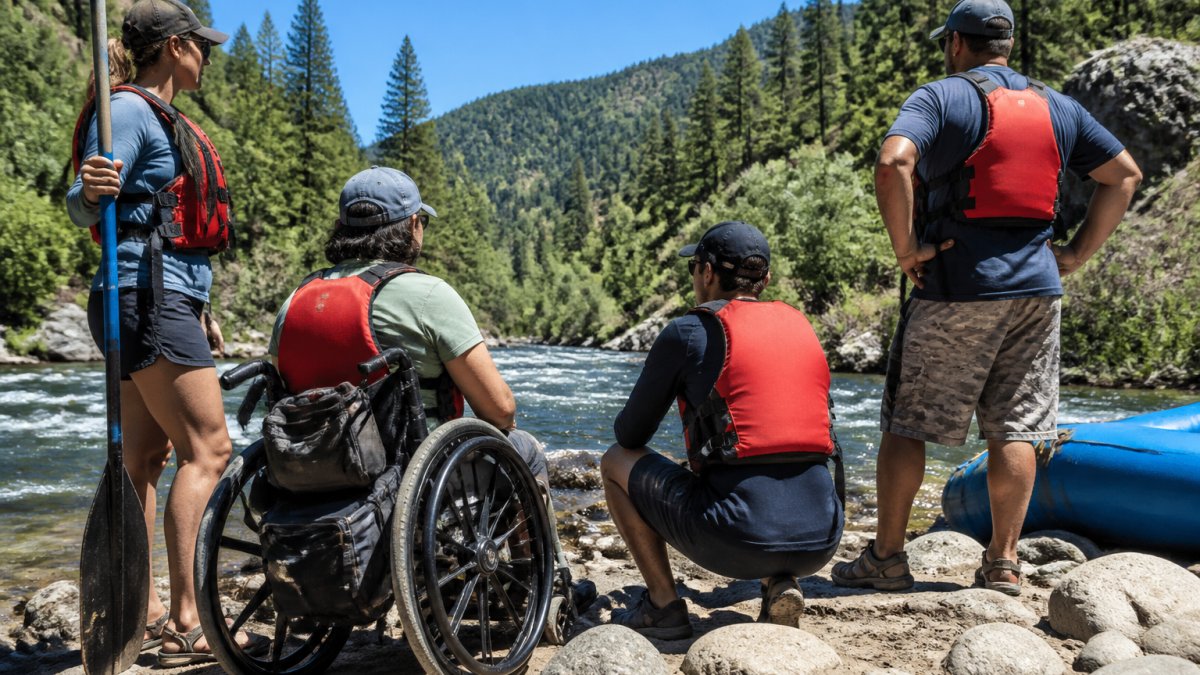
Inclusive trip design also covers belonging.
Risk communication belongs here too. Climate-resilient planning now accounts for flash floods, heat domes, and fire clouds (NCOAE, 2026), and good outfitters explain evacuation routes before departure rather than after.
Never downplay a medical condition to secure a spot. Undisclosed needs are the most common reason a participant gets pulled from a trip mid-expedition, and it puts the whole group at risk.
:::
Your Wilderness Expedition Packing List
Pack in layers, carry your own water, and assume the weather will change. A wilderness expedition packing list covers four categories: clothing layers, shelter and sleep, food and hydration, and navigation.
Bring a rain shell and insulation you can add or remove, a sleeping bag rated for the coldest expected night, a shelter if the trip requires one, a refillable water container, and a map and compass even when a guide carries them.
For multi-day river travel specifically, our multi-day Yosemite rafting packing guide covers what to bring and what to leave behind.
What to Expect on Multi-Day Guided Outdoor Trips
Expect a rhythm, not a race. Multi-day guided outdoor trips typically alternate active hours with camp chores, meals, and rest, and the guide sets the pace around the slowest member of the group.
Days usually start early, cover a set distance or river section, and end with camp set up before dark. You’ll carry personal gear, help with shared tasks, and follow leave-no-trace practices.
Cost Transparency and Financial Access for Beginners
Guided wilderness travel has real costs, and inclusive outfitters state them plainly instead of burying them. Pricing depends on trip length, water class, group size, season, and what’s included, so ask for a full breakdown rather than a single number.
Our Yosemite rafting pricing guide explains what drives cost. Financial access also means asking about deposit schedules, cancellation terms, and whether partial-day options exist for families testing the water before committing to a multi-day trip.
Skills to Practice Before Your First Expedition
Practice three skills before you go: walking with a loaded pack, reading a map and compass, and managing your layers as conditions shift. Each one reduces the chance you’ll be the person holding up the group.
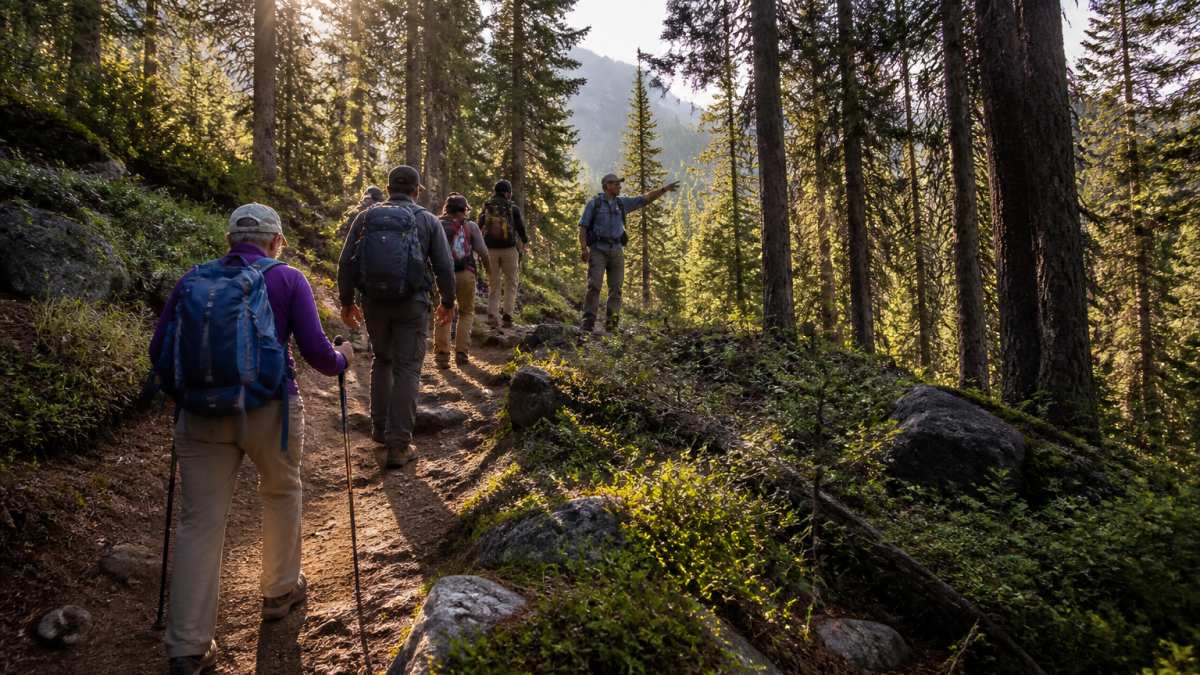
Do a few day hikes in the boots and pack you’ll actually use. Learn to orient a map to terrain and take a bearing.
Turn Each Skill Into a Drill
Vague practice does not build confidence; specific repetitions do. Try these before departure:
- Loaded-pack walking: Do three hikes of increasing distance (for example, 3, 5, and 8 miles) wearing the pack weight you expect to carry, ideally on terrain similar to the trip. Note where the pack rubs and adjust straps before the real trip, not on it.
- Map and compass: On a local trail, orient your map to north, take a bearing to a visible landmark, and walk to it without using your phone. Repeat until you can do it without hesitating. Carry a physical map and compass even when a guide carries them.
- Layering: Practice adding and removing a midlayer and shell while moving, without stopping for more than a minute. Learn what “too cold to stop, too warm to climb” feels like so you can regulate before you sweat through your base layer.
Prepare for the Group, Not Just the Terrain
Inclusive expeditions ask participants to practice communication as deliberately as they practice navigation.
If you have a medical, sensory, or dietary need, practice managing it in the field before the trip. Test how you will carry and take medication on a schedule, how you will store and access snacks that meet your dietary needs, and how you will signal a guide if you need to step away.
A Simple Four-Week Ramp
Most practitioners recommend starting four to six weeks out rather than the week before. A workable pattern:
- Week 1: Two short hikes in your boots with a light pack; pitch your shelter once.
- Week 2: One longer hike with your target pack weight; practice map and compass on a local trail.
- Week 3: A back-to-back weekend of two hikes on consecutive days to test recovery and layering.
Fitness helps, but preparation helps more. The EXPLORE Act guidance for wilderness climbing management shows how formalized recreation policy keeps evolving in wilderness units, which is one more reason to travel with a guide who tracks current rules.
Practice is not about becoming an athlete. It is about making the ordinary parts of the day, walking, navigating, layering, speaking up, automatic so you have attention left for the parts that are new.
A simple four-week ramp helps beginners build readiness before departure.
| Week | What to do |
|---|---|
| Week 1 | Two short hikes in your boots with a light pack; pitch your shelter once |
| Week 2 | One longer hike with your target pack weight; practice map and compass |
| Week 3 | Back-to-back weekend of two hikes on consecutive days |
| Week 4 | A taper: one easy hike, gear check, call with the outfitter |
Conclusion
Planning a first wilderness expedition means matching the trip to the people, not the other way around. Sierra Mac has guided families, groups, and first-timers on the Tuolumne, Merced, and Cherry Creek rivers since 1965, with trips ranging from mild half-day floats to multi-day Class V runs, led by professional local guides and based just 15 miles from the park’s northwest entrance.
Frequently Asked Questions
What is an inclusive wilderness expedition?
An inclusive wilderness expedition is a guided backcountry trip designed so people with different experience levels, ages, fitness, medical needs, and sensory requirements can take part. That means the outfitter plans routes with realistic daily mileage, provides adaptive gear options, collects dietary and medical information before departure, and briefs the whole group on how decisions get made. Forest Service Manual 2320 governs how designated wilderness is managed, including group size limits and camping setbacks that can reach up to 1/4 mile from water sources, so a good outfitter builds those rules into the itinerary from day one.
How do I choose a beginner-friendly wilderness expedition?
Start by matching trip difficulty to your actual fitness, not your ambitions. Ask about daily mileage, pack weight, elevation gain, and how many hours the group spends moving. Confirm the guide-to-participant ratio and whether the outfitter runs separate trips for first-timers. Check that route planning accounts for trail conditions and weather, and that there is a written emergency plan. A reputable operator will share these details before you pay and will not pressure you toward a trip above your level. Reviews and references from past beginners are worth more than marketing copy.
What should I pack for a wilderness expedition?
A wilderness expedition packing list starts with the big four: a fitted backpack, a sleeping bag rated for expected lows, a shelter, and clothing layers you can add or remove as weather changes. Add navigation tools (map and compass, plus a backup), water treatment, a first-aid kit, headlamp, sun protection, and food planned per day. Bring any prescription medication in labeled containers and tell your guide what you take. Leave cotton at home and test every item on a day hike before your trip. Outfitters often supply group gear, so confirm what is provided before you buy anything.
How can I find out whether a wilderness trip is accessible?
Ask the outfitter directly and in writing. Request specifics on terrain, trail surface, water crossings, daily distance, and whether adaptive equipment is available. Ask how the team handles mobility aids, sensory needs, dietary restrictions, and medication storage in remote settings. A good operator will describe their risk communication process and any evacuation routes. If answers stay vague, treat that as a warning sign. Accessible outdoor adventures depend on honest pre-trip conversations, so raise your needs early rather than hoping to manage on the day.
How do guided wilderness expeditions accommodate different experience levels?
Guides typically split responsibilities and pace so stronger participants are not held back and beginners are not pushed past their limits. That may mean a lead guide setting pace, a sweep guide at the back, and checkpoints where the group regroups. NOLS-style adult expeditions show the model: participants learn real-terrain navigation and decision-making with coaching rather than being left to figure it out alone. Ask how your outfitter handles a participant who struggles on day two, and whether there is a shorter route option or a support plan.
How do I prepare for a multi-day wilderness trip?
Build fitness gradually in the eight to twelve weeks before departure. Train with a loaded backpack on hills, practice hiking in the footwear you will actually wear, and do at least one overnight shakedown trip. Learn basic camping skills: setting up shelter, filtering water, layering clothing, and reading a map. Test your food plan and hydration strategy. Read up on leave no trace practices so you understand camping setbacks and waste rules. Confirm logistics with your outfitter, including transportation to the put-in or trailhead, so nothing surprises you on day one.