
What Should You Wear for Yosemite River Rafting?
Last Updated: October 26, 2026
Quick Summary
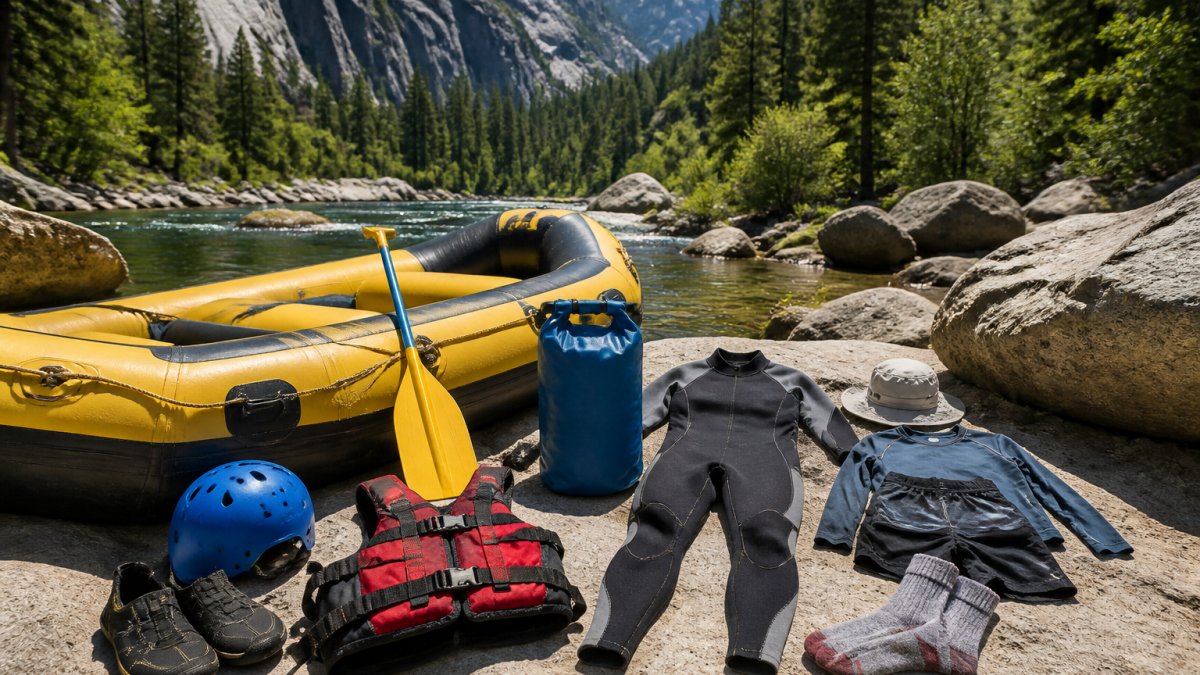
For Yosemite river rafting, wear a synthetic or wool base layer, quick-drying shorts, and secure closed-toe footwear, and skip cotton entirely. Add a fleece mid-layer and waterproof shell for cold mornings, and rent a wetsuit or drysuit when water temperatures drop below 50°F.
- The Merced River can sit near 50°F in early summer, so dress for the water, not the air.
- Cotton stays wet and cold against your skin, so leave the cotton tee at home.
- Choose closed-toe shoes or strapped sandals with rubber soles; never wear flip-flops.
- Reapply zinc-based sunscreen every two hours, more if you’re splashing.
- Rent expensive, fit-sensitive gear like wetsuits and PFDs; buy cheap, packable layers.
Table of Contents
- Start With the Water, Not the Weather
- Essential Clothing for Yosemite River Rafting
- The Best Footwear for Whitewater Rafting
- Sun Protection for River Rafting
- What to Bring on a Multi-Day Rafting Trip
- Dressing for Different Seasons and River Conditions
- Rent or Buy? Deciding Before You Book
- Book Your Trip and Let the Guides Handle the Rest
- Frequently Asked Questions
Start With the Water, Not the Weather
The Merced River can sit near 50°F in early summer. That number, not the air temperature in your hotel room, can help guide what you wear for Yosemite river rafting.
Cold water pulls heat from your body fast. So does wind, and so does a soaking cotton shirt.
Below, we break down exactly what to wear, what to leave in the car, and how to handle cold mornings, hot afternoons, and multi-day trips. Get the layers right and the river becomes the fun part.
Essential Clothing for Yosemite River Rafting
Your base outfit is simple: a synthetic top, quick-drying shorts, and secure footwear. Skip cotton. Add a swimsuit underneath if you want a fast change later.
Here’s what to wear for Yosemite river rafting on a typical summer day:
- Synthetic or wool base layer. Moisture-wicking tops dry fast and hold warmth when damp.
- Swimwear or athletic shorts as a bottom layer.
- Quick-drying board shorts over the top.
- Rash guard for sun and spray protection.
- Fleece or wool mid-layer for cool mornings, easy to peel off.
Why Cotton Is the Wrong Choice on the River
Cotton stays wet and cold. It soaks up river spray and holds it against your skin, which is exactly how people get chilled on a warm day. Whitewater Guidebook’s rafting clothing guidance advises synthetic athletic tops and quick-dry shorts for this reason.
There is one exception worth knowing. OARS river gear guidance notes that a long-sleeved cotton shirt soaked in water can help you stay cool in extreme summer heat. That’s a cooling trick, not a layering strategy. For most trips, leave the cotton tee at home.
Layering for Cold Water and Cold Mornings
Cold-water trips need real insulation. For April and May runs, when water temperatures sit below 50°F, Sierra Mac’s seasonal gear requirements call for a full wetsuit or drysuit, neoprene booties, a helmet, and a Type V personal flotation device.
Our layering rule: wicking base, insulating mid-layer, windproof or waterproof shell. Add or shed as the day warms. If you’re building a cold-water kit, our guide to Essential Whitewater Rafting Gear for Cold Water covers the full list.
The Best Footwear for Whitewater Rafting
The best footwear for whitewater rafting is a closed-toe shoe that stays on your foot and grips wet rock. Think water shoes, strapped sandals, or old sneakers. Never flip-flops.
Secure fit matters more than you’d expect. A loose sandal can slip off in a swim, and bare feet offer no protection against rocks. Look for:
- Closed toe or a heel strap that locks the shoe in place
- Rubber soles with real tread
- Quick-drying mesh so feet aren’t soggy all day
- Neoprene booties for cold-water trips
A common mistake is wearing heavy hiking boots. They get waterlogged and stay heavy for hours.
Sun Protection for River Rafting
Sun protection for river rafting matters more than on land. Water reflects UV rays upward, so you get hit from above and below. Add wind and glare, and a two-hour float can leave you burned.
Cover up first, then use sunscreen:
- Hooded sun shirt with UPF rating
- Wide-brimmed hat with a chin strap
- Sunglasses with a retention strap
- Zinc-based sunscreen on face, ears, and hands
Outfitters now explicitly recommend hooded sun shirts, wide-brimmed hats, and zinc sunscreen for river trips, according to OARS sun protection guidance. Reapply sunscreen every two hours, more if you’re splashing.
What to Bring on a Multi-Day Rafting Trip
A multi-day rafting trip packing list is shorter than a backpacking list because the raft carries the weight. Focus on dry clothes, warmth, and sleep comfort.
Pack these essentials:
- Two synthetic tops and one warm mid-layer
- Quick-dry shorts plus one long pair for evenings
- Wetsuit or drysuit if the season calls for it
- Warm hat and gloves for cold mornings
- Camp clothes kept separate and dry
- Headlamp, water bottle, and personal toiletries
- Sleeping bag and pad if your trip includes camping
Post-rafting comfort deserves its own bag. Dry socks, a warm fleece, and a pair of camp shoes make the evening far better. For booking details on overnight options, see Multi-Day Yosemite Rafting Trips.
Dry Bags, Valuables, and What to Leave Behind
Pack a dry bag for anything that must stay dry: phone, keys, medication, a change of clothes. Double-bag electronics.
Leave these behind:
- Jewelry and loose valuables
- Cotton clothing
- Flip-flops
- Drones and glass containers
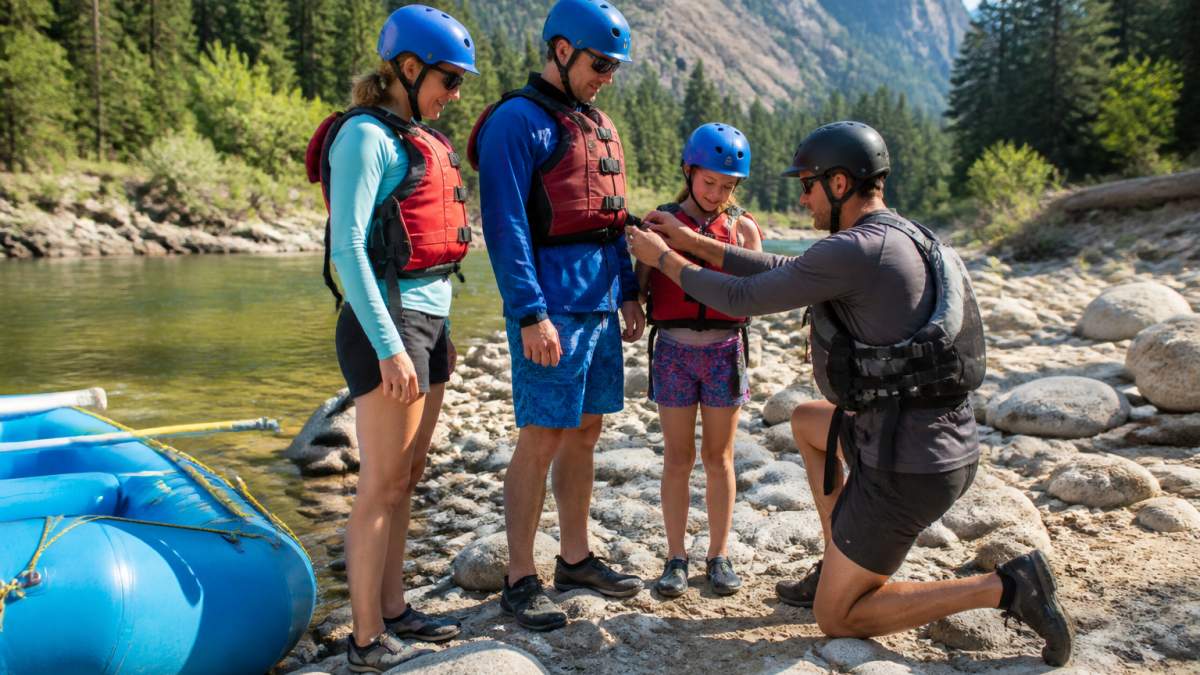
Life jackets must be worn at all times in rental rafts, per Travel Yosemite rafting safety rules. Keep your dry bag clipped in so it doesn’t float away.
Dressing for Different Seasons and River Conditions
Most rafting clothing guides give you a generic four-season table. That’s not much help when the Merced and Tuolumne each behave differently, and when a 10-degree swing in water temperature changes whether you need a wetsuit or just a rash guard. Here’s the season-by-season picture with the water data that actually drives your layering decisions.
How Cold Is the Water, Really?
River water temperature lags air temperature by weeks. Snowmelt from the high country keeps the Merced and Tuolumne cold well into summer, and the shade of a deep canyon can hold that cold all day. The practical ranges most guides work with:
| Season | Typical Water Temp | What That Means for Clothing |
|---|---|---|
| April-May | 45-52°F | Full wetsuit or drysuit, neoprene booties, wool hat, gloves |
| June | 50-58°F | Wetsuit, synthetic base layer, splash shell |
| July-August | 58-68°F | Swimwear, rash guard, quick-dry shorts; wetsuit only for cold mornings |
| September | 55-62°F | Wetsuit or fleece-and-shell combo, booties |
| October | 48-55°F | Drysuit or full wetsuit, warm mid-layer, hat and gloves |
Treat these as planning ranges, not guarantees. A hot spring can push early-season water a few degrees warmer; a cool summer can hold it lower. Ask your outfitter for the current reading the week before your trip. Consistent thermal regulation remains just as vital when transitioning to saltier environments, where selecting the right apparel for kayaking helps maintain core comfort against unpredictable ocean breezes and spray.
Spring: Cold Water, High Flow
Spring is the season that catches people out. Air temperatures can hit the 70s while the water sits in the high 40s. Dress for the water, not the parking lot. A full wetsuit or drysuit is the standard, with neoprene booties, a wool or fleece hat, and gloves for the coldest mornings. Snowmelt also means higher, faster water, so spray and unexpected swims are more likely. Our page on High-Water Rafting on the Merced and Main Tuolumne River covers what that season demands.
Summer: Warm Air, Deceptive Water
Mid-summer is the easiest season to dress for, but don’t skip the cold-water layer entirely. Morning water can still be in the high 50s, and afternoon thunderstorms roll in fast. A synthetic base layer, quick-dry shorts, and a rash guard handle most days. Keep a fleece or lightweight splash shell in the raft for the ride home and for storm cells. Sun protection matters more than insulation by August.
Fall: Low Flow, Chilly Mornings
Fall flows drop and the water cools again. Mornings can be in the 40s, afternoons in the 70s. A wetsuit or a fleece-and-shell combination works, with a warm hat for early starts. Fall is also when a dry bag earns its keep, since you’ll want dry clothes waiting at the takeout.
What Changes With High Water
High water doesn’t just mean bigger rapids. It means more spray, colder swims, and a longer recovery if you go in. When flows are up, add a layer rather than subtract one, and make sure your shell is actually waterproof, not just water-resistant. A soaked fleece is heavy and slow to dry.
Check the flow and water temperature the morning of your trip. A 5-degree drop changes the layering call more than the air forecast does.
Rent or Buy? Deciding Before You Book
Most first-timers ask the same question: should I buy gear or rent it? The answer depends on how often you’ll raft, what season you’re going, and whether the item is safety-critical. Here’s a decision framework you can actually use.
The Short Version
Rent safety-critical and seasonal gear. Buy the cheap, packable items you’ll use again. That’s the rule of thumb, but the details matter.
Buy vs. Rent by Item
| Item | Rent or Buy? | Why |
|---|---|---|
| Wetsuit or drysuit | Rent | Expensive, fit-sensitive, and seasonal. Outfitters supply properly fitted suits. |
| Personal flotation device (PFD) | Rent | Safety-critical and fit-critical. Use the outfitter’s Type V PFD unless you raft often and know your fit. |
| Helmet | Rent | Same logic as the PFD. |
| Neoprene booties | Rent for cold-water trips; buy if you go often | Cheap to rent, but a well-fitting pair is worth owning if you raft several times a year. |
| Synthetic base layer | Buy | Inexpensive, packable, useful beyond the river. |
| Rash guard | Buy | Cheap, doubles as sun protection, packs flat. |
| Quick-dry shorts | Buy | Everyday useful. |
| Water shoes | Buy | Cheap and useful for hiking and beach days too. |
| Sun hat and sunglasses | Buy | You probably already own them. |
| Dry bag | Buy | A small one is inexpensive and useful for travel, camping, and boating. |
| Splash shell | Buy a basic one; rent specialty | A lightweight waterproof shell is broadly useful. Heavy-duty dry tops are worth renting. |
Questions That Decide It
Ask yourself these before you buy anything:
- How many trips will I take in the next two years? One or two trips means rent the big items. Three or more means buying base layers and footwear starts to pay off.
- Am I doing cold-water runs? Cold-water gear is expensive and fit-sensitive. Rent until you’ve done several trips and know you’ll keep going.
- Am I bringing kids? Children grow out of gear fast. Rent anything fit-sensitive. Note that children under 50 lbs. are not permitted on rental rafts for safety reasons, per Travel Yosemite, so check weight and age rules before you buy gear for a child.
- Do I have storage? Wetsuits and drysuits take up space and need proper drying. If storage is tight, renting is the practical call.
What Outfitters Typically Provide
Confirm what’s included before you pack. If you’re building a cold-water kit of your own, our guide to Essential Whitewater Rafting Gear for Cold Water covers the full list.
Rent the expensive, fit-sensitive, safety-critical gear. Buy the cheap, packable layers you’ll use again. That split handles most first-trip decisions.
Book Your Trip and Let the Guides Handle the Rest
The hardest part of packing is knowing what your specific river and season demand. That’s where a guided trip takes the guesswork out.
Sierra Mac has guided the Merced, Tuolumne, and Cherry Creek rivers since 1965, as a family-owned, third-generation outfitter. We’re located 15 miles from Yosemite’s northwest entrance.
Trips range from mild half-day floats to intense multi-day Class V expeditions.
Ready to plan? Head to our Reservations page to secure your trip, and read How to Prepare for a Guided Rafting Adventure before you pack.
Frequently Asked Questions
Are cotton clothes okay for river rafting?
For Yosemite river rafting, pack synthetics and leave the cotton tee in the car.
Do I need a wetsuit for rafting the Tuolumne or Merced rivers?
It depends on the season. Ask your outfitter what the water temperature is running before you pack, and follow their gear list.
What kind of footwear is best for rafting near Yosemite?
Secure footwear with a closed toe and a strap that stays on if you swim. Avoid Crocs, flip-flops, and slides.
What should I avoid wearing on a rafting trip?
Skip cotton, loose jewelry, and anything you can’t afford to lose. Don’t wear flip-flops or open-back sandals.
The river rewards preparation. Get your layers right, leave the cotton at home, and let experienced guides handle the rest. Get started with Sierra Mac and turn a good rafting day into the highlight of your Yosemite trip.