
11 Things to Bring on a Merced River Rafting Excursion
Last Updated: October 25, 2026
Quick Summary
For a Merced River rafting excursion, bring quick-drying clothes, secure footwear, a dry bag, sun protection, and a refillable water bottle. The outfitter supplies the raft, paddles, and life jacket on guided trips, so you only pack personal items. Skip cotton and flip-flops entirely.
- Wear a swimsuit or quick-drying shorts as your base layer and skip cotton entirely.
- Choose closed-toe water shoes or heel-strap sandals; loose footwear is the most commonly lost item.
- Pack one dry bag per person and clip it to the raft frame.
- Bring a refillable water bottle holding at least one liter per person.
- Leave jewelry, loose cash, glass containers, and drones behind on the river.
Table of Contents
- What to Bring on a Merced River Rafting Excursion: The Short List
- What the Outfitter Supplies vs. What You Bring
- What to Wear Whitewater Rafting: Layers That Dry Fast
- Best Shoes for Whitewater Rafting: Heel Straps Beat Flip-Flops
- What to Pack in a Rafting Dry Bag: Waterproof Storage That Works
- Sun, Heat, and Cold Water: Protection for a Full Day on the River
- Beginner Whitewater Rafting Safety Tips for Families and First-Timers
- What to Leave Behind on a Merced River Rafting Trip
- Packing for Children, Older Paddlers, and Rental vs. Personal Rafts
- Frequently Asked Questions
What to Bring on a Merced River Rafting Excursion: The Short List
Packing for a Merced River rafting excursion comes down to a short, specific list: quick-drying clothes, secure footwear, a secured life jacket, a dry bag, sun protection, and a refillable water bottle.
Here is what most first-timers get wrong: they pack for a boat ride instead of a river day. Water, sun, and cold morning air change what you need.
Below, we break down all 11 items by category, plus what your outfitter already supplies so you do not haul duplicates to the put-in.
What the Outfitter Supplies vs. What You Bring
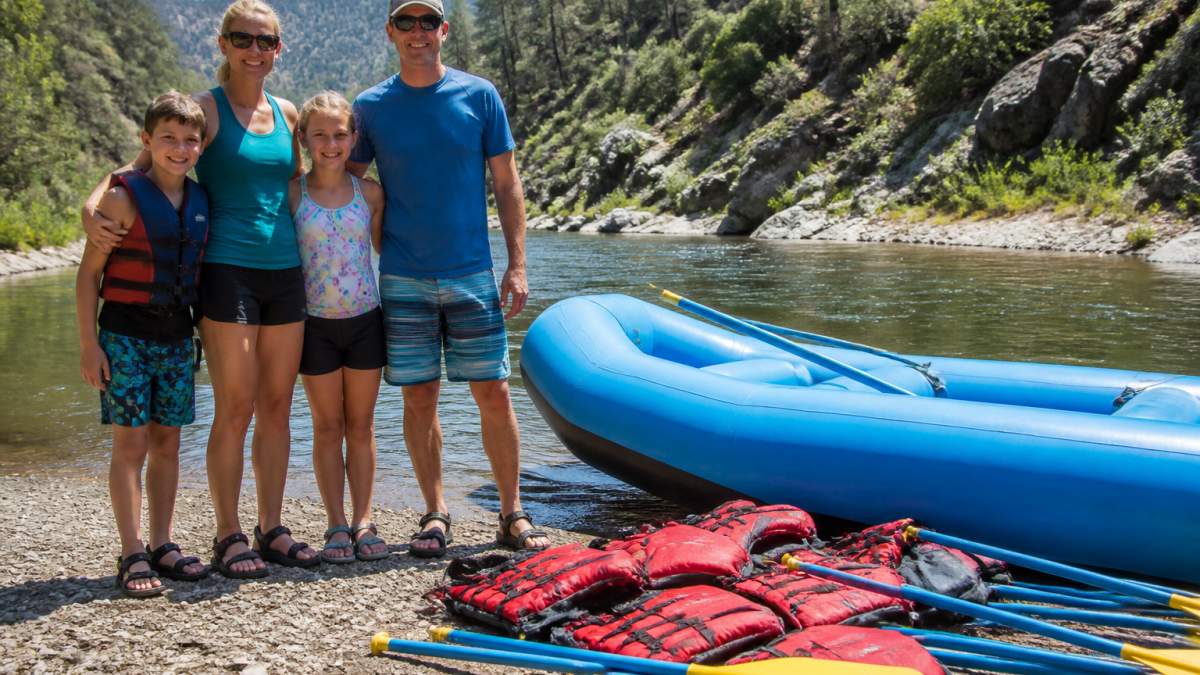
On a guided trip, the raft, paddles, and life jackets come from the outfitter. You can also review the Merced River rafting trips to see what each trip supplies.
That split matters because it stops you from overpacking. Rafts, paddles, and personal flotation devices are bulky and expensive, and no reputable guide wants guests bringing their own flotation gear on a guided run.
Your job is the small stuff: what touches your skin, your eyes, and your water bottle.
What to Wear Whitewater Rafting: Layers That Dry Fast
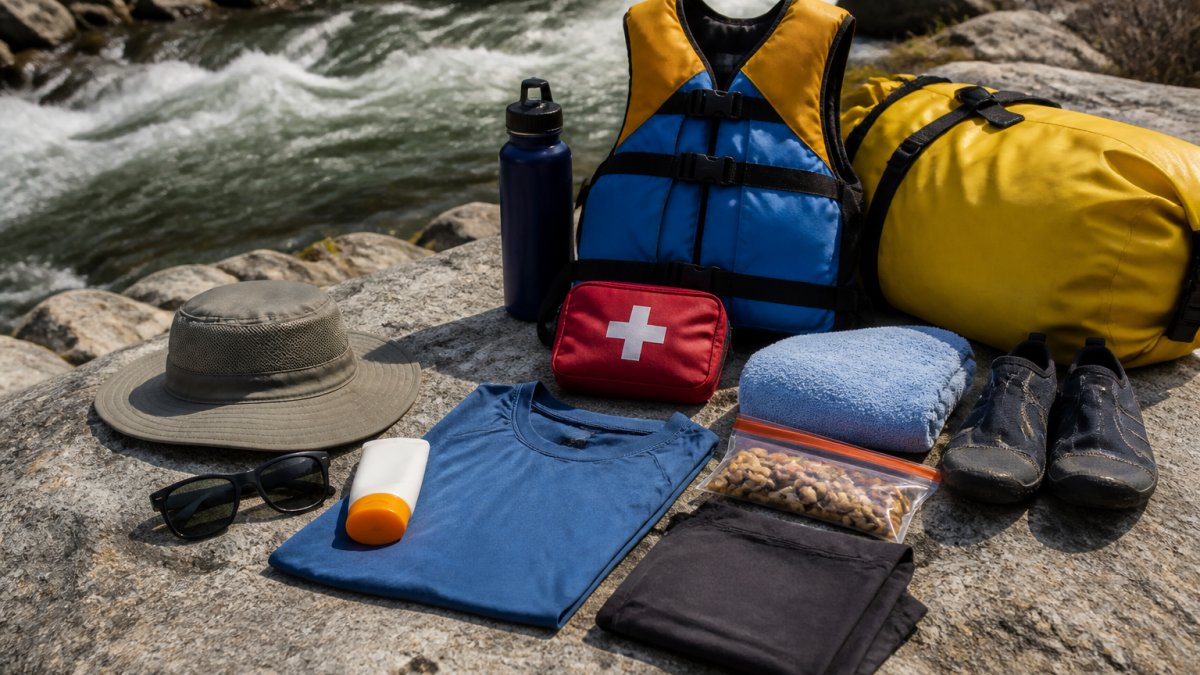
Wear a swimsuit or quick-drying shorts as your base layer, add a synthetic or wool top, and skip cotton entirely. Cotton holds water against your skin and stays cold for hours after the splashes stop.
A typical rafting outfit looks like this:
- Swimsuit or quick-drying shorts as the base
- Synthetic or wool top for warmth when wet
- A warm layer for cool mornings, removable by midday
- Dry clothes sealed in a bag for the ride home
Morning trips on mountain-fed rivers start cold even in midsummer. The water stays chilly, and the first rapid soaks everyone in the boat. Dress for the water temperature, not the parking lot.
Best Shoes for Whitewater Rafting: Heel Straps Beat Flip-Flops
The best shoes for whitewater rafting are closed-toe water shoes or sneakers, or sandals with a secure heel strap.
Heel-strap sandals from brands like Chaco, Teva, and Astral are built for exactly this. The strap keeps the sandal on your foot in moving water, which is the whole point.
A word of warning from guides: loose footwear is the single most common item guests lose on the river. If it does not strap down, leave it in the car.
What to Pack in a Rafting Dry Bag: Waterproof Storage That Works
A rafting dry bag is a roll-top waterproof sack that keeps a change of clothes, a towel, and small valuables dry through splashes and full swims. Pack one bag per person, and keep it clipped to the raft frame so it stays with the boat if you swim.
What goes inside:
- Dry clothes and a towel
- Sunscreen and lip balm
- Phone and keys, sealed in a second layer
- Any medication you need during the day
Layer your protection
A dry bag is only as good as its seal. Roll the top at least three times and clip the buckle before the raft leaves the bank. For anything you truly cannot lose, use two layers: a waterproof pouch inside the dry bag. That second layer matters because a dry bag protects against splashes, not against a bag left open on the floor of the raft or a seal that works loose in a rapid.
Electronics and keys
Electronics deserve special caution. Seal your phone in a waterproof pouch inside the dry bag, or better, leave it behind and let the guide carry a group waterproof camera. Keys are the item guests most often regret bringing loose, clip them to the inside of the dry bag, not a pocket. If you are unsure whether to bring a phone at all, the safer answer on a full-day run is no.
What to leave out of the dry bag
Do not pack glass containers, drones, or anything the park restricts. Do not pack jewelry, loose cash, or anything you would grieve on the river bottom. The river keeps what it catches, and a dry bag does not change that.
A dry bag left unrolled on the raft floor will take on water. Roll and clip it before launch, and re-seal it every time you open it.
Sun, Heat, and Cold Water: Protection for a Full Day on the River
Sun protection is not optional on the water. Reflection off the surface doubles your exposure, and a full day on the river burns skin that felt fine on land.
Bring sunscreen, a hat with a brim, sunglasses with a tie-on strap, and a long-sleeve synthetic layer for the hottest stretch of the afternoon.
Cold water changes the plan. If you run cold easily, a thin neoprene top is worth considering, and our guide to essential whitewater rafting gear for cold water covers that in more depth.
Beginner Whitewater Rafting Safety Tips for Families and First-Timers
The core beginner whitewater rafting safety tips are simple: wear your life jacket properly fastened, listen to the safety briefing, keep your feet forward if you swim, and hold your paddle the way the guide shows you.
A few more that experienced guides repeat every trip:
- Keep the life jacket buckled at all times on the water, not just in rapids
- Hold the paddle with both hands and follow the guide’s stroke calls
- Sit where you are told and stay seated through rapids
- Tell the guide about medical conditions before launch
- Keep group members in sight if you swim
Families with kids often worry about panic. The honest answer: guides run beginner sections with gentle water and quiet stretches precisely so first-timers can build confidence. If you are comparing options, our list of family-friendly Yosemite rafting trips shows which runs suit younger paddlers.
What to Leave Behind on a Merced River Rafting Trip
Leave behind anything you cannot afford to lose or soak: jewelry, loose cash, unsecured phones, and anything you would grieve on the river bottom. The river keeps what it catches.
Also leave:
- Flip-flops and loose sandals
- Cotton jeans and heavy sweatshirts
- Glass containers
- Drones and anything the park restricts
- Extra gear you will not touch
Many guests pair a river day with an overnight and wonder where to stay. Our Merced River rafting camping guide covers campsites along the river if you want to extend the trip.
Packing for Children, Older Paddlers, and Rental vs. Personal Rafts
This is where most packing lists fall apart. A family of four, a grandparent paddling the easy stretch, and a private boater hauling their own raft need three different loads. Below is a categorized checklist you can copy, followed by the rental-versus-personal-raft split that decides what you actually carry to the put-in.
The Merced River packing checklist, by category
Worn on the water
- Swimsuit or quick-drying shorts as a base layer
- Synthetic or wool top (no cotton)
- Closed-toe water shoes or heel-strap sandals
- Hat with a brim and a tie-on strap
- Sunglasses with a retention strap
- Life jacket, properly fitted and buckled (supplied on guided trips)
In the dry bag, per person
- One full change of dry clothes, including socks and a warm top
- A quick-dry towel
- Sunscreen (SPF 30 or higher) and lip balm with SPF
- Any medication you need during the day, in a sealed bag
- A thin warm layer or neoprene top for cold water and cool mornings
- Phone and keys in a waterproof pouch as a second layer
Within arm’s reach
- Refillable water bottle, at least one liter per person
- A small snack in a sealed bag
Left in the vehicle
- Dry shoes and a towel for the ride home
- A full change of clothes for after the trip
- Wallet, jewelry, and anything you cannot afford to soak
Packing for children
Children need the same list as adults, sized correctly, plus a few additions. Confirm age, height, and weight requirements with the outfitter when you book, since these vary by river section and water level. Pack a child-sized life jacket if the outfitter does not supply one for your child’s measurements, and bring a warm dry layer for after the swim, kids chill faster than adults.
Packing for older paddlers
Older paddlers should pack lighter and smarter. A warm layer, a secure hat, and a comfortable seat position matter more than gear volume. Guides can accommodate different fitness levels on beginner and intermediate runs, so say so at booking. Keep the dry bag small enough to clip within reach, and carry water where you can grab it without twisting around in the boat.
Rental versus personal raft: what changes
On a rental or guided trip, the outfitter supplies the raft, paddles, and life jackets, and you carry only personal items. Bring your own raft and the load grows: add a pump, a repair kit, a throw rope, and a spare paddle, plus a shuttle plan to get the raft to the put-in and back.
| Item | Guided or rental trip | Personal raft |
|---|---|---|
| Raft | Supplied | You bring |
| Paddles | Supplied | You bring, plus a spare |
| Life jacket | Supplied | You bring |
| Pump and repair kit | Not needed | You bring |
| Throw rope | Guide carries | You bring |
| Dry bag | You bring | You bring |
| Shuttle plan | Outfitter handles | You arrange |
If this is your first guided trip, our preparation guide for a guided rafting adventure walks through the logistics beyond the packing list.
Pack one dry bag per person and clip it to the raft frame. A bag you cannot reach is a bag you will not use.
Frequently Asked Questions
What equipment is required for river rafting?
Every commercial Merced River rafting trip supplies the core safety gear: a Coast Guard-approved personal flotation device, a helmet where the river class requires it, and a paddle for each paddler. Sierra Mac provides rafts, paddles, and life jackets on guided excursions. Your job is the personal layer: quick-drying clothes, secured footwear with a heel strap, a water bottle, sun protection, and a dry bag for anything that must stay dry. Confirm what your outfitter supplies when you book so you do not duplicate gear or show up short.
Do I need water shoes for river rafting?
You need footwear that stays on your foot in moving water. Closed-toe water shoes, sneakers worn with synthetic or wool socks, or heel-strap sandals from brands like Chaco, Teva, or Astral all work. Flip-flops do not: they slide off in current and leave you barefoot on rocky banks. Bring a dry pair of shoes and socks to change into at the takeout.
What should I pack in a dry bag for rafting?
Pack only what you cannot replace: car keys, phone, wallet, sunscreen, a lip balm with SPF, any medication, and a lightweight layer for the ride home. Roll-top dry bags seal reliably when you fold the top at least three times and clip it shut. Leave jewelry, loose cash, and anything you would grieve over in the car. Electronics go inside a second waterproof case or stay behind entirely.
Can a beginner handle rapids on the Merced River?
Beginners handle the Merced’s gentler sections well, and families with children aged 12 and up regularly float the calmer stretches. Higher-class rapids demand capable paddlers who can follow guide commands and swim if needed. Be honest about swimming ability and fitness when you book so the outfitter places you on the right trip. Guides brief every group on paddle strokes, weight shifts, and what to do if someone goes overboard before the raft pushes off.
What should I leave behind on a rafting trip?
Leave jewelry, watches, loose cash, and anything sentimental in your vehicle or at home. Skip cotton jeans and heavy sweatshirts, which soak up water and stay cold for hours. Do not bring glass containers, and leave the drone behind since national park rules restrict them. Anything you would panic about losing does not belong on the raft. If you cannot lock it in a car, it stays home.