
8 Advanced Whitewater Rafting Equipment Choices That Matter
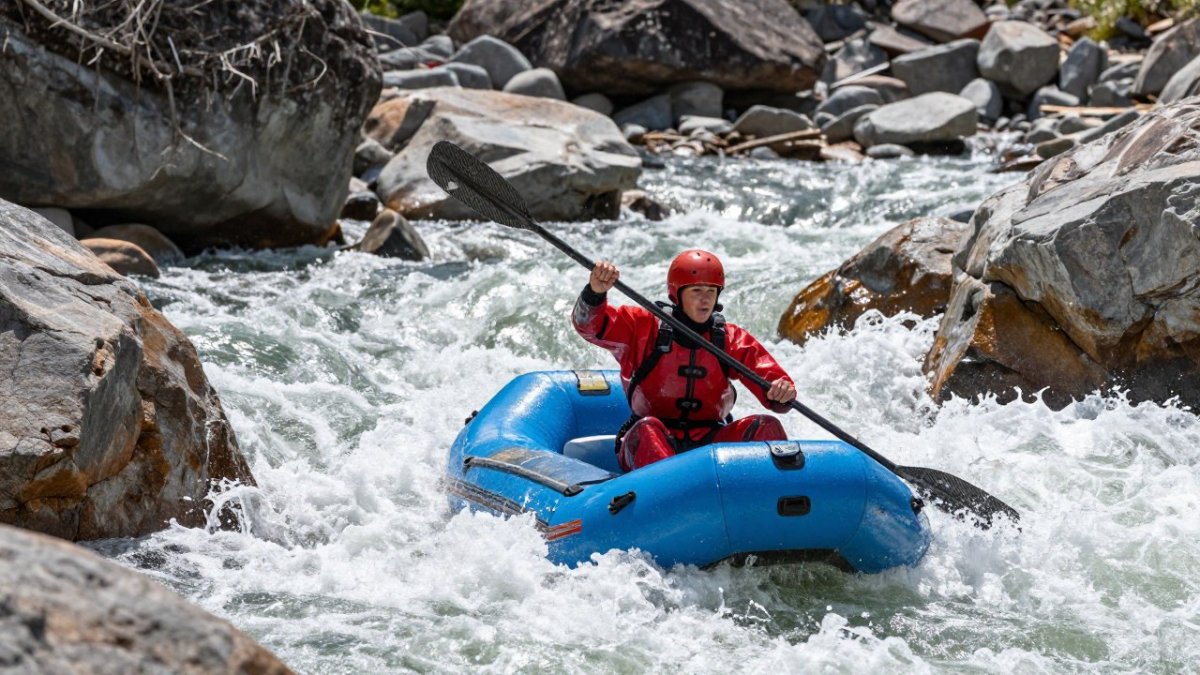
Last Updated: November 23, 2026
Quick Summary
Choosing advanced whitewater rafting equipment means matching each item to the river, crew, and conditions you actually paddle, because gear amplifies skill rather than replacing it. Prioritize a certified helmet and fitted PFD, then size thermal layers to water temperature and paddles to the boat.
- A certified helmet and fitted PFD are the two items with no budget tier worth considering.
- Match your suit to water temperature, from boardshorts above 70°F to a drysuit below 50°F.
- Size paddle shafts to the boat, not the paddler alone, since wide rafts need more length.
- Technical Class IV-V boats carry more rocker to climb over holes instead of plowing into them.
- Build a rescue kit around a throw bag, quick-release harness, two prusiks, a knife, and a pulley.
Table of Contents
- Why Advanced Whitewater Rafting Equipment Is a Skill Multiplier
- Whitewater Rafting Helmet and PFD: The Two Items You Never Compromise
- Whitewater Rafting Safety Equipment: Thermal Layers, Footwear and Clothing
- Paddle and Raft Specs: Shaft, Blade Material and Rocker Profile
- Whitewater Rescue Gear Every Advanced Team Should Carry
- Budget vs. Premium Gear: Where the Extra Money Actually Goes
- Multi-Day Rafting Equipment Checklist for Overnight Runs
- Book a Guided Run and Test Your Gear Decisions on the River
- Frequently Asked Questions
Why Advanced Whitewater Rafting Equipment Is a Skill Multiplier
Choosing advanced whitewater rafting equipment is less about buying the most expensive gear and more about matching each item to the river, the crew, and the conditions you actually paddle. Gear amplifies skill; it does not replace it.
The math explains why selection matters. According to Paddling Magazine’s analysis of whitewater rescue gear selection, four paddlers picking three items each creates 81 possible equipment combinations. Get the pairing wrong and the whole system underperforms.
American Whitewater’s river safety basics notes that different whitewater craft significantly change risk, control, and decision-making on the river. That is the frame for everything below.
Whitewater Rafting Helmet and PFD: The Two Items You Never Compromise
A whitewater rafting helmet and PFD are the only two items where there is no budget tier worth considering. Buy certified, buy fitted, and replace anything cracked or faded.
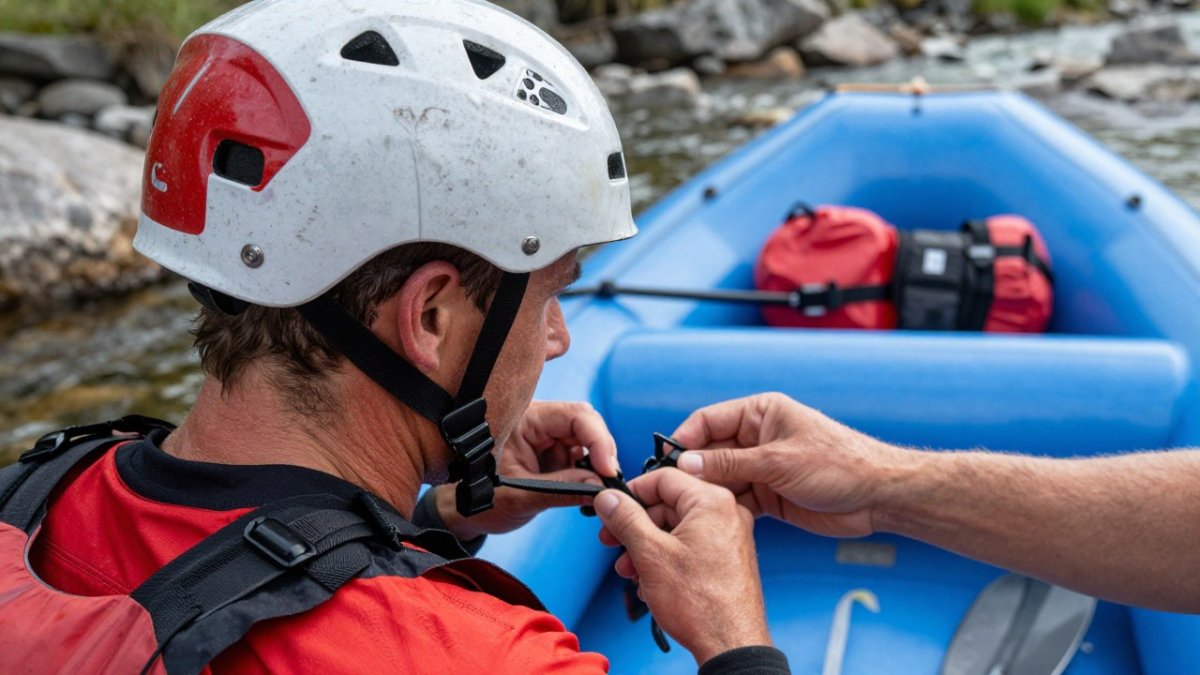
Look for a whitewater helmet with a safety certification stamp, full ear coverage, and drainage ports so it does not hold water after a swim. A personal flotation device built for whitewater needs high-buoyancy foam, a snug fit that will not ride up, secure straps, and a quick-release harness on rescue vests.
Fitting a Helmet and PFD for a Snug, Secure Fit
Fit beats brand every time. A helmet should sit level, cover the forehead, and stay put when you shake your head. A PFD should feel tight over a dry layer, with no gap at the shoulders when a partner pulls up on the shoulder straps.
Our step-by-step guide to how to properly fit a whitewater life jacket walks through the strap sequence and the pull test we use at the put-in.
Whitewater Rafting Safety Equipment: Thermal Layers, Footwear and Clothing
Whitewater rafting safety equipment starts with thermal regulation, because cold paddlers make bad decisions. The useful version segments the decision by water temperature, because that is the variable that actually drives the choice.
Match the Suit to the Water Temperature
Water temperature is a practical first filter, then adjust for air temperature and wind:
- Above roughly 70°F water: boardshorts and a synthetic top are enough for confident swimmers on Class III. A splash jacket earns its place when wind picks up.
- Roughly 60-70°F: a 2-3 mm shorty wetsuit or a farmer john over a synthetic layer. This is the range where most recreational trips sit, and where a drysuit is overkill.
- Roughly 50-60°F: a 3-4 mm full wetsuit with a neoprene top, or a breathable drysuit if air temperature is also low.
- Below roughly 50°F: a drysuit with insulating layers underneath is the standard. Cold water plus cold air is the combination that produces hypothermia fastest, and a wetsuit that stays wet between rapids stops working.
Wetsuit vs. Drysuit: The Mechanism Matters
A wetsuit is neoprene that traps a thin layer of water against the skin; your body warms that layer, and the suit holds it in place. It works only while you are active and only if it fits snugly, a loose wetsuit flushes cold water on every swim and defeats the design.
A drysuit is a waterproof shell with sealed latex or neoprene gaskets at the wrists and neck. It keeps you dry, so the insulating layers underneath stay dry and keep working. The trade-off is breathability and cost: a drysuit is warmer when you are stationary and less forgiving when a gasket fails.
Layering Under a Shell
Synthetic fabrics, polyester, polypropylene, merino blends, move moisture away from the skin. Cotton holds water against the body and is the one material to leave at home. Under a drysuit, add a fleece or synthetic insulating layer sized to the water temperature; under a splash jacket, a single synthetic base layer is usually enough.
Footwear: Drainage, Abrasion, and a Secure Heel
Water shoes need three things: drainage ports so they do not hold water, abrasion resistance for granite and limestone, and a secure heel so the shoe does not pull off in a swim. Neoprene socks add warmth in cold water; a stiff sole helps on rocky portages. Avoid sandals with open heels on advanced runs, they are the most common footwear failure at a put-in.
Fitment: How to Size Thermal Gear
Fitment is where most guides go quiet, and it is where gear fails. Measure your chest, waist, and inseam against the manufacturer’s size chart, then size for the layer you will wear underneath. A drysuit should allow a full squat and a raised-arm reach without binding at the shoulders. A wetsuit should feel tight but not restrict breathing; if you can pinch more than an inch of neoprene at the small of the back, it is too loose.
For a deeper look at what to wear, read our guide on how to layer clothing for river rafting.
Paddle and Raft Specs: Shaft, Blade Material and Rocker Profile
Paddle and raft specifications decide how the boat responds, and advanced teams feel the difference within the first rapid. The ranking pages list the specs; the useful version explains how to size them to the paddler and the crew. Sizing the paddle and raft to the crew is only part of the fit equation, since clothing that moves freely at the shoulders and stays comfortable through repeated strokes matters too, as Silverback Hawaii makes clear.
Paddle Shaft: Length, Flex, and Swing Weight
Shaft length is set by torso height and paddling style, not by preference. A common starting point is a shaft that reaches from the ground to roughly the paddler’s chin when standing, then adjust for reach and boat width. A longer shaft gives more leverage on wide rafts; a shorter shaft is faster to reposition in technical water.
Flex matters more than most buyers expect. Fiberglass and carbon shafts flex under load, which smooths the stroke and reduces fatigue over a long day. Carbon is the lightest and stiffest, but it fails catastrophically on impact; fiberglass bends and survives.
Blade Size and Shape
A larger blade catches more water and delivers more power per stroke, at the cost of fatigue. Smaller blades suit high-cadence paddling and smaller paddlers. Blade shape, symmetric versus asymmetric, changes how the paddle tracks; asymmetric blades are the common choice for whitewater because they reduce flutter on the power stroke.
Raft Specs: Rocker, Thwarts, and Length
A rocker profile with more curve climbs over holes instead of plowing into them, which is why technical Class IV-V boats carry more rocker than freight-style rafts. Thwarts stiffen the frame and give paddlers something to brace against; a firm foot brace transfers power into the stroke. Raft length trades maneuverability for load capacity: shorter boats turn faster, longer boats carry multi-day loads and track better on flatwater sections.
Sizing the Boat to the Crew
Crew weight and paddler count drive raft selection more than any spec sheet. A boat loaded below its designed weight sits high and catches wind; a boat loaded above it plows and loses rocker. Match the raft’s rated capacity to the crew plus gear, then confirm that each paddler can reach the water with the shaft length chosen above.
Watch out: a paddle sized for a narrow boat will feel short on a wide raft, and the crew will compensate with bad posture rather than admit the mismatch. Size paddles to the boat, not to the paddler alone.
| Spec | What It Changes | Advanced Pick |
|---|---|---|
| Paddle shaft | Flex and stroke efficiency | Carbon or fiberglass for lighter swing weight |
| Blade material | Durability and bite | Nylon for rocky runs, composite for precision |
| Rocker profile | How the bow and stern ride waves | More rocker for technical Class IV-V |
| Thwarts and outfitting | Structure and foot bracing | Thigh hooks and a firm foot brace |
Whitewater Rescue Gear Every Advanced Team Should Carry
Whitewater rescue gear is the category advanced teams under-buy. A throw bag is the minimum; a full kit is the standard on Class III and above.
Northwest Rafting Company’s safety guidance recommends paddlers carry a specific rescue kit and complete formal training before advanced runs. Build yours around a throw bag with a floating rope, a quick-release harness, two prusiks, a knife, and a pulley.
For a fuller inventory, our list of 9 essential gear items for Class V rafting expeditions covers the kit we would not launch without.
Budget vs. Premium Gear: Where the Extra Money Actually Goes
Gear maintenance extends every tier: rinse neoprene in fresh water, dry gear out of direct sun, and inspect straps and gaskets before each season.
Multi-Day Rafting Equipment Checklist for Overnight Runs
Overnight runs add waterproof storage and camp gear to the day kit. Pack to this checklist:
- Certified helmet and fitted PFD
- Drysuit or wetsuit plus synthetic layers
- Water shoes and dry camp footwear
- Two dry bags, one for sleep system, one for clothes
- Headlamp, repair kit, and personal medication
- Throw bag and rescue kit per boat
- Insulating layers for cool evenings
Our guide to packing essential camping gear for a Yosemite rafting trip covers how to fit it all into the raft without burying the rescue gear.
Book a Guided Run and Test Your Gear Decisions on the River
TryWVA’s paddling guidance puts it plainly: the right gear is essential, but it cannot turn an advanced run into a safe experience for an unprepared paddler. That is why we pair every gear recommendation with instruction on the water.
A guided run is the fastest way to test your choices. Learn how to book a multi-day river rafting trip and put your gear decisions to work.
Gear choices only prove themselves on moving water. Sierra Mac has guided Class IV and V runs on the Tuolumne, Merced, and Cherry Creek since 1965, with professional local guides, fully catered multi-day expeditions, and trips scaled from mild floats to intense whitewater.
Frequently Asked Questions
What equipment do you need for advanced whitewater rafting?
At minimum you need a high-buoyancy personal flotation device, a certified whitewater helmet, a wetsuit or drysuit matched to water temperature, drainage water shoes, and a paddle sized to your raft position. Advanced teams add a throw bag, quick-release harness, dry bags for waterproof storage, and a repair kit. Build your kit around the river class and water temperature rather than buying everything at once.
How do you choose a whitewater rafting helmet and PFD?
Fit decides it. A helmet should sit level, cover the forehead, and stay put when you shake your head; a PFD should feel snug over insulating layers with no ride-up when you pull the shoulders. Look for safety certification on both, secure straps, and a quick-release harness on the PFD if you plan to run Class IV-V. Try gear on with the layers you will actually wear, since a PFD fitted over a t-shirt will not fit the same over a drysuit.
How does rafting gear differ for Class IV and Class V rivers?
Class IV gear prioritizes impact protection and thermal regulation; Class V adds rescue capability. On Class V runs, craft choice significantly affects risk and control, so teams carry a throw bag, quick-release harness, and backup paddle, and wear helmets with full coverage. Drysuits replace wetsuits in cold water, and every item is checked for abrasion resistance before launch. Equipment cannot compensate for lack of skill, so pair the kit with formal river rescue training.
What rafting equipment is essential for a multi-day expedition?
A multi-day rafting equipment checklist starts with the day kit (PFD, helmet, thermal layers, water shoes) and adds waterproof storage: dry bags for sleeping gear, a repair kit with patch material, a spare paddle, and a first aid kit. Bring a headlamp, sun protection, and synthetic insulating layers that dry fast. Confirm what is provided on any guided overnight trip before you buy duplicate equipment.